
Lieferung heute & morgen

Qualitätsgarantie

Willkommens-Angebote freischalten: KOSTENLOSE Lieferung | Bis zu 80 % RABATT | Kostenlose 30-Tage-JoyPlus-Testphase
App herunterladen
Freshly ground beans can make preparing espresso, filter coffee or French press more flexible. An electric coffee grinder is more convenient than a manual model, but not every electric coffee grinder is suitable for every brewing method. What matters is not just wattage, design or marketing claims, but also the grinder mechanism, adjustment options, dosing and cleaning.
A powerful motor only says so much about the quality of the ground coffee. Consistency depends mainly on the grinder’s construction, geometry and calibration. A compact machine with blade cutters may grind quickly, but usually does not offer defined grind settings. The fineness is then controlled by how long the grinder runs and when you stop it manually.
This can make it harder to achieve the right setting for espresso or pour over. If you regularly use different brewing methods, look specifically for a burr coffee grinder with an adjustable grind size.
Figures such as 30, 36 or 48 grind settings are initially easy to compare objectively. However, they do not show how large the usable range actually is or whether the settings are suitable for your preferred brewing method. For an espresso coffee grinder, a fine, controllable range is important. With pour over, filter coffee and French press, you also need coarser settings.
Stepless adjustment can allow for finer tuning, but it requires more time to learn. For beginners, a clearly marked scale is often easier to understand.
A large bean hopper is practical if several people in the household drink coffee. However, for better protection of the coffee’s aroma, it makes sense to add only the amount you need. A coffee grinder with a timer can simplify dosing, but it does not replace checking the actual amount dispensed. The type of beans, roast and grind size all affect how much coffee is produced in a given time.
In a traditional electric coffee bean grinder with blades, sharp metal cutters rotate inside the grinding chamber. The fineness is controlled mainly by how long the grinder runs. These machines are often compact and straightforward to use, but are less suitable for repeatable espresso recipes.
A conical burr grinder crushes the beans between two conical grinding surfaces. Models of this type typically offer defined grind settings and dosing control. They are a good option for households that switch between espresso, moka, filter coffee and pour over. You can find an overview in the electric conical burr grinders category.
Use your preferred brewing method as a guide:
A coffee grinder with adjustable grind size is particularly useful if several brewing methods are used in your household.
For individual cups, a bean capacity of 50 to 75 g is often sufficient. Machines with a 200 to 220 g hopper are more suitable for several portions, but do not need to be filled completely. Also check whether the upper burr, grounds container or bean hopper can be removed.
A quiet coffee grinder should not be selected based solely on a marketing claim, as noise levels also depend on the beans, the surface it stands on and the grinding time. Specifications such as a 0.1-second timer or a slow motor speed, on the other hand, are specific technical features that are easier to assess.
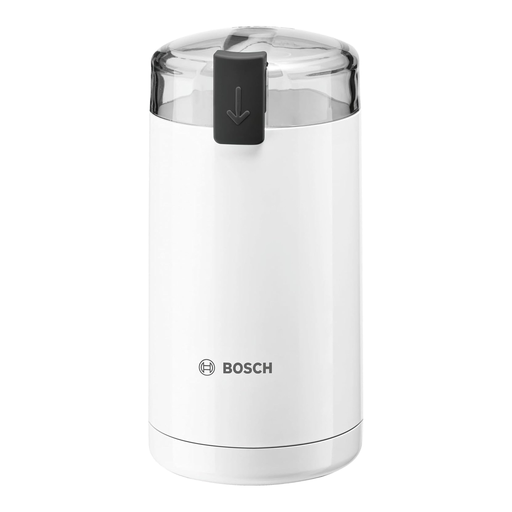
Why this product suits this profile: This compact appliance is operated with a push switch and, according to the product details, holds up to 75 g of beans. It is suitable for households looking for a simple electric coffee grinder for home use.
The product details clearly state that it uses stainless steel blades and has a capacity of 75 g. This makes it easier to form realistic expectations about its limited grind-size control before buying.
180 W power, safety activation when the lid is closed and compact dimensions of 90 × 90 × 170 mm.

Why this product suits this profile: This model combines conical burrs made from 420 stainless steel with 48 grind settings and a digital control interface. The product details also specify timer accuracy of 0.1 seconds.
The clearly stated 48 settings and three portafilter modes for 51, 54 and 58 mm make it possible to check compatibility with different portafilter machines.
48 grind settings, 150 W rated power, touchscreen and conical burrs with an outer diameter of 48 mm.
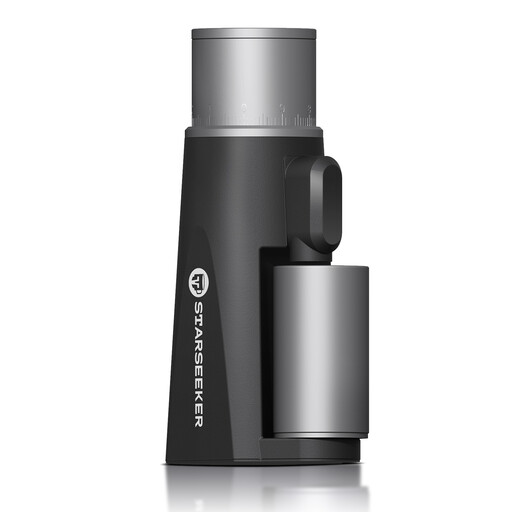
Why this product suits this profile: This cordless model is designed for use at home, in the office, while travelling and when camping. According to the product description, it features 38-mm conical burrs, a 2600-mAh battery and stepless adjustment.
The specifications explicitly mention possible static build-up and recommend the grinder primarily for medium and dark-roasted beans. These limitations make it easier to make a realistic choice.
Cordless operation, USB-C charging port, 38-mm conical burrs and stepless grind-size adjustment.
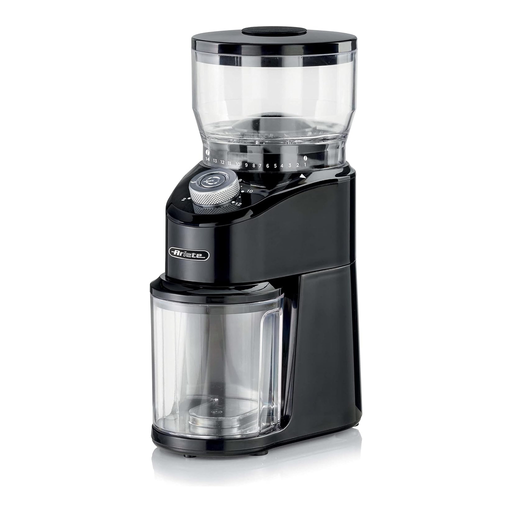
Why this product suits this profile: According to the product details, the bean hopper holds up to 200 g. The choice of 2 to 12 cups and 14 grind settings is aimed at households with regular coffee requirements.
Cup-based dosing and the removable grinder are clearly specified. This puts ease of use and cleaning first, rather than simply promoting high motor power.
200 W power, 200-g hopper, 14 grind settings and automatic dosing for 2 to 12 cups.
We have put together a complete, regularly updated list of products that fully meet these strict selection criteria and the safety regulations applicable in the EU.
Before using the appliance for the first time, check the instructions for voltage, maximum filling quantity and operating time. Many appliances for Germany operate at 220 to 240 V. An electric coffee grinder must only be used on a dry, stable surface.
Follow these basic care guidelines:
Ongoing costs mainly depend on power consumption, operating time and frequency of use. A timer can reduce unnecessarily long grinding times. With a cordless coffee grinder, charging cycles and, where applicable, battery replacement are additional factors to consider.
For espresso, a model with conical burrs or another adjustable grinder mechanism is usually easier to set consistently than a blade grinder. Look for a fine grind range, suitable dosing and—if you use a portafilter machine—compatibility with the portafilter you use.
Its lifespan depends on the grinder mechanism, motor, frequency of use, beans and maintenance. Overfilling, very hard foreign objects and continuous grinding without cooling breaks can put strain on the components. Regularly removing coffee residue and following the operating instructions will help ensure reliable operation.
This depends on the price of the beans, consumption, electricity usage and the cost of the appliance. The electricity used for individual grinding cycles is usually only one part of the overall cost. For a fair assessment, consider the purchase price, quantity of beans and period of use together.