
Lieferung heute & morgen

Qualitätsgarantie

Willkommens-Angebote freischalten: KOSTENLOSE Lieferung | Bis zu 80 % RABATT | Kostenlose 30-Tage-JoyPlus-Testphase
App herunterladen
For many, the aroma of freshly ground coffee beans is the epitome of a perfect start to the day. Your own electric coffee grinder promises just that: full flavour and complete control over the final result in your cup. However, the path to the right grinder is often paved with marketing promises and technical pitfalls. Many devices quickly turn out to be a bad purchase because they fail to meet basic requirements.
Before you buy a coffee bean grinder, you should be aware of the three most common problems that lead to unsatisfying results and frustration:
To avoid these pitfalls, it's crucial to focus on the core technical features that directly impact the quality of your grind.
The grinder mechanism determines how the coffee bean is broken down. There are three basic types with significant differences in quality:
The ability to precisely adjust the grind size is critical. A good coffee grinder for espresso requires a very fine and consistent grind, while a French press needs coarse grounds.
Pay attention to the build quality and features that make daily use easier. A metal housing is often more durable and stable than one made purely of plastic. Anti-static technologies, such as built-in plasma generators or collection bins made of anti-static borosilicate glass, are a clear advantage as they effectively reduce the problem of scattered coffee grounds.
Instead of making a blanket recommendation, we have matched models tailored to specific use cases and requirements.
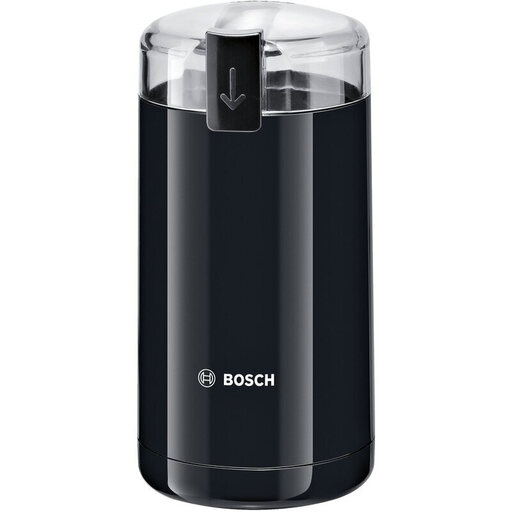
Why This Fits Their Persona: Ideal for users switching from pre-ground coffee who want a simple, reliable solution for drip coffee or French press. The operation is straightforward, and the device has a small footprint.
This model is purely a blade grinder and is not falsely marketed as an espresso grinder. It serves its purpose well for basic brewing methods, thus avoiding incorrect expectations.
Simple one-button operation and a compact design. The stainless steel blade is robust for grinding coffee beans.
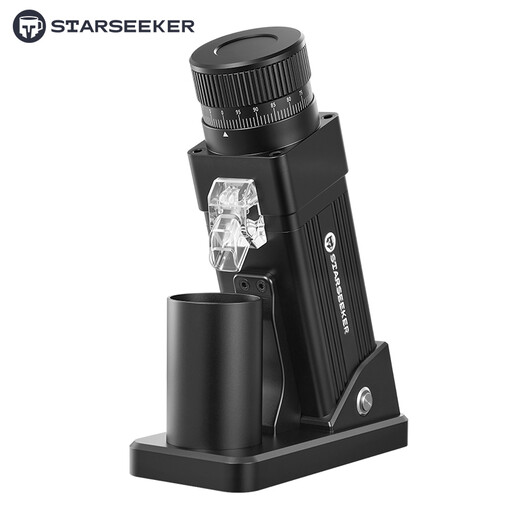
Why This Fits Their Persona: Designed for users who need maximum control over their espresso grind. The solid metal body and precision mechanics are aimed at users with high standards for quality.
The stepless fine-tuning with 0.01 mm precision solves the problem of insufficient grind settings. The built-in plasma generator eliminates static cling and prevents coffee ground chaos.
A 55mm titanium alloy conical burr set for consistent grinding. The CNC-milled aluminium body ensures stability and durability.
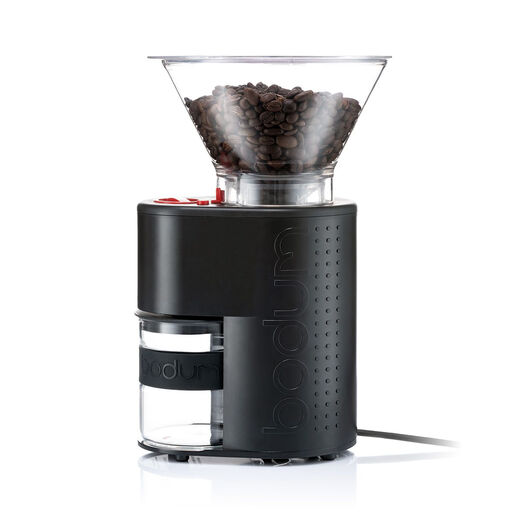
Why This Fits Their Persona: Perfect for households where various types of coffee are prepared. The grinder covers a wide spectrum from fine (espresso) to coarse (drip coffee maker) and is easy to use.
The conical burr ensures a uniform grind, unlike blade grinders. The anti-static borosilicate glass collection container effectively prevents coffee grounds from scattering.
An adjustable timer for a repeatable, precise amount of coffee. The 220g capacity is also sufficient for larger batches or for serving guests.
We have compiled a complete, up-to-date list of products that fully meet these strict selection criteria and comply with German safety regulations.
Regular cleaning is crucial for the taste of your coffee and the longevity of the grinder. Always unplug the device from the power source. The bean hopper and grounds container can usually be wiped out with a dry cloth. For the grinder mechanism itself, it's best to use a brush or a small air blower to remove coffee residue. Absolutely avoid using water near the grinder and motor. Some manufacturers offer special cleaning pellets that bind to old coffee oils.
As a rule of thumb: the shorter the contact time between water and coffee, the finer the grind should be.
For coffee drinkers who primarily use a simple drip coffee machine, a good blade grinder may suffice. However, as soon as you start experimenting with different brewing methods or own a portafilter machine for espresso, a coffee grinder with a conical burr is a worthwhile investment. The consistency and precision of the grind have a direct and clearly noticeable impact on the quality of the coffee. The difference between an uneven and a uniform grind is often more significant than the difference between two different types of coffee beans.