
Lieferung heute & morgen

Qualitätsgarantie

Willkommens-Angebote freischalten: KOSTENLOSE Lieferung | Bis zu 80 % RABATT | Kostenlose 30-Tage-JoyPlus-Testphase
App herunterladen
By Joybuy Product Recommendation Officer, August 30, 2026
The path to a truly great cup of coffee doesn't start with the coffee machine, but with the bean—or more specifically, with the grind. Finding a high-quality electric coffee grinder is the crucial step to extracting the full aroma from your coffee beans. However, the market is flooded with devices whose marketing promises often fall short. Many users invest in a grinder only to be disappointed when their coffee tastes bitter, watery, or simply inconsistent.
This guide will help you recognise the typical pitfalls and make an informed decision. We focus on the technical features that truly matter and show you how to find a grinder that suits your preferred brewing method.
Before we dive into desirable features, it's important to understand the most common reasons for a poor purchase. These three points often lead to unsatisfying results and unnecessary expense.
Many entry-level models attract buyers with a low price but use what's known as a blade grinder. In these devices, rotating blades uncontrollably shatter the coffee beans. The result is an inconsistent grind consisting of coarse chunks and fine dust. During the brewing process, the fine particles are over-extracted (leading to a bitter taste), while the coarse pieces are under-extracted (resulting in a watery, sour flavour). A balanced aroma requires a uniform grind, which blade grinders are physically incapable of delivering.
Calling nearly every grinder adjustable is a common marketing practice. The critical question, however, is: how finely can it be adjusted? Models with only 3 to 10 coarse settings are unsuitable for demanding brewing methods. An espresso coffee grinder, for example, requires micro-adjustments to create the perfect resistance for the water in the portafilter. A grinder for filter coffee or French press may need different grind sizes, but here too, the ability to fine-tune is crucial for adapting the flavour to the specific bean.
An often-overlooked factor is the heat generated during the grinding process. Particularly fast motors or burrs made from inferior materials can create frictional heat that damages the delicate oils and aromas of the coffee bean before brewing even begins. The result is a flat, burnt-tasting coffee. Furthermore, a plastic housing can promote static electricity, causing coffee grounds to stick to the inside of the grinder and all over your countertop.
To avoid the traps mentioned above, you should focus on three core technical aspects. These determine the quality, longevity, and versatility of your grinder.
The grinding mechanism is the most important component. Instead of a blade grinder, you should only consider models with a true burr set that grinds the beans rather than shattering them. There are two main types:
For most home users, a conical burr grinder offers an outstanding balance of performance, durability, and price.
The number and fineness of the grind settings are critical for versatility. Pay attention to:
The choice of material affects both performance and lifespan. A stainless steel coffee grinder is often a great choice.
Based on the criteria above, we have identified a few models that are well-suited for different user profiles and their specific needs.
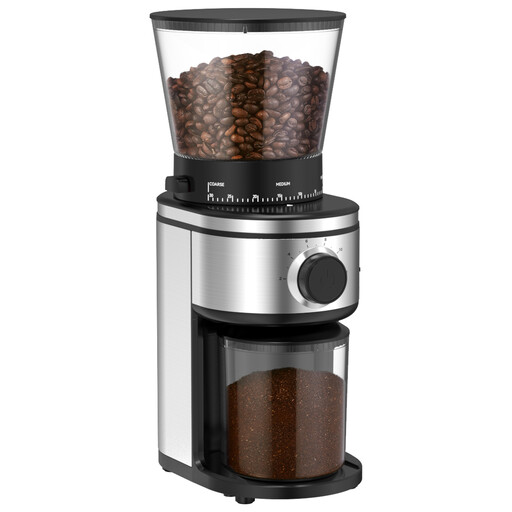
Why it's a good fit: Ideal for anyone looking to upgrade from pre-ground coffee or a blade grinder. It offers the essential benefits of a true burr grinder without breaking the bank, allowing for initial experiments with different grind sizes.
This model uses a conical burr set instead of a blade and offers 30 grind settings. This directly avoids the traps of inconsistent grinding and insufficient adjustability.
A wide range of grind settings for various brewing methods (filter, French press) and simple one-touch operation with a memory function make getting started straightforward.
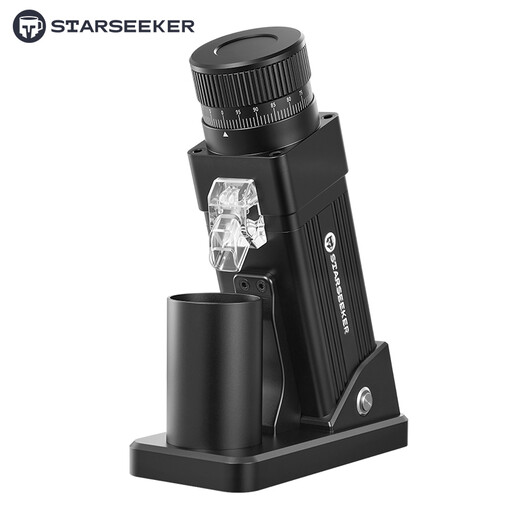
Why it's a good fit: Designed for home baristas who own a portafilter machine and require an extremely precise, repeatable grind for a consistent espresso shot. Control is the top priority here.
The stepless fine adjustment solves the problem of overly coarse grind steps found in standard grinders. The full metal body and AC motor minimise heat issues and static build-up.
The stepless grind adjustment allows for maximum precision. The 55mm titanium alloy conical burr set ensures a uniform grind that is optimised for espresso.
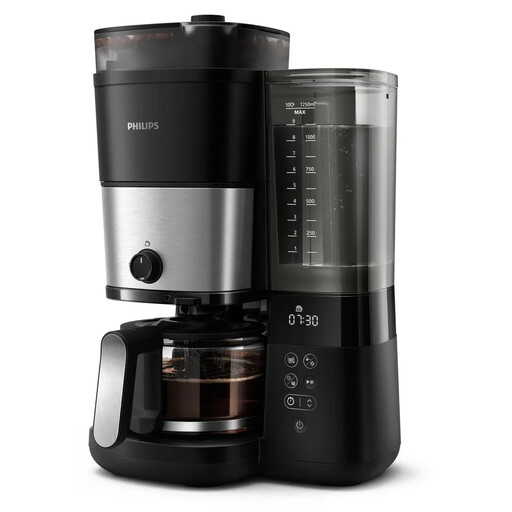
Why it's a good fit: Perfect for users who appreciate the convenience of a machine that freshly grinds beans and brews them immediately. Ideal for a hassle-free yet aromatic filter coffee in the morning without needing to operate multiple devices.
This device integrates a conical burr grinder directly into the coffee machine. It thus bypasses the need for a separate device and the temptation to opt for a low-quality blade grinder.
An all-in-one solution that saves space and steps. According to Philips, the Smart Dosing technology ensures an optimised coffee-to-water ratio and consistent results.
We've compiled a complete, up-to-date list of products that fully meet these strict selection criteria and relevant safety standards.
For consistently high coffee quality and a long lifespan for your device, regular cleaning is essential.
Both conical and flat burr grinders can produce a fine grind suitable for espresso. The deciding factor is not just the burr type, but primarily the quality of the burrs and the precision of the adjustment mechanism. For espresso, you need a grinder that grinds very finely and extremely consistently. A micro-stepped or stepless adjustment is a major advantage here, as it allows you to precisely tailor the grind size to the bean, ambient humidity, and your espresso machine.
This heavily depends on your standards and your coffee brewing method. If you are a passionate espresso drinker with a high-quality portafilter machine, the grinder is the most important investment—often even more critical than the machine itself. In this case, a higher-priced model with precise adjustment and high consistency can directly translate into better flavour. For lovers of filter coffee or French press, a solid mid-range electric coffee grinder with a good conical burr set is often perfectly sufficient to achieve a significant taste improvement over pre-ground coffee.