
Lieferung heute & morgen

Qualitätsgarantie

Willkommens-Angebote freischalten: KOSTENLOSE Lieferung | Bis zu 80 % RABATT | Kostenlose 30-Tage-JoyPlus-Testphase
App herunterladen
For many, the aroma of freshly ground coffee beans is the essence of a perfect start to the day. Finding a high-quality electric coffee grinder is the first step toward this pleasure. However, the market is saturated with models whose marketing promises often create more confusion than clarity. Before you make a decision, it's crucial to understand the most common pitfalls that lead to disappointing coffee and unnecessary expense.
As your Joybuy Product Recommendation Officer, I'll help you establish objective criteria for your choice and identify the right grinder for your needs.
To avoid these traps, you should focus on the technical fundamentals. These three parameters are the primary determinants of the quality of your coffee grounds and, consequently, your coffee.
The grinding mechanism is the most critical component. There are two main types:
A good grinder with adjustable settings allows you to precisely match the fineness of the coffee powder to your brewing method.
Pay attention to the details that affect daily use. A small coffee grinder fits well in kitchens with limited space. The bean hopper's capacity should match your consumption—60–100 grams is often enough for one or two people. Materials like stainless steel or aluminium are not only more durable than plastic but can also reduce static buildup in the coffee grounds, leading to a cleaner experience.
The right electric coffee grinder is the one that fits your habits and your budget. Here are some recommendations tailored to different user profiles.
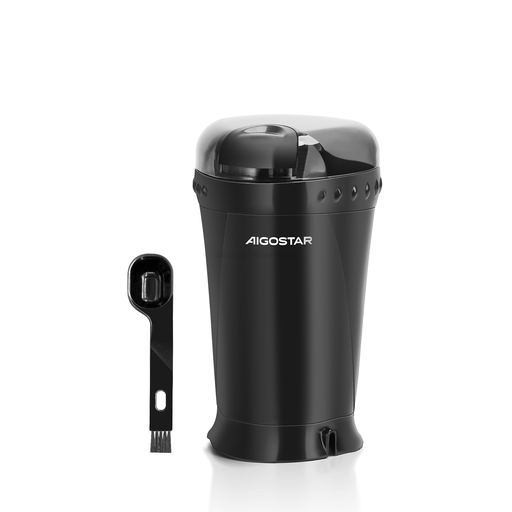
Why it's a great fit: Ideal for coffee drinkers switching from pre-ground powder to fresh beans who primarily make filter coffee or French press. Its simple operation and small footprint make it a hassle-free first grinder.
This model is clearly a blade grinder. It doesn't promise espresso-level precision and instead reliably performs its core task: quickly chopping beans for simple brewing methods. This helps you avoid the disappointment that comes from having false expectations of an entry-level model.
Simple one-touch operation and a compact design that fits in any kitchen. The transparent lid allows for visual control of the grind size.
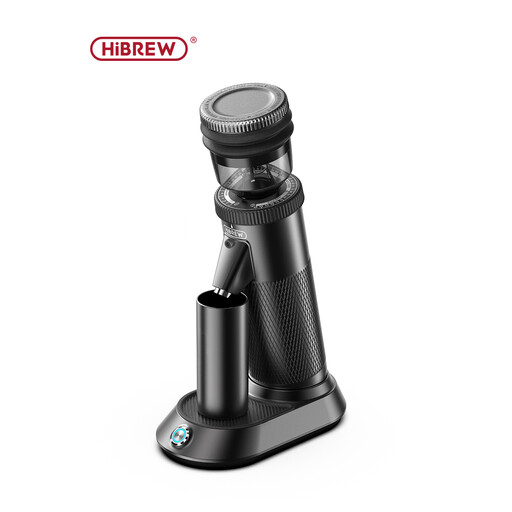
Why it's a great fit: For users of an espresso machine who need a precise and consistent grinder for espresso. The fine adjustment options and high-quality burrs are designed for the demands of advanced coffee preparation.
This model avoids the trap of an inadequate grinding mechanism with a 48mm CNC conical burr. The 36 grind settings provide the necessary precision for espresso without compromising on consistency. The low-speed grinding function also reduces heat buildup.
Offers 36 grind settings for a wide range from espresso to pour-over. The anti-static function and powder knocker minimise coffee ground retention and make cleaning easier.
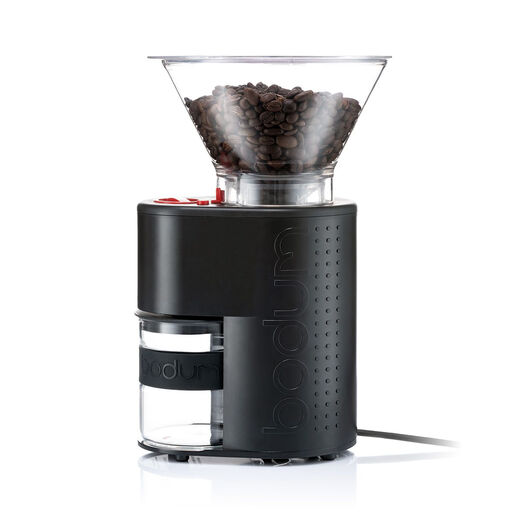
Why it's a great fit: For coffee lovers who enjoy various brewing methods and value a consistent result as well as a clean, mess-free experience. A reliable brand-name appliance that offers a great balance between price and performance.
The conical burr grinder ensures a uniform grind across various settings. The anti-static borosilicate glass catch cup directly addresses the problem of static and flying coffee grounds, making it easy to transfer them cleanly—a clear advantage over models with static-prone plastic containers.
A gentle conical burr grinder for full aroma and an anti-static glass container for a clean experience. The timer function allows for repeatable grind amounts.
We've compiled a complete, up-to-date list of products that fully meet these strict selection criteria and German safety standards.
Always unplug the appliance from the power source. The housing can be wiped with a damp cloth. For the grounds container and the grinder itself, a small brush or a vacuum cleaner on a low setting is suitable for removing coffee residue. Absolutely avoid water near the motor and grinding mechanism to prevent damage and rust. For conical or flat burr grinders, disassembly may be necessary for a thorough cleaning; follow the manufacturer's instructions for this.
The lifespan heavily depends on the build quality and maintenance. Simple blade grinders can last for many years with proper use. For grinders with conical or flat burrs, the lifespan of the burrs (made of steel or ceramic) is the deciding factor. With normal home use and regular cleaning, a quality model can easily remain functional for five to ten years or more.
As a rule of thumb: the shorter the contact time between water and coffee, the finer the grind should be.