
Lieferung heute & morgen

Qualitätsgarantie

Willkommens-Angebote freischalten: KOSTENLOSE Lieferung | Bis zu 80 % RABATT | Kostenlose 30-Tage-JoyPlus-Testphase
App herunterladen
Freshly ground beans can make a real difference when brewing espresso, pour-over or French press. However, an electric coffee grinder isn't automatically right for every household. Many people end up with the wrong purchase because product descriptions highlight individual performance figures, while important details like the burr mechanism, dosing and cleaning are overlooked.
This buying guide shows what coffee lovers, home baristas, offices and small cafés should look out for.
A high motor power rating alone says very little about the consistency of the coffee grounds. What really matters is the type of burr mechanism, the geometry of the grinding discs or conical burrs, and the ability to adjust the grind setting in a repeatable way. A simple blade grinder, for example, might have 180 or 200 watts, but often only offers a time-based control over the coarseness.
Claims of 36, 48 or 100 settings sound impressive. However, when making a decision, you should check whether these are clearly defined steps or a stepless grind adjustment. For espresso, fine adjustment is particularly important, whereas for French press, larger jumps are often sufficient.
A large bean hopper isn't always practical. If you only grind 15 to 20 grams a day, you probably don't need a 220-gram capacity. What's more, residue left in the hopper or the chute can affect the aroma of later batches. A well-accessible grinding chamber and dry cleaning with a brush or bellows are therefore important criteria.
A coffee grinder with conical burrs crushes the beans between two cone-shaped grinding surfaces. Many models allow finer adjustment than classic blade grinders. A flat burr grinder works with flat grinding discs and is also commonly used in machines for espresso and filter coffee.
Blade grinders chop the beans with rotating blades. The fineness is usually controlled by the running time. Models like the Bosch TSM6A014R or the Melitta Amigo are said to have stainless steel blades or a stainless steel chopping blade, according to product information. They are compact and designed for smaller quantities, but they don't offer a comparable grind scale to a dedicated coffee grinder for espresso.
For different brewing methods, the coffee grinder with grind adjustment should be fine-tunable enough. Espresso generally needs a finer grind than pour-over, filter coffee or French press. A timer function can simplify dosing, but it doesn't replace control over the actual amount ground. The bean type, roast level and burr mechanism all affect the grinding time.
A coffee grinder with a timer is useful if you want to dose repeatable portions as consistently as possible. However, specifications like 0.1-second intervals should be understood as a device setting, not a guarantee of a specific gram weight.
A quiet coffee grinder is especially pleasant in flats, offices or early in the morning. The actual noise level depends on the motor, burrs, housing and beans. Reliable decibel values aren't given for every model.
Look out for:
Internal burr mechanisms should generally not be treated with water or liquid cleaners. Before clearing any blockages, the appliance must be switched off and unplugged from the mains.
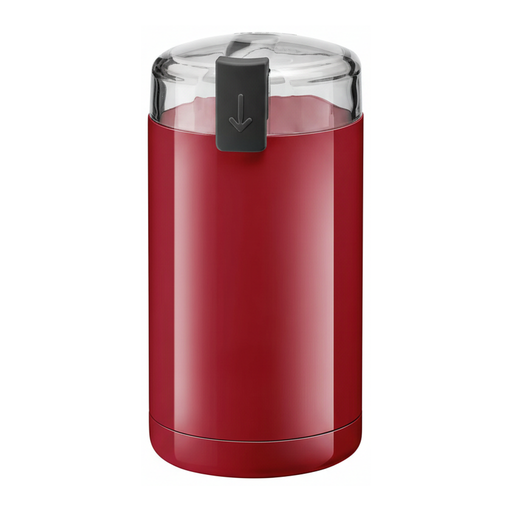
Why this product fits the profile: This compact grinder is suitable for households that want to grind smaller amounts without any fuss. It has a 75 g bean capacity, 180 W power and is operated via a safety switch and lid.
The product data clearly states the burr type, capacity and one grind option. Buyers should therefore not expect stepless espresso adjustment.
Compact dimensions of 9 × 9 × 17 cm, 75 g capacity and a safety feature when the lid is correctly fitted.

Why this product fits the profile: The features are aimed at users who want to prepare espresso and pour-over with fine control over dosing and grind size.
The specifications mention a 55 mm conical burr set, stepless adjustment down to 0.01 mm and a device to reduce static build-up.
72 W motor, metal housing, stepless grind adjustment and a magnetically detachable output area, according to the product description.
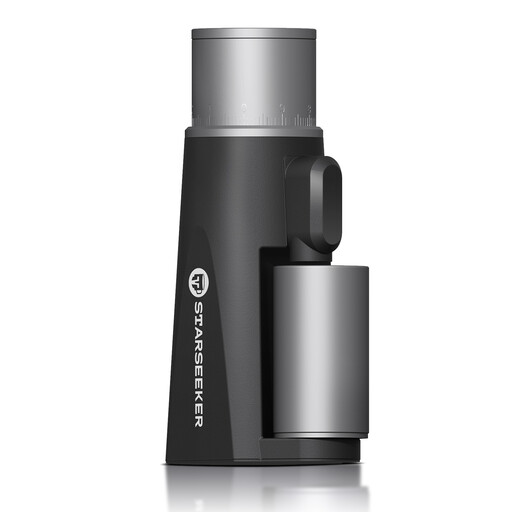
Why this product fits the profile: The cordless format is ideal for travel, camping, the office and households without a permanent spot next to a power socket.
The product information explicitly points out the lack of static discharge. In dry air, clumps or powder residue may therefore occur.
38 mm conical burr set, 100-step adjustment, 2,600 mAh battery and Type-C charging port, according to the supplier's information.

Why this product fits the profile: The digital control panel and the choice of 48 grind settings suit households or small offices with several brewing methods.
The timer function works in 0.1-second steps, according to the product information; additionally, modes for 51, 54 and 58 mm portafilters are provided.
48 grind settings, conical stainless steel burr set and a digital control panel with time-controlled dosing.
We've put together a complete, regularly updated list of products that fully meet these strict selection criteria and the safety regulations in force in the EU.
The ongoing costs of an electric coffee bean grinder mainly consist of electricity, cleaning and, if necessary, replacement parts. With short grinding cycles, the power consumption in the household is usually low. More important for the lifespan are correct use and regular removal of coffee residue.
Avoid spices, nuts and unroasted green beans unless the manufacturer explicitly allows them. If a blockage occurs, switch off the appliance, unplug it and only then check the grinding chamber. The bean hopper and collection container should be cleaned according to the instruction manual and dried completely.
For espresso, a machine with conical or flat burrs and a finely adjustable grind setting is appropriate. Additionally, the grinder should be able to dose small portions in a controlled way. A simple blade grinder is less flexible for this purpose, as the fineness depends mainly on the running time.
The lifespan depends on the burr mechanism, motor, intensity of use, beans and care. Regular dry cleaning, avoiding unsuitable materials and taking breaks during longer grinding sessions can reduce the strain. Binding information can be found in the manufacturer's instructions and warranty conditions for the specific model.
Yes, as long as the grind size can be set in the medium to coarser range. For pour-over, a traceable setting, as uniform particles as possible and controllable dosing are important. Before buying, you should check whether the stated adjustment range explicitly includes filter coffee or pour-over.