
Lieferung heute & morgen

Qualitätsgarantie

Willkommens-Angebote freischalten: KOSTENLOSE Lieferung | Bis zu 80 % RABATT | Kostenlose 30-Tage-JoyPlus-Testphase
App herunterladen
An electric coffee grinder makes daily coffee preparation easier and can grind coffee beans immediately before brewing. However, wattage is not the only factor that matters. Depending on the brewing method, espresso, pour-over and French press require coffee grounds with different levels of fineness or coarseness.
Anyone who focuses solely on glossy product promises can easily overlook important details. Three common buying misconceptions are particularly relevant:
A coffee grinder for coffee beans usually works with burrs or rotating blades. With conical burrs, the beans are crushed between two conical grinding surfaces. With a suitable design, this allows more differentiated control over the grind size.
A blade coffee grinder breaks the beans down using rapidly rotating stainless-steel blades. This design is compact and often affordable. The grind size is normally controlled by how long the button is pressed. This principle may be sufficient for filter coffee or occasional use. For espresso, where more precise adjustment is required, a grinder with finely graduated grind settings is usually more practical.
Look for specific details such as:
An espresso coffee grinder should offer fine adjustments. Small changes can affect the flow time and therefore the preparation process. For a pour-over coffee grinder, a controlled medium grind range is important. A French press coffee grinder, on the other hand, requires a significantly coarser setting.
Models with 14, 30, 36 or 48 settings offer different ranges on paper. However, the number alone says nothing about the actual increments. Check whether the manufacturer specifies the suitable brewing methods and whether a timer or dosing function is available.
With stepless systems, such as those specified in 0.01 mm increments, the setting can be adjusted very precisely. At the same time, returning to a previous setting may take longer because there are no fixed detents.
For everyday household use, 50 to 75 g is often sufficient. Depending on the dosage, this corresponds to several cups. Appliances with a 220 g capacity are more suited to households, offices or users who grind several portions one after another.
A low noise rating should only be taken into account when the manufacturer provides specific measuring conditions. Terms such as ‘quiet’ are difficult to assess without a decibel value. Other practical features include:
A cordless coffee grinder also involves battery capacity, charging connection and charging cycles. This design is flexible for travel or camping. For stationary use, a mains-powered appliance may be more suitable.
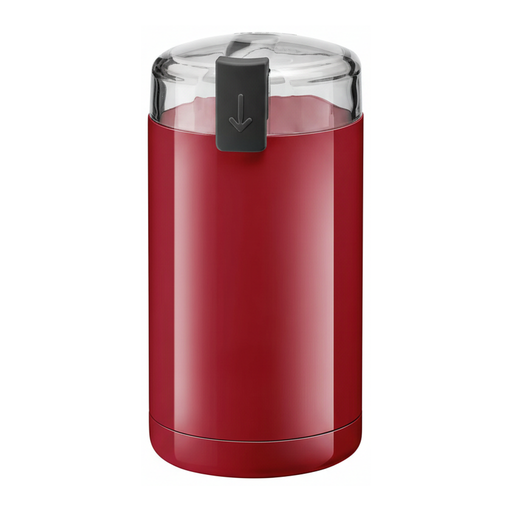
Why this product suits this profile: This compact blade coffee grinder operates at 180 W and holds up to 75 g of coffee beans. It is suitable for simple everyday brewing and can be stored neatly without taking up much space.
The maximum fill level and the requirement to fit the lid for safe operation are clearly stated. The grind size is controlled by grinding time rather than unclear marketing claims.
180 W motor, 75 g capacity, 220–240 V and integrated safety switch.
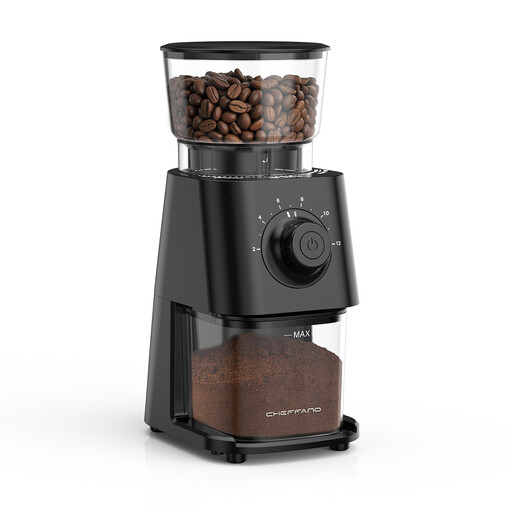
Why this product suits this profile: The conical burrs and 30 grind settings appeal to users who want to switch between espresso, filter coffee and French press.
The grind adjustment is specified as 30 settings. This makes it easier to target the desired range than with purely time-based control via a button.
Conical burrs, 30 settings and capacity for up to 12 cups according to the product information.
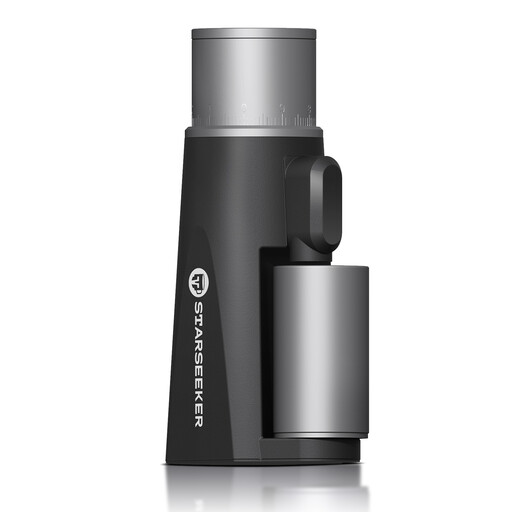
Why this product suits this profile: This cordless coffee grinder is designed for camping, travel, the office and small mobile coffee setups. According to the product information, the 2,600-mAh battery supports around 40 to 50 grinding sessions.
The product information explicitly highlights the possibility of static charge and clumping. Short cooling and cleaning intervals should also be allowed for.
38-mm conical burrs, 100-step adjustment and USB-C charging connection.
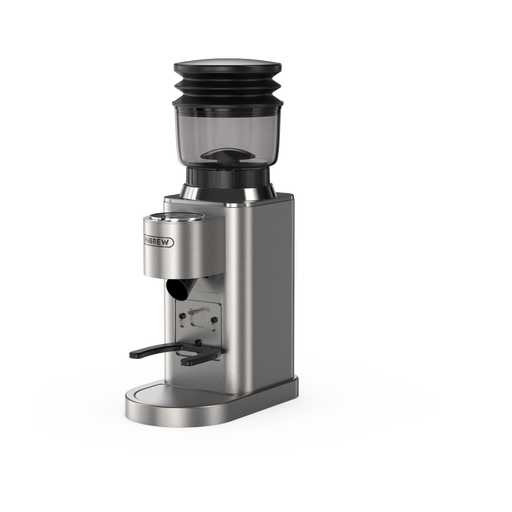
Why this product suits this profile: The G7 offers 48 grind settings, time control in 0.1-second increments and three modes for 51, 54 and 58 mm portafilters.
The selection considers not only the number of grind settings, but also compatibility with different portafilter sizes and time-based dosing.
48 grind settings, 150 W, visible bean hopper and three portafilter modes.
Whenever possible, grind only the amount you need. When using a blade grinder, short pulses help you gradually achieve the desired grind size. Conical burr grinders should be adjusted according to the manufacturer’s instructions; on some appliances, changing the setting while the grinder is stationary prevents pieces of beans from blocking the mechanism.
Before cleaning:
A professional coffee grinder for home use is not automatically necessary. For several espresso portions a day, an easily accessible burr set, consistent settings and sufficient cooling breaks are more important than an especially large bean hopper.
We have put together a complete, regularly updated list of products that fully meet these strict selection criteria and the safety regulations applicable in the EU.
For espresso, an appliance with conical burrs or another adjustable burr set and several fine settings is a sensible choice. A blade coffee grinder can break beans down finely, but usually does not offer a precisely repeatable grind setting.
Its lifespan depends on usage, cleaning, the type of beans and operating time. Observe the maximum fill level, do not grind foreign objects and allow the motor to cool during longer batches. Internal burrs should only be cleaned in accordance with the relevant instructions.
Individual grinding sessions usually last only a short time. Running costs therefore depend mainly on power, grinding time and daily use. An appliance with a higher wattage does not necessarily use more electricity if it grinds the required amount in less time.