
Lieferung heute & morgen

Qualitätsgarantie

Willkommens-Angebote freischalten: KOSTENLOSE Lieferung | Bis zu 80 % RABATT | Kostenlose 30-Tage-JoyPlus-Testphase
App herunterladen
Freshly ground beans can transform your daily coffee routine, but choosing the right electric coffee grinder is not simply a question of motor power. Many appliances promote high wattages, numerous grind settings or particularly fast processing. However, these figures are only meaningful when considered alongside the burr type, dosing method and intended brewing style.
That is why it is worth taking a close look at the technical specifications for home, office and home-barista use. When comparing a conical burr coffee grinder, an electric coffee-bean grinder with blade cutters and a manual coffee grinder, you should be aware of common buying misconceptions.
A high number of grind settings sounds convincing at first. What matters, however, is whether the adjustment range suits your preferred brewing method and whether the setting can be used consistently. Espresso requires a fine grind, while a coffee grinder for French press needs to work much more coarsely. Filter coffee usually sits somewhere in between.
A stepless adjustment allows for highly precise changes. By contrast, a clearly defined number of settings may be easier to use. The claim of “48 settings” or “30 settings” should therefore not be assessed in isolation.
Power consumption does not directly indicate how evenly a grinder performs. A 200 W appliance may use blade cutters and therefore produce less controllable particles than a grinder with lower power consumption and a precise conical burr system.
For everyday use, motor running time, noise levels, heat generation and recommended usage are also more important. With an electric espresso grinder, controlled dosing matters in particular, rather than simply grinding quickly.
A large bean hopper is convenient when preparing coffee for several people. For freshly ground coffee every day, however, a smaller capacity may be more suitable, as beans should not remain in the hopper unnecessarily long. Check whether the coffee grinder with dosing measures by cups, time or weight.
With appliances featuring a quantity setting, you should check whether the figures are intended as guidelines or represent actual gram values. The amount dispensed can vary depending on the type of bean, roast and grind size.
A conical burr system guides the beans between two conical grinding elements. Models such as the HiBREW G5 and CHEFFANO BG710 use this type of system. According to the respective product specifications, it is suitable for several brewing methods, including espresso, pour-over and French press.
Flat burr grinders, such as the system specified for the Severin KM 3880, work with two flat grinding discs. They can offer a broad adjustment range for fine and coarse grinds. Blade cutters, on the other hand, chop the beans using rotating blades. Bosch TSM6A011W, Bosch TSM6A017C, Severin KM 3879 and Aigostar CG-200 are specified as using this type of blade system. These appliances are generally controlled by pressing a button and adjusting the grinding time.
A coffee grinder with grind-size adjustment should not only be capable of grinding finely, but should also offer sufficiently coarse settings. As a practical guide:
If you regularly switch between espresso and filter coffee, choose an appliance with a broad adjustment range. A dedicated coffee grinder for filter coffee, on the other hand, can have a simpler specification.
For a small household, a bean capacity of 50 to 75 g is often sufficient. For families or offices, 200 to 240 g may be more practical. Other relevant features include:
With a grinder featuring an integrated doser, check how the controls work before buying. A bean grinder built into an automatic coffee machine cannot automatically be used as a separate appliance; some automatic machines have a permanently integrated grinder with less flexible settings.
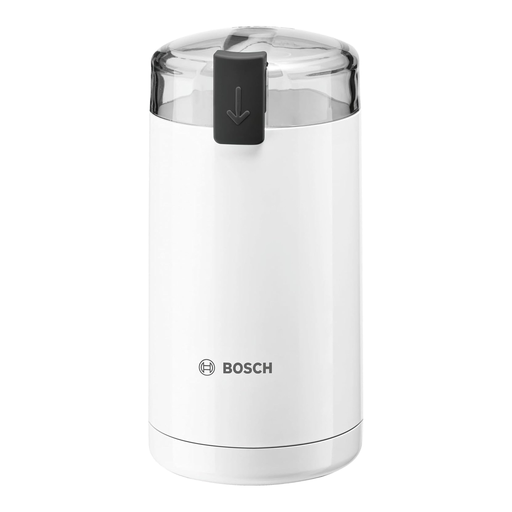
Why this product suits this profile: This compact appliance is operated with a push-button switch and offers a bean capacity of 75 g. It is suitable for anyone looking for a simple electric coffee-bean grinder for occasional use.
The safety lock prevents operation if the lid has not been fitted correctly. However, the quantity and grind size are controlled by grinding time rather than pre-set dosing programmes.
180 W, 75 g capacity, compact dimensions of 90 × 90 × 170 mm and a specified safety valve on the lid.
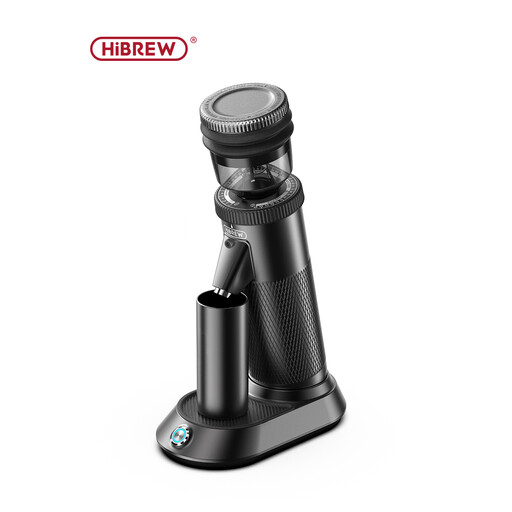
Why this product suits this profile: The conical burr system with 36 settings is designed for users who want to switch between espresso, moka, pour-over and filter coffee.
The technical specifications state the burr type, adjustment range and two speeds clearly. The slower setting is specified at 400 rpm, while the faster setting runs at 500 rpm.
48 mm conical burr system, 36 grind settings, 50 g bean hopper and aluminium-alloy housing.
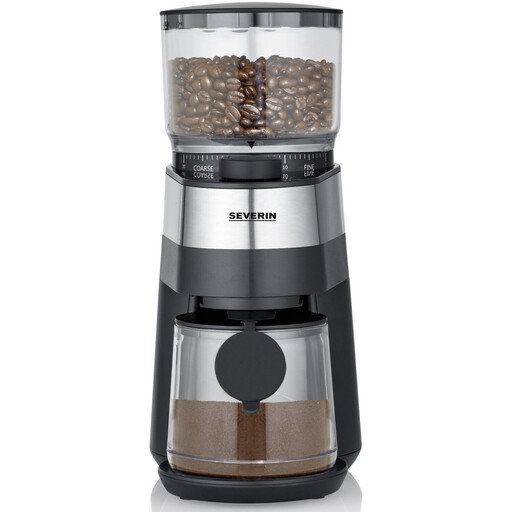
Why this product suits this profile: This grinder is aimed at households or small offices that want to prepare several cups at once and switch between espresso and French press.
The dose can be set for 2 to 12 cups. You can also choose from 30 grind settings. This reduces reliance on judging grinding time alone.
Flat burr system, 30 grind settings, 240 g bean hopper and removable ground-coffee container with aroma protection.
We have put together a complete, regularly updated list of products that fully meet these strict selection criteria and the safety regulations applicable in the EU.
An electric coffee grinder uses comparatively little energy per grinding cycle. Running costs therefore depend more on how often it is used and how long the burrs last. Avoid continuous operation if the instruction manual recommends short grinding intervals. With blade grinders, allow the motor to cool down between several cycles.
Remove coffee residue regularly with a dry brush. Keep water away from the motor, electronics and burrs unless the manufacturer permits a different cleaning method. Residue can build up more quickly when using very oily beans, which may affect the adjustment.
For espresso, a grinder with a fine setting and preferably precise dosing is a sensible choice. A conical burr system with many settings or stepless adjustment can make fine-tuning easier. Also check whether the outlet is suitable for your portafilter.
There is no one-size-fits-all lifespan. It depends on the burr system, amount of beans, cleaning intervals and operating method. Regular cleaning, short grinding cycles and following the manufacturer’s instructions can reduce the strain on the motor.
A manual coffee grinder does not require electricity and is suitable for small quantities at home or when travelling. However, grinding takes physical effort and more time. If you prepare several portions every day or use very fine grind settings, an electric coffee grinder can be more convenient for everyday use.