
Lieferung heute & morgen

Qualitätsgarantie

Willkommens-Angebote freischalten: KOSTENLOSE Lieferung | Bis zu 80 % RABATT | Kostenlose 30-Tage-JoyPlus-Testphase
App herunterladen
Freshly ground beans can transform the way you make coffee at home – provided your electric coffee grinder suits your preferred brewing method. However, many purchasing decisions come unstuck not because of the motor, but because information about the burrs, capacity or controls is unclear. An espresso coffee grinder needs different adjustment options from a machine designed for filter coffee or a French press.
This buying guide explains what coffee lovers, home baristas and households in Germany should look out for. The product selection is based on the technical specifications provided for each model and its intended area of use.
A high power rating alone says little about the consistency of the ground coffee. Machines with blade grinders can chop beans quickly, but they often produce a mixture of fine and coarse particles. With filter coffee or a French press, this can result in uneven extraction.
An electric coffee grinder with burrs – particularly conical or flat burrs – generally offers greater control over particle size. The important factors are the burrs, adjustment options and dosing, not just the wattage.
The description “adjustable grind setting” is not always enough. Buyers should check how many settings are available and whether the machine is genuinely suitable for their preferred coffee. An espresso coffee grinder needs a fine and, ideally, precise setting. Coarser ranges are important for filter coffee and French press.
With blade grinders, the fineness is often controlled by how long the button is pressed. This is simple, but less repeatable than using a clearly defined adjustment dial.
A large bean hopper is not automatically practical. If you only prepare one cup, you may not need a capacity of 200 grams or more. Beans should be used as fresh as possible, so a suitable portion size can be beneficial.
Access to the burrs, outlet and collection container is equally important. Coffee residue can build up over time and affect the flavour of the next portion. Removable components and cleaning with a brush or suitable air blower make maintenance easier.
A simple electric coffee bean grinder with stainless-steel blades is usually operated by pressing a button. Models of this type are compact and suitable for occasional use. However, the fineness depends more heavily on the grinding time and how the beans move around inside the container.
A flat-burr grinder guides the beans between two grinding discs. Machines such as the Severin KM 3880 use stainless-steel flat burrs and offer 30 grind settings.
A conical burr grinder guides the beans between a cone and an outer ring. A coffee grinder with conical burrs is appealing to users who want to switch between espresso, pour-over, filter coffee and French press. Models with multiple settings or stepless adjustment allow for more precise fine-tuning.
For espresso, the grinder should offer a fine setting and make it possible to dose portions as consistently as possible. Medium settings are usual for filter coffee, while a coffee grinder for French press should produce coarser particles.
Useful features include:
For a two-person household, 50 to 75 grams per grinding cycle may be sufficient. If you regularly prepare several cups or a full pot, a larger hopper can be useful. A quiet electric coffee grinder is particularly appealing for offices, open-plan kitchens or early mornings. However, noise levels should be treated as manufacturer specifications unless a standardised measurement is provided.
A portable electric coffee grinder with a battery can be useful when camping, travelling for business or working in an office. You should consider the charging connection, battery capacity and suitability for the roast you use.
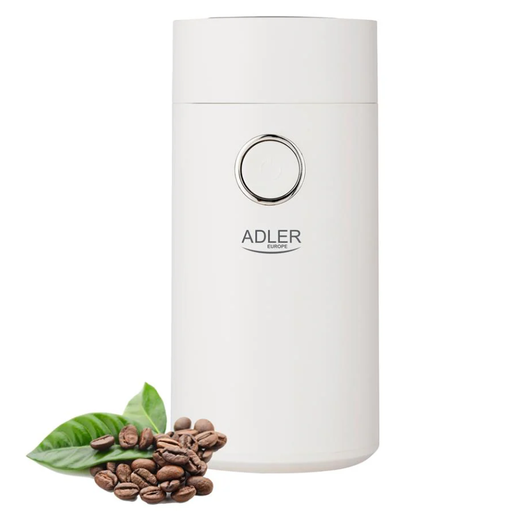
Why this product suits this profile: This compact grinder is designed for daily use with up to 75 grams of beans and features simple one-button operation.
The transparent lid lets you monitor the grinding process. The safety lock prevents the grinder from starting if the lid is not closed correctly.
150-W motor, metal container, retractable cable and 75-gram capacity.
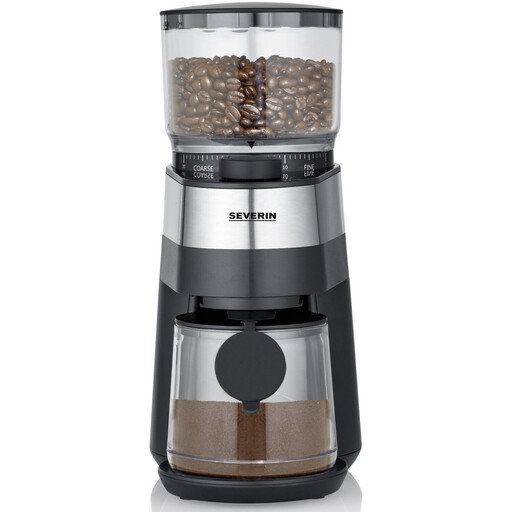
Why this product suits this profile: According to the product information, its 30 grind settings cover a range from very fine for espresso to coarse for French press.
The defined scale is easier to understand than relying solely on time control. The bean and ground-coffee containers are removable, making cleaning easier.
Stainless-steel flat burrs, 30 grind settings, quantity dosing for 2 to 12 cups and a 240-gram bean hopper.
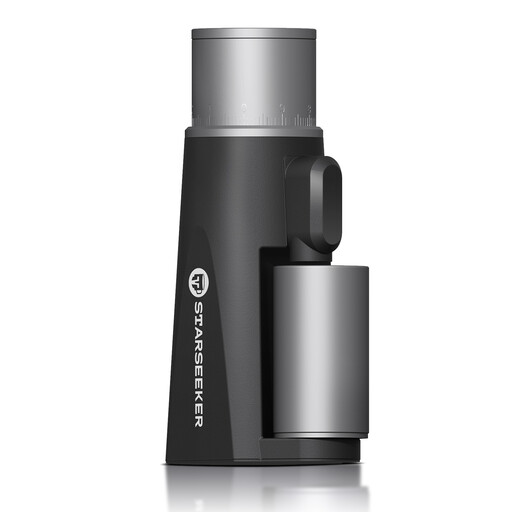
Why this product suits this profile: Its cordless design and 2,600-mAh battery are ideal for camping, travel, the office and households where it is used in different locations.
The product information lists 100 adjustment steps, while also warning that very light roasts may cause jamming at fine settings. This limitation should be considered when buying.
38-mm conical burrs, USB-C charging connection, magnetic design and, according to the product information, around 40 to 50 grinding cycles per charge.
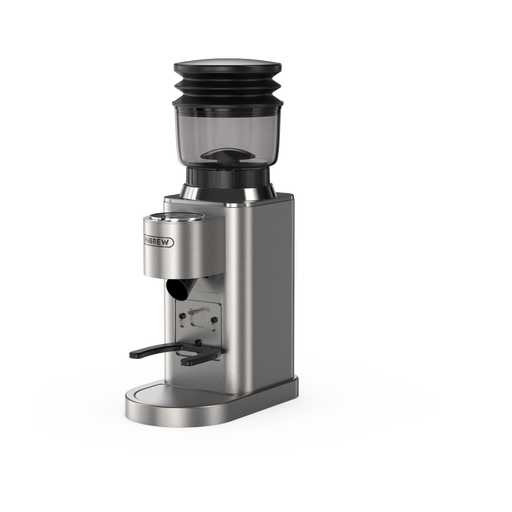
Why this product suits this profile: Its digital controls, 48 settings and timer are designed for users who regularly prepare espresso and different filter methods.
The 48-step adjustment and 0.1-second timing increments make dosing easier to repeat than stopping the grinder manually every time.
48 settings, 420 stainless-steel conical burrs, three modes for 51-, 54- and 58-mm portafilters, plus 150-W power.
We have put together a complete, regularly updated list of products that fully meet these strict selection criteria and the safety regulations applicable in the EU.
For espresso, a coffee grinder with an adjustable grind setting and a fine adjustment range is a sensible choice. Conical burrs with many settings or stepless adjustment make it easier to fine-tune the grind. A timer or quantity dosing function helps produce repeatable portions. A basic blade grinder may be impractical for espresso if a highly uniform particle size is required.
Its lifespan depends on the burrs, frequency of use, type of beans and cleaning routine. Taking regular breaks when grinding several portions, cleaning without water and observing the maximum operating time can reduce strain on the motor and burrs. Particularly oily or very hard beans should only be processed if the operating instructions state that the grinder is suitable for them.
A single grinding cycle usually takes only a short time, so energy consumption per portion generally remains limited. For running costs, the key factors are power, grinding time and daily use. A battery-powered model also needs to be charged regularly; with a mains-powered model, the voltage and frequency should match the specifications for a German household.