
Lieferung heute & morgen

Qualitätsgarantie

Willkommens-Angebote freischalten: KOSTENLOSE Lieferung | Bis zu 80 % RABATT | Kostenlose 30-Tage-JoyPlus-Testphase
App herunterladen
Anyone living in a small apartment, a student dorm, or a shared flat knows the problem: limited kitchen space. Juggling multiple pots, pans, and appliances is often impractical. An electric cooker can be a versatile and space-saving solution. It allows you to prepare quick and easy meals, from pasta and soups to hot pot, without needing a stove.
This article serves as a guide. We will introduce various models and explain the key features to consider when making your choice, helping you make an informed decision that suits your needs.
Choosing the right model depends on your individual cooking habits and space constraints. Here are three key criteria to make your decision easier.
The size of the pot is crucial. For one person or for preparing smaller portions like pasta or oatmeal, a volume of 1.5 to 2.5 liters is usually sufficient. These models are often designed as a portable electric cooker and are easy to store. For two to three people, or if you enjoy cooking for guests, a model with a 3 to 5-liter capacity is recommended. In addition to the volume, pay attention to the external dimensions to ensure the appliance fits on your countertop or in your cupboard.
The power, measured in watts (W), determines how quickly the pot heats up. Models with 600 to 800 watts are well-suited for slow cooking and keeping food warm. For rapidly boiling water, for instance for an electric noodle cooker, or for preparing an electric hot pot, appliances with 1000 watts or more are more advantageous. An electric multi-cooker with multiple heat settings offers the greatest flexibility. A low setting is ideal for simmering soups, while a high setting allows for searing or quick cooking.
A non-stick electric pot is a practical choice for easy cleaning and low-fat cooking. Food is less likely to burn, and residue can be effortlessly removed with a soft sponge after use. Look for a durable, PFOA-free coating. Some models offer additional inserts, such as stainless steel for steaming, which expands their functionality. A rice cooker with a frying function often combines a non-stick surface with enough power for searing, making it particularly versatile.
Based on the criteria mentioned, we have compiled a selection of models that stand out for their functionality and practical design.
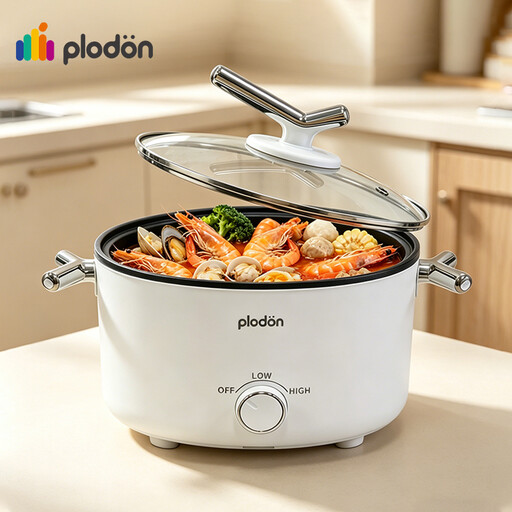
Why it stands out: This model is notable for its compactness and straightforward operation with two power levels, making it a great choice for novice cooks and small households.
Pros:
Who it's for: Ideal for students, singles, and professionals looking for a simple, space-saving solution for quick one-pot meals. A classic student-friendly cooker.
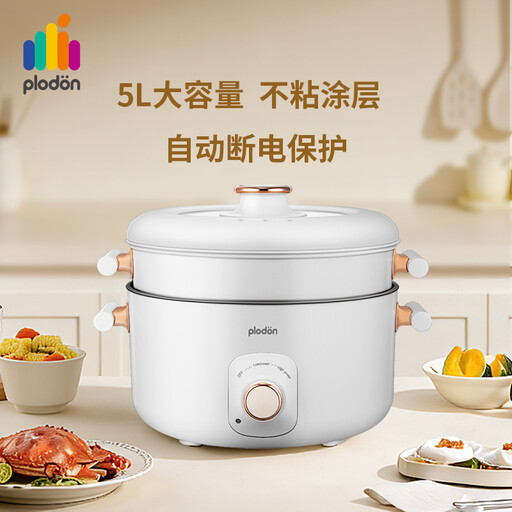
Why it stands out: With its large capacity and detachable steamer insert, this pot offers great versatility for preparing complete meals for several people.
Pros:
Who it's for: Suitable for couples, small families, or individuals who enjoy meal prepping and appreciate the added function of steaming.
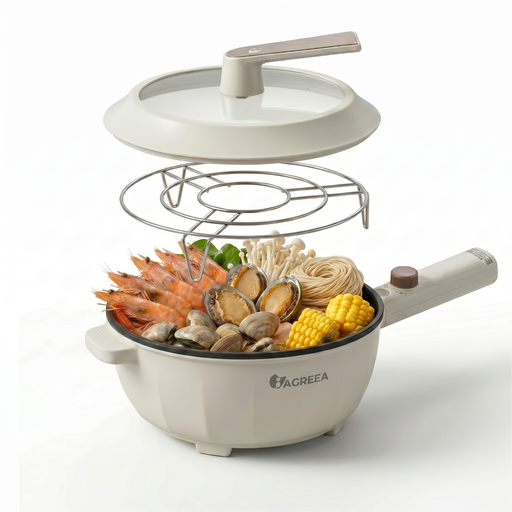
Why it stands out: This appliance distinguishes itself with its high power of 1600 W and three adjustable power modes, allowing for more precise temperature control and versatile cooking applications like searing.
Pros:
Who it's for: Perfect for ambitious home cooks and anyone looking for a true electric multi-cooker that can not only boil but also fry.
The models presented cover common use cases. However, if none of these appliances exactly match your needs or if you are looking for more specific features, it's worth exploring other options.
In our small pot category, you will find a wider selection of electric cooking appliances with different sizes and functions.
1. Can you also sear food in an electric cooker? Yes, some models are suitable for this. Look for high power (ideally over 1000 W) and adjustable heat settings. An electric multi-cooker or a model that explicitly mentions a frying function typically has the necessary power and a heat-resistant non-stick coating to sear ingredients like meat or vegetables.
2. How do you clean an electric cooker with a non-stick coating? Unplug the appliance and let it cool down completely. Then, wipe the inner surface with a soft cloth or sponge and a little mild dish soap. Do not use abrasive cleaners or steel wool, as they can damage the non-stick coating. Appliances with a detachable power cord are easier to handle during cleaning. Never submerge the entire unit in water.
3. How much electricity does an electric cooker use? Power consumption depends on the appliance's wattage and how long you use it. A 1000-watt (1 kW) model running for one hour on the highest setting will consume one kilowatt-hour (kWh) of electricity. Devices with adjustable power are more energy-efficient because they use a lower wattage for simmering or keeping food warm.