
Lieferung heute & morgen

Qualitätsgarantie

Willkommens-Angebote freischalten: KOSTENLOSE Lieferung | Bis zu 80 % RABATT | Kostenlose 30-Tage-JoyPlus-Testphase
App herunterladen
An electric cooking pot can be a practical addition for students, single people, couples, house shares and small flats. You can prepare pasta, rice, soup, porridge or a small hot pot without needing a fully equipped kitchen. A compact appliance can also be useful in the office, campervan or when camping.
However, there is a wide choice available: mini cooking pots, electric hot pots, multi-cookers and electric hot plates differ considerably in capacity, controls and cleaning requirements. If you focus only on wattage or product images, you may overlook important details.
An appliance with 1,500 or 2,000 watts can generally heat water more quickly than a 300- or 600-watt model. However, very high power is not always necessary for a small portion of soup or pasta. It can also place greater demands on the socket and the surface underneath.
What matters more is the relationship between power, capacity and intended use:
It is also important to check whether the temperature can be adjusted. Two power settings are enough for simple dishes, while continuously variable control gives you more control when simmering, frying or keeping food warm.
A non-stick coating can reduce rice, pasta or soup residue sticking to the surface and make cleaning easier. However, it is sensitive to metal utensils, abrasive sponges and deep scratches. If the coating is damaged, the pot should no longer be used in accordance with the manufacturer’s instructions.
Before buying, check whether:
An non-stick cooking pot is therefore not automatically dishwasher-safe. The specific care instructions for the model in question remain decisive.
Although a 1.0- to 1.6-litre mini cooking pot fits into small cupboards and is suitable as a cooking pot for students, space may be limited when preparing two large portions or sharing a hot-pot meal. Larger models with capacities of 2.3 to 2.4 litres are more suitable for couples or small households. Appliances with capacities of 5 or 6 litres are designed for families and several people, but require considerably more worktop space.
When cooking with liquids, the pot should not be filled to the brim. Some product instructions recommend using no more than around two-thirds of the capacity to help prevent boiling over and splashing.
1.0 to 1.6 litres is often enough for a single meal. If you want to steam rice with vegetables, cook soup and prepare several portions in advance, you should plan for 2.3 litres or more. A rice cooker with steamer offers additional options with a separate steaming insert, while a simple pasta cooker is usually more compact.
An electric hot pot with a glass lid lets you monitor the cooking process without lifting the lid. A steam valve can help control the pressure or release of steam more effectively. However, it does not replace careful handling: the lid and steam may be hot.
Check whether the appliance has only an on/off switch, two power settings or a continuously variable control. A high setting is usually sufficient for pasta and water. A lower setting is beneficial for rice, stews, porridge or slow simmering.
With a multi-cooker, preset programmes for rice, soup or steaming can make operation easier. However, these programmes do not replace monitoring the cooking time, as the quantity of ingredients, starting temperature and volume of liquid all affect the result.
For German households, a suitable 230-volt connection is important. Look for information about:
An electric hot plate such as the Clatronic EKP 3582 uses separate cookware and offers a 180-millimetre cooking surface, 1,500 watts and a continuously variable thermostat. This is particularly useful if you already own pots and need an additional cooking zone. For camping and office use, make sure the appliance is placed securely, stably and on a dry surface.
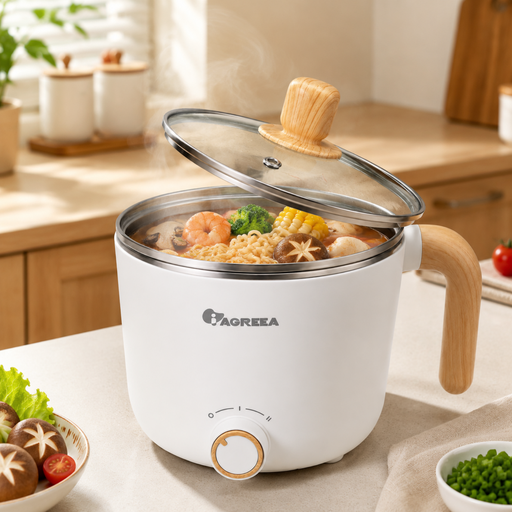
Why this product suits this profile: With a 1.0-litre capacity and 300/600 watts, this model is designed for small portions and limited storage space. The stainless steel inner pot is suitable for soup, rice, pasta and boiled ingredients.
The limited capacity prevents a small appliance from being used for quantities that are too large. Two power settings are easier to assess than vague marketing claims.
1.0 litre, 300/600 watts and a stainless steel inner pot in a compact design.
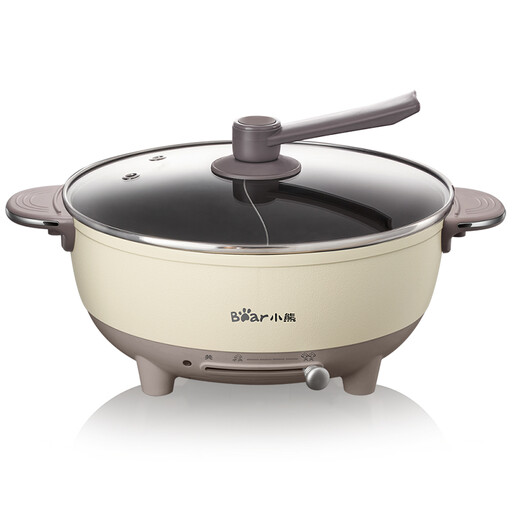
Why this product suits this profile: The 6-litre model is designed for households that want to prepare larger quantities or two flavours at the same time. According to the product information, the temperature can be adjusted continuously from 0 to 210 °C.
The specific capacity and temperature information makes the choice easier to understand. Because of its size, the pot should be placed on a sufficiently large, heat-resistant surface.
6 litres, 1,500 watts, separate sections and boil-dry protection according to the product description.
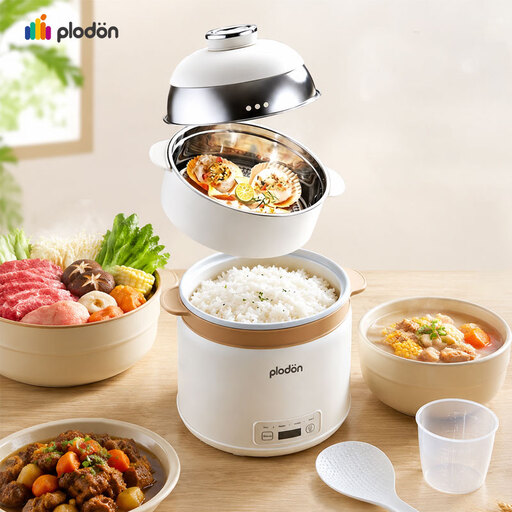
Why this product suits this profile: This multi-cooker combines programmes for rice, soup, porridge and steaming. The steaming insert allows food to be cooked at the same time above the 2.3-litre pot.
The functions are clearly specified rather than being described merely as general versatility. The maximum fill level of around two-thirds should be observed.
2.3 litres, touch controls, steaming insert and keep-warm function according to the product information.
We have put together a complete, regularly updated list of products that fully meet these strict selection criteria and the safety regulations applicable in the EU.
Place the electric cooking pot on a level, heat-resistant and stable surface. Keep cables, curtains and other flammable materials away from the heating surface. Do not leave the appliance unattended while it is operating, and open the lid carefully as hot steam may escape.
When cleaning:
Electricity costs depend on the power rating, operating time and electricity tariff. The simple calculation is: power in kilowatts × operating time in hours × price per kilowatt-hour. A 1,000-watt appliance running for 30 minutes uses 0.5 kilowatt-hours in theory. Keep-warm functions can increase consumption if they remain active for longer periods.
Yes, provided the model is designed for this use and enough liquid is added. With rice, the ingredient ratio and cooking programme are important. When cooking pasta, do not overfill the pot, as starch and rising foam can cause it to boil over.
Its lifespan depends on usage, cleaning, the coating, the cable and the heating element. Do not operate the appliance when empty, avoid scratches and store it in a dry place. If the cable is damaged, an unusual smell develops or the coating starts to come away, stop using the appliance and contact the manufacturer or retailer, referring to the instructions where necessary.
A portable cooking pot or electric hot plate is suitable only where an appropriate power connection is available. At campsites, check the power rating, connection requirements and permitted use. Outdoors, the appliance must be placed in a dry, sheltered location and kept at a safe distance from flammable materials.