
Lieferung heute & morgen

Qualitätsgarantie

Willkommens-Angebote freischalten: KOSTENLOSE Lieferung | Bis zu 80 % RABATT | Kostenlose 30-Tage-JoyPlus-Testphase
App herunterladen
An electric cool box can keep drinks, snacks and food chilled on the go – or, depending on the model, keep them warm. But not every model suits every use. A compact thermoelectric cooler for the passenger seat serves a different purpose to a powerful compressor cool box in a motorhome.
Typical buying mistakes come from three misunderstandings:
With a thermoelectric 12V cool box, heat is expelled via a semiconductor module. These devices are usually compact and can also be used as a cool and warm box. However, the cooling performance is often given as a difference from the ambient temperature. For a model that cools, say, 18 to 22 °C below the ambient temperature, the actual internal temperature depends on your location and the weather.
A compressor cool box works in a similar way to a small fridge. Suitable models can cover an adjustable range of around -20 °C to 20 °C, making them ideal as a cool box with a freezing function. For multi-day camping, fishing or storing frozen food, this type is usually more appropriate. That said, compressor models are generally heavier and more complex in construction.
Before you buy, check which connections are actually available:
An electric cool box for the car should have an adjustable battery protection feature if it’s going to run off the vehicle for a long time. Several protection levels can help reduce the strain on the starter battery. Even so, you should follow the instruction manual: running the box continuously with the engine off isn’t automatically suitable for every vehicle.
For a single person or short trips, 5 to 9 litres may be enough. For several travellers, around 18 to 25 litres is often more practical. For families, motorhomes or boats, models with 40 to 65 litres are worth considering. Dual-zone units split the interior into two temperature areas, for example for drinks and frozen items.
Also pay attention to:
A value of around 40 to 45 dB can be relevant for camping and overnight stays. However, the actual noise level also depends on the operating mode, surroundings and surface it’s placed on.
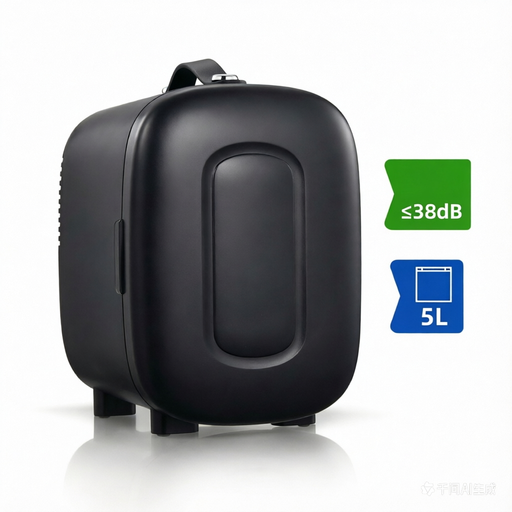
Why this product fits the profile: The compact 5-litre design is ideal for drinks, snacks or cosmetics in the car, bedroom and office.
The description lists separate cooling and warming functions, plus 240V AC and 9–12V DC operation. This reduces reliance on a single power source.
5-litre capacity, removable shelf and magnetic door seal; thermoelectric cooling with a warming function.

Why this product fits the profile: Two temperature zones, app support and multiple charging options appeal to users who prioritise features and technical control.
The stated temperature range of -20 °C to 20 °C is more specific than a simple ambient temperature reference. The app also allows control without needing the direct control panel.
45-litre usable capacity, dual-zone operation, AC, car and solar charging, plus a stated noise level below 38.5 dB.
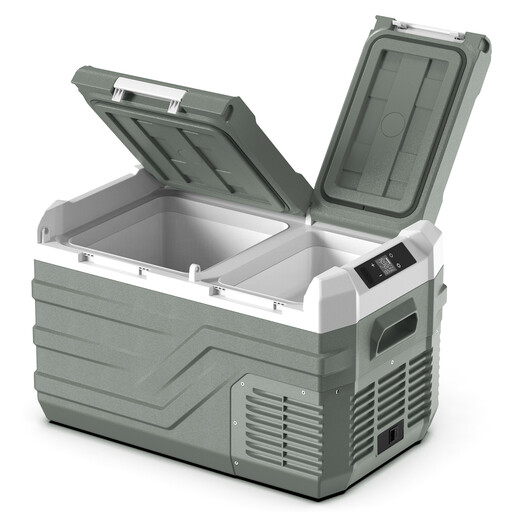
Why this product fits the profile: For camping, fishing and road trips, this model offers two temperature zones and a range designed for both cooling and freezing.
The specifications mention 12/24V DC and 100–240V AC operation, plus three battery protection levels. This documents the key points for longer mobile use.
23.3-litre total capacity, separately controllable zones, USB port and a stated noise level below 45 dB.

Why this product fits the profile: The large capacity and two storage compartments are designed for longer stays, several people and regular use.
Bluetooth app, LCD control panel and three battery protection levels address ease of use and continuous mobile operation. Average power consumption is stated as 45 W.
49.4-litre total capacity, 12/24V and 240V operation, two zones, wheels and a pull-out handle.
We’ve put together a full, regularly updated list of products that fully meet these strict selection criteria and the safety regulations in force in the EU.
Many models are connected via a 12V DC connection to the vehicle’s cigarette lighter socket. Before use, check the plug, fuse and the vehicle’s permitted power rating. For longer stationary periods, a model with battery protection or a separate power station is recommended.
The service life depends on the design, compressor, insulation, ambient temperature and operating mode. It’s not possible to give a precise running time across the board. For longevity, make sure there’s adequate ventilation, a dry location, an intact seal and that you clean it after use.
Running costs depend on power consumption, running time and electricity price. A device with 45 W uses 1.08 kWh in 24 hours if running continuously at full load; however, a compressor switches on and off depending on temperature and surroundings. The manufacturer’s figure for average power consumption is therefore more useful for comparison than the maximum wattage alone.