
Lieferung heute & morgen

Qualitätsgarantie

Willkommens-Angebote freischalten: KOSTENLOSE Lieferung | Bis zu 80 % RABATT | Kostenlose 30-Tage-JoyPlus-Testphase
App herunterladen
Alternating between sitting and standing at work is increasingly becoming the standard for an ergonomic workspace. An electric height-adjustable desk is a core component for achieving this. However, the market is flooded with models whose quality differences are difficult to spot at first glance. Many buyers invest in a product that shows defects after only a short time. This guide highlights the most common pitfalls and explains which technical features truly matter, enabling you to make an informed decision for your home office or professional workspace.
Before exploring the benefits, it's crucial to understand the typical problems that arise with low-quality models, which can negate their advantages entirely.
To avoid these problems, you should base your selection on objective technical parameters. The following three areas are crucial for the longevity and functionality of an electric height-adjustable desk.
The construction of the desk frame is the most important factor for stability. Look for models with a solid steel frame. T-shaped legs generally offer better weight distribution and stability than C-shaped legs, especially when fully extended. Some models use a dual-motor system, where each leg is powered by its own motor. This often results in a smoother, faster, and quieter adjustment, as well as greater stability compared to single-motor systems that distribute power via a drive shaft.
The quality of the motor significantly determines the user experience. Relevant metrics include the lifting speed (measured in mm/s) and the noise level (in dB). A quiet operation below 50 dB is considered pleasant. A key convenience feature is a desk with a memory function. This allows you to save several preferred heights (e.g., for sitting, standing, and an ergonomic office chair) and recall them at the touch of a button. An integrated anti-collision system, which stops the motor when it encounters an obstacle, is an important safety feature.
The size of the desktop should match your work requirements. For a setup with a laptop and a single monitor, a width of 120 cm is often sufficient. If you work with two or more monitors, you should consider a width of 160 cm or more. Useful additional features that promote a tidy workspace include integrated cable grommets, hooks for headphones or bags, and sometimes even USB ports directly on the control panel.
Based on the criteria above, we have identified several models suitable for different user profiles and requirements.
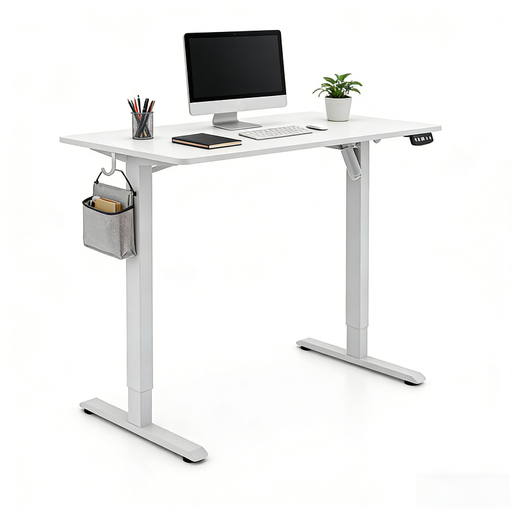
Why This Fits Their Persona: Ideal for users seeking a functional, electric height-adjustable desk for a smaller home office or student workspace. The compact 120 x 60 cm size provides enough space for a laptop and a monitor without dominating the room.
The steel frame ensures solid foundational stability. The motor is designed for quiet operation to avoid disrupting concentration—a direct counter to the pitfall of a loud drive system.
Delivers the core functionality of an electric sit-stand desk with a specified load capacity of 70 kg, which is sufficient for standard setups. Its minimalist design blends seamlessly into various interior styles.
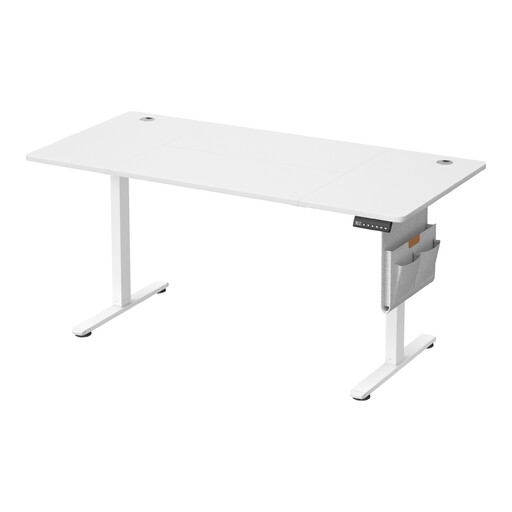
Why This Fits Their Persona: Perfect for professionals and creatives who need a large work surface for multiple monitors, documents, and peripherals. The generous 180 x 80 cm desktop allows for a productive and organized setup.
The robust steel frame is designed for the large desktop, minimizing wobble even when fully loaded. The integrated cable grommets and fabric organizer combat the chaos caused by a lack of cable management.
Equipped with a 4-height memory function, a USB-C charging port, and a quiet motor. These convenience features encourage regular use of the height adjustment and boost productivity.

Why This Fits Their Persona: For users who want a desk that is both functional and aesthetically pleasing for their home office. The rustic look adds a warm accent, while the 160 cm size strikes a good balance between workspace and footprint.
The quality motor ensures smooth and quiet height adjustment, avoiding the pitfall of a disruptive drive system. The solid steel frame guarantees stability, so aesthetics do not come at the expense of functionality.
Combines an attractive appearance with practical features like 4 memory height settings, a storage pouch, and cable grommets. The integrated anti-collision sensor enhances safety during daily use.
We've compiled a complete, up-to-date list of products that fully meet these strict selection criteria and safety regulations.
Most models come with detailed instructions and labeled parts. Assembly can typically be completed by one person in about 30 to 60 minutes. For larger desktops, a second person may be helpful for lifting the top onto the frame.
The power consumption is very low. In standby mode, most desks use less than 0.5 watts. Energy is only consumed during the lifting and lowering process, which amounts to just a few seconds over a normal day. Some models feature an additional energy-saving mode.
The maximum static load capacity (e.g., 70 kg) indicates how much weight the desk can support when stationary. More important is the dynamic load capacity—its stability during movement and under an uneven load. A solid steel frame and a high-quality motor design are crucial here to prevent wobbling when using monitor arms or heavier equipment. Ensure that your planned setup (monitors, PC, accessories) is well below the specified maximum load.