
Lieferung heute & morgen

Qualitätsgarantie

Willkommens-Angebote freischalten: KOSTENLOSE Lieferung | Bis zu 80 % RABATT | Kostenlose 30-Tage-JoyPlus-Testphase
App herunterladen
An electric dirt bike can deliver plenty of riding fun on private land, designated off-road tracks and suitable trails. However, before you buy, it shouldn't just be about motor power and range. Many offers look similar at first glance, but differ significantly when it comes to brakes, suspension, battery capacity and permitted use.
Manufacturer range figures often refer to assist mode and favourable conditions. Inclines, soft ground, rider weight, tyre pressure, temperature and frequent acceleration all reduce the actual distance you can achieve. A figure like "up to 85 km" or "up to 120 km" should therefore be taken as a guideline.
Also pay attention to:
A powerful motor alone doesn't make an electric off-road bike suitable for every terrain. On gravel, roots and uneven ground, full suspension, ground clearance, tyre tread and frame construction affect your control. An e-dirt bike with basic suspension can reach its limits more quickly when used regularly on demanding tracks.
Many electric dirt bikes are intended exclusively for private land or approved off-road tracks. As a rule, they may not be ridden on public roads, cycle paths, pavements or other public thoroughfares. Before ordering, you should check the details on vehicle class, registration, insurance and driving licence. The local regulations in force are what matter.
Motor power is usually given in watts. However, when choosing an electric off-road motorcycle, torque is also important because it affects acceleration and climbing on inclines. More power doesn't automatically mean greater safety. Beginners benefit from several riding modes and should start on the lowest setting on controlled ground.
Check:
A dirt bike with a 48 V battery offers a common system voltage for performance-oriented leisure models. The capacity in amp-hours, together with the voltage, shows how much energy the battery can nominally store. A 48 V battery with 23.4 Ah theoretically has more energy than a 48 V battery with 17 Ah. The range still depends on the terrain and your riding style.
A removable battery makes charging indoors easier. Only use the designated charger and charge the battery in a dry, well-ventilated area away from easily flammable materials.
For frequent off-road use, hydraulic suspension or a comparable suspension system, together with well-dimensioned brakes, are relevant selection criteria. A dirt bike with hydraulic disc brakes can allow precise modulation; however, the condition of the brakes, pads and discs remains crucial.
Before every ride, you should check:
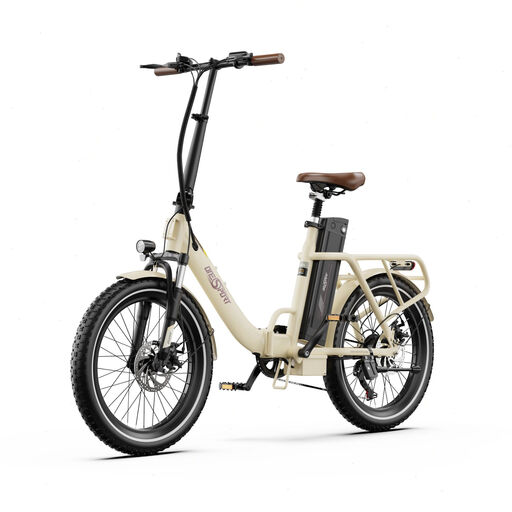
Why this product suits the profile: This model combines a 48 V battery with 17 Ah, 20 × 3 inch tyres and a stated range of up to 120 km in assist mode. It's suitable for buyers who want to compare basic technical data and are looking for a versatile off-road bike.
The battery and tyre data are clearly stated. This makes it easier to put the range claims into perspective, rather than deciding based on an isolated kilometre figure alone.
48 V system, 17 Ah battery, 20-inch tyres and front and rear disc brakes according to the product specification.
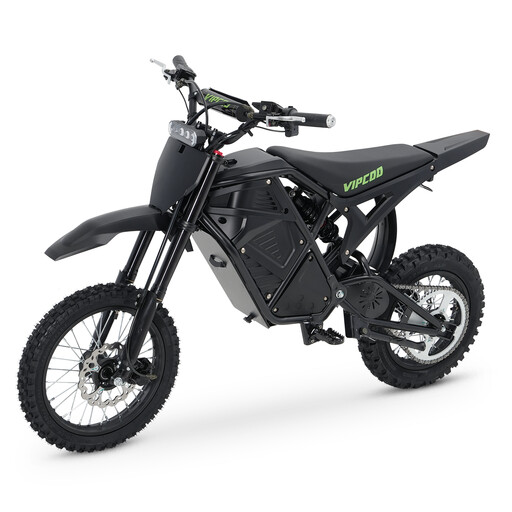
Why this product suits the profile: The VIPCOO H3 is aimed at users who value high motor power, full suspension and hydraulic disc brakes for use on private land or suitable off-road tracks.
The suspension and brake equipment are described in concrete terms. At the same time, the lack of road approval is explicitly stated.
3500 W motor, 48 V 23 Ah battery, front and rear hydraulic disc brakes and front and rear suspension according to the product specification.
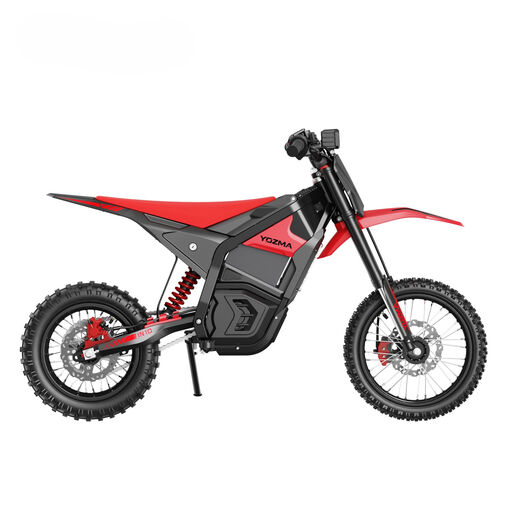
Why this product suits the profile: According to the product information, this electric mini dirt bike is intended for riders aged 16 and over, with a height of 120 to 185 cm and a maximum load of 120 kg.
Age, height, payload and off-road use are all specifically listed. The advertised range is also qualified as being dependent on terrain, riding mode and other conditions.
48 V 23.4 Ah battery, three riding modes, hydraulic suspension, puncture-proof tyres and a stated range of approximately 56 to 85 km.
We've put together a complete, regularly updated list of products that fully meet these strict selection criteria and the safety regulations in force in the EU.
An electric dirt bike is often delivered partially assembled. Follow the assembly instructions and, if you're unsure, have the vehicle checked by a qualified person before first use. Wear a suitable helmet, eye protection, gloves, knee and elbow pads, and sturdy footwear.
For young riders, use should only take place under responsible supervision. New riders should start on the lowest speed setting on clear, open ground. After each ride, a quick clean and visual inspection is recommended. The battery, charger and electrical components must not be opened or modified without authorisation.
The off-road models mentioned are not intended for public roads according to the product information. Cycle paths, pavements and other public thoroughfares are not automatically permitted either. Check local regulations and the details on registration and insurance before use.
The service life depends on cell quality, charge cycles, temperature, storage and charging habits. Only charge with the designated charger. Extreme temperatures, deep discharge and prolonged storage with a completely empty battery can affect its lifespan. The range per charge is not the same as the overall battery life.
In addition to electricity consumption, there are potential costs for wear parts such as brake pads, tyres, chain, sprockets and tubes. With off-road use, these parts can be subjected to greater stress. Also factor in maintenance, suitable protective gear and, if necessary, transport to an approved track.