
Lieferung heute & morgen

Qualitätsgarantie

Willkommens-Angebote freischalten: KOSTENLOSE Lieferung | Bis zu 80 % RABATT | Kostenlose 30-Tage-JoyPlus-Testphase
App herunterladen
An electric fan heater can warm cold rooms quickly and be moved flexibly between the bedroom, home office, living room or cellar. However, the range available can be confusing. High wattages, promises such as “instant warmth” and general room-size claims alone say little about how suitable a heater will be in everyday use.
If you focus only on the price or maximum heating output, you can easily overlook three important points:
Many portable fan heaters operate at 750 W, 1,500 W or 2,000 W. The required output depends not only on the number of square metres, but also on insulation, ceiling height, outdoor temperature and how quickly you want the room to warm up.
A lower setting may be sufficient for smaller, well-tempered rooms. A 2000 W appliance offers more power for medium-sized rooms, but it should not be left running permanently at the highest setting if a lower setting can maintain the desired temperature. Claims such as “suitable for 10 m²” or “up to 25 m²” should be treated as guidance rather than a guarantee of a specific room temperature.
A ceramic fan heater with a PTC heating element regulates its heat output using different operating levels. However, ceramic technology does not automatically mean lower electricity costs. The deciding factors are the selected power level, operating time and an effective temperature control system.
A fan heater with thermostat can switch the heating output on and off depending on the selected temperature. This is more practical than a heater that simply operates continuously. A fan heater with timer is suitable for set running times, for example in a home office or when briefly preheating a room.
An ECO mode can make operation easier and adjust the output automatically. However, it is not proof that the appliance generally uses less energy than every other type of electric heating. Compare the specific power levels and control options instead.
Look for:
A CE marking indicates that the manufacturer declares the product to meet the relevant EU requirements. It is not an independent test seal and does not replace checking the instruction manual. At 220–240 V and 50 Hz, the appliance should be designed for the German power grid.
A fan heater with oscillation distributes warm air across a wider angle. This can be useful when several people are seated in the room or in a wider space. For directing airflow beneath a desk, a fixed position is often sufficient.
A portable fan heater warms the air quickly, but it also produces fan noise and largely stops emitting heat once switched off. An electric oil radiator works more slowly, distributes heat more evenly across its surface and can remain warm for some time after being switched off. It is usually heavier and less compact, however.
For short periods of warmth in a home office or bedroom, a room heater with a timer and thermostat is practical. For longer, quieter use, an oil radiator may be worth considering. An energy-efficient fan heater is particularly useful when it is used selectively and at an appropriate power level.
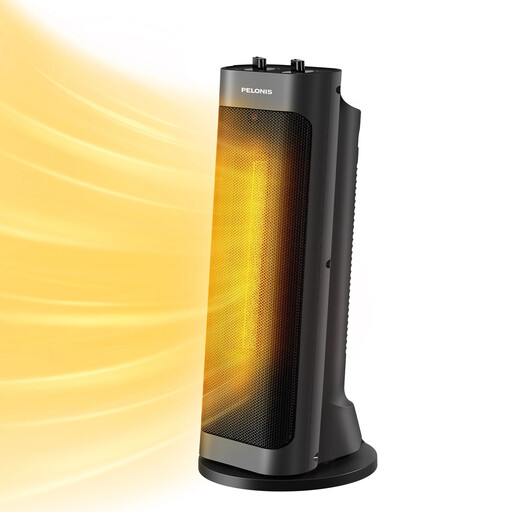
Why this product suits this profile: Its compact design and carry handle make it suitable for occasional heating in smaller rooms of up to around 10 m², according to the manufacturer.
Four heating modes, an adjustable thermostat, plus overheat and tip-over protection reduce the need to rely on a permanently high power setting.
PTC ceramic technology, 70° oscillation, stated noise level of 50 dB and maximum output of 2,000 W.

Why this product suits this profile: Suitable for users who want to combine a temperature display, touch controls, ECO mode and a longer timer.
The 24-hour timer and thermostat allow you to heat for a limited period instead of leaving the appliance running unnecessarily.
5 operating modes including ECO, adjustable thermostat, precise temperature display, plus overheat and tip-over protection.
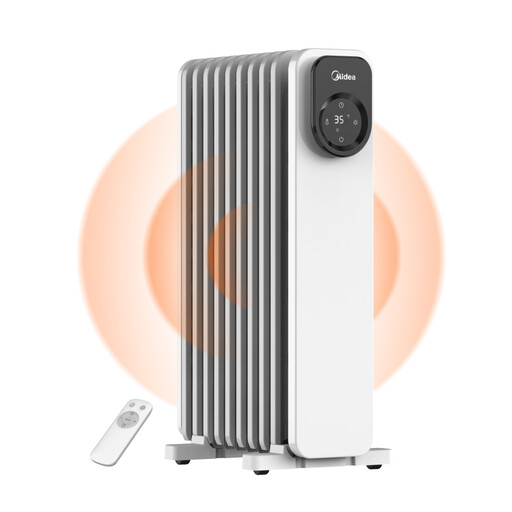
Why this product suits this profile: This portable oil radiator is designed for well-insulated rooms or occasional use and operates without a fan.
The fan-free design avoids typical fan noise. Its even heat distribution is well suited to longer, quieter periods of use.
2,000 W rated output, thermostat control, 9 fins, remote control, plus overheat and tip-over protection.
Place the appliance on a dry, level and stable surface. Keep it at least 1 m away from curtains, textiles, paper and other flammable objects. The air openings must remain clear. Do not use a fan heater in the immediate vicinity of a bath, shower or swimming pool unless the instruction manual specifies a suitable protection rating.
Even a model with a stated protection rating should not be treated as a licence to use it in damp environments. Always check the specific manufacturer’s instructions. If you notice visible damage, a damaged cable, an unusual smell or smoke, switch the appliance off and disconnect it from the mains.
We have put together a complete, regularly updated list of products that fully meet these strict selection criteria and the safety regulations applicable in the EU.
At full power, a 2,000 W appliance uses around 2 kWh per hour of operation. The cost is calculated by multiplying this consumption by your electricity price per kilowatt-hour. A thermostat, timer and lower power settings can reduce the actual running time or output, provided they maintain the desired room temperature.
A fan heater can be suitable for briefly preheating a room. If you plan to use it while sleeping, pay attention to the manufacturer’s instructions, noise level, clearance from textiles and available safety features. A timer prevents the appliance from running for longer than intended. It should never be covered or placed directly next to bedding.
Its service life depends on operating time, exposure to dust, storage conditions and build quality. Keeping the air inlets clear, storing the appliance in a dry place and cleaning it according to the instructions can help maintain its performance. Stop using the appliance if the casing, cable or plug is damaged. It is also important to check whether spare parts and customer service information are available.