
Lieferung heute & morgen

Qualitätsgarantie

Willkommens-Angebote freischalten: KOSTENLOSE Lieferung | Bis zu 80 % RABATT | Kostenlose 30-Tage-JoyPlus-Testphase
App herunterladen
An electric fan heater can warm individual rooms quickly, but it is not the right heating solution for every situation. Bedrooms, living rooms, offices and studies have different requirements when it comes to noise levels, power, controls and the space available. If you focus only on a high wattage or terms such as “Eco”, you can easily overlook important details.
A 2,000-watt appliance can heat a room significantly in a short time, but it also uses a corresponding amount of electricity when operating at full power. The simple calculation is:
Power in kW × operating time in hours × electricity price per kWh = running costs
A 2,000-watt heater uses 2 kWh when running at full power for one hour. An energy-efficient fan heater does not automatically reduce consumption through its heating element. Instead, savings usually come from thermostat control, lower power settings or an ECO mode. The key question is whether the appliance automatically reduces its output or switches off once the target temperature has been reached.
Noise levels matter when choosing a fan heater for a bedroom or office. Terms such as “Silent” or “Ultra Quiet” should be accompanied by a specific decibel rating. Even a fan operating at a moderate volume can be noticeable at night. Convector heaters and oil-filled radiators generally work without a fan, which can make them worth considering for noise-sensitive users.
Overheat protection and tip-over protection are important features, but they do not eliminate every risk. A fan heater must not be covered and should be positioned away from curtains, furniture, paper and textiles. An ordinary portable electric heater is generally not intended for bathrooms or other damp areas. Always follow the manufacturer’s information regarding the appliance’s protection rating and intended area of use.
The right output depends on factors including room size, insulation, outdoor temperature and how quickly you want the room to heat up. A specification such as “suitable for 20–25 m²” should therefore be treated as the manufacturer’s guideline, not a guarantee for every home.
A ceramic fan heater with a PTC heating element can provide heat quickly. However, ceramic technology alone does not automatically mean lower electricity consumption. Here too, the main factors are operating time and the way the appliance regulates its output.
A fan heater with a thermostat should offer a clear temperature setting and automatic regulation. Depending on the model, the target temperature may be adjustable between 5 and 35 °C, for example. A fan heater with a timer switches the appliance off after a set period, helping to prevent unnecessary continuous operation.
A remote control is convenient when the appliance is placed in the living room or bedroom. However, it should not encourage you to leave the fan heater running unattended for long periods. Also check whether the timer covers 12 or 24 hours, and whether the ECO mode actually reduces the output or simply switches between two settings.
A compact fan heater takes up little space and is easy to move. An electric radiator or oil-filled radiator, by contrast, is generally larger and heavier, but releases heat more evenly over a longer period. The following applies to all types:

Why this product suits this profile: This compact ceramic fan heater offers four operating modes, a remote control and an adjustable temperature range from 5 to 35 °C. It is suitable for individual rooms and changing locations.
The thermostat, ECO mode and programmable 24-hour timer support heating based on actual demand rather than continuous operation at full power.
Temperature range from 5 to 35 °C, oscillation, tip-over protection and overheat protection according to the product description.

Why this product suits this profile: This model combines five modes, an ECO function, thermostat, 24-hour timer and an integrated carry handle. It is a good choice for users looking for several control options in one appliance.
Automatic regulation and several heating levels provide more control than an appliance that simply switches on and off.
PTC ceramic technology, ECO mode, tip-over protection and overheat protection according to the manufacturer’s specifications.
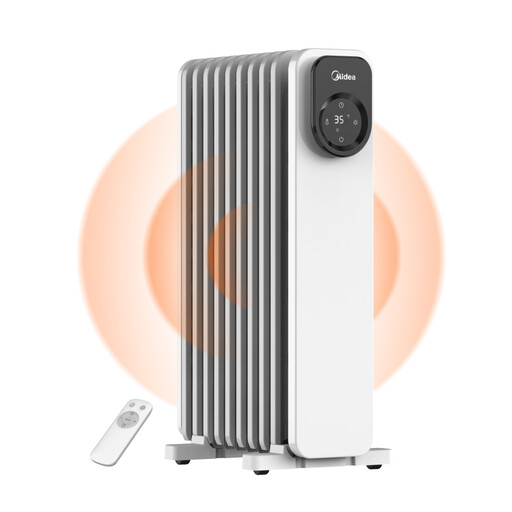
Why this product suits this profile: This portable electric heater with nine fins is designed to provide additional warmth in well-insulated rooms or for occasional use. It operates without a fan, making it suitable for living rooms and bedrooms where quiet operation is important.
The oil-filled design avoids the common expectation that a fan heater will operate silently, while continuing to release heat after it has been switched off.
2000 watts rated output, thermostat, remote control, plus overheat and tip-over protection according to the product description.
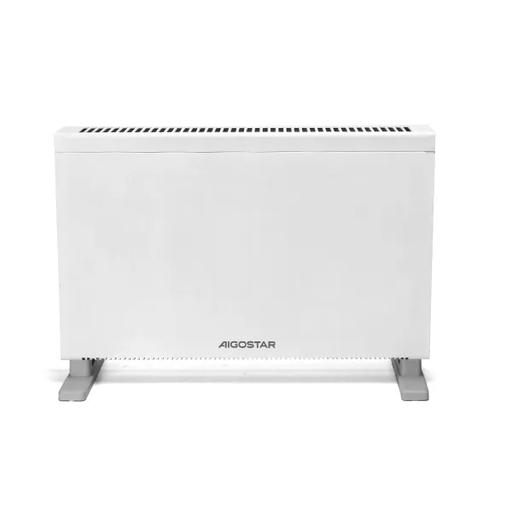
Why this product suits this profile: According to the product information, this convector is designed for areas of around 20 to 25 m² and offers ECO, 1250-watt and 2000-watt settings, as well as a temperature range from 5 to 35 °C.
The specified power settings make it easier to avoid heating continuously at maximum output. The timer can further limit operating time.
Natural convection, LED touch controls, remote control, plus protection against overheating and tipping over.
We have put together a complete, regularly updated list of products that fully meet these strict selection criteria and the safety regulations applicable in the EU.
Consumption depends on the output and operating time. A 1,500-watt appliance uses 1.5 kWh when running at full power for one hour, while a 2,000-watt model uses 2 kWh. A thermostat, timer and ECO mode can reduce the actual operating time, but they do not change consumption while the appliance is running at full power.
A fan heater is generally not the right solution for permanently heating an entire home. It is primarily suitable as an additional heater for individual rooms or short periods of use. Before buying, you should consider the insulation, room size and existing heating system.
It is not possible to give a reliable general lifespan. This depends on operating time, exposure to dust, storage conditions and build quality. Regularly cleaning the air intake, storing the appliance in a dry place and following the instructions can help maintain its usability. If the cable is damaged or you notice an unusual smell, smoke or sparks, switch the appliance off immediately and do not use it again.