
Lieferung heute & morgen

Qualitätsgarantie

Willkommens-Angebote freischalten: KOSTENLOSE Lieferung | Bis zu 80 % RABATT | Kostenlose 30-Tage-JoyPlus-Testphase
App herunterladen
An electric fan heater can warm bedrooms, home offices or smaller living areas quickly and temporarily. The choice ranges from simple portable heaters to ceramic fan heaters with thermostats, timers, remote controls and ECO modes. However, this variety of features can make comparisons difficult: not every advertised feature will be relevant to your room.
A 2000 W fan heater can warm the air quickly, but at full power it naturally uses a corresponding amount of electrical energy. The power rating describes the maximum consumption, not necessarily the actual running costs. A heater with a thermostat or ECO mode can reduce its heating output at certain times. Even so, the principle remains the same: an energy-saving fan heater does not produce more heat from less electricity; it simply adjusts more appropriately to demand or operates at a lower setting.
A fan heater with a fan will inevitably produce airflow and motor noise. Without a specific dB rating, “quiet operation” remains a vague marketing claim. For bedrooms and offices, documented noise levels, multiple power settings and a display that can be switched off are practical criteria.
A fan heater with overheat protection and tip-over protection provides additional technical safeguards. Nevertheless, it must not be covered, used on bedding or operated near curtains. Water, damp rooms, damaged cables and unsuitable extension leads or multi-socket adaptors increase the risk regardless of any built-in safety switches.
For small, well-insulated areas, a heater with an output of 1200 to 1500 W may be sufficient. A 2000 W fan heater offers more power to spare, but is not automatically suitable for large or poorly insulated rooms. Check the room size specified by the supplier and consider the window area, ceiling height and existing central heating.
A model with several settings is more flexible: a low setting is suitable for maintaining the temperature, while a higher setting can be used to warm the room initially. The “1500 W” rating should also be compared with the actual settings, as product descriptions sometimes specify different figures for individual operating modes.
A ceramic fan heater with a PTC heating element adjusts the element’s electrical conductivity according to its temperature. This can support consistent regulation, but does not replace complete energy consumption data. PTC heaters are often designed in a compact format and combined with oscillation.
A convector mainly warms the room through natural air circulation and operates without fan noise. However, the heat is often distributed more slowly. According to its product description, the Aigostar Convector Heater 2000W is offered with natural convection, two power settings and a remote control. The stated suitability for 20 to 25 m² should be understood as the manufacturer’s specification, not a universal guarantee.
A fan heater with a thermostat lets you set a target temperature. Clear temperature ranges, such as 5 to 35 °C, and an easy-to-read display are useful features. A fan heater with a timer can switch off after a set period and is suitable for limited periods of use.
A remote control is particularly useful when the heater is positioned next to your desk or bed. Check whether it controls only the power or also the temperature, oscillation and timer. For use at night, a dimmable display and low noise level are also important.
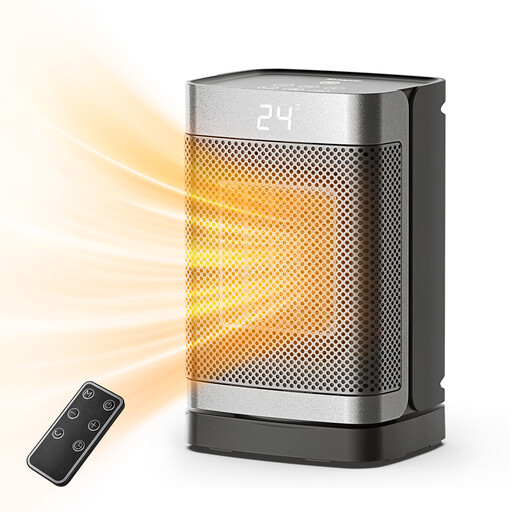
Why this product suits the profile: This compact heater offers two heating settings, digital temperature control, a remote control and a 12-hour timer for bedrooms, home offices or offices.
The two power settings mean that maximum output is not the only operating mode. According to the product description, overheat and tip-over protection are integrated.
PTC heating element, LED display, oscillation and 220–240 V design according to the product data.

Why this product suits the profile: For bedrooms and workspaces, the product description specifies a noise level of 25 to 42 dB, a thermostat range of 5 to 35 °C and a remote control.
The specific dB rating makes it easier to compare with general claims such as “whisper-quiet”. Several power settings allow you to choose the output to suit your needs.
PTC ceramic heating, a 12-hour timer, tip-over protection and overheat protection according to the product specifications.

Why this product suits the profile: Four heating modes, ECO mode, a 24-hour timer, oscillation and a remote control appeal to users who regularly make use of a wide range of settings.
The ECO mode and adjustable thermostat do not simply eliminate unnecessary continuous operation; they regulate the heater according to the selected parameters.
Temperature adjustment from 5 to 35 °C, plus stated safety features for overheat and tip-over protection.
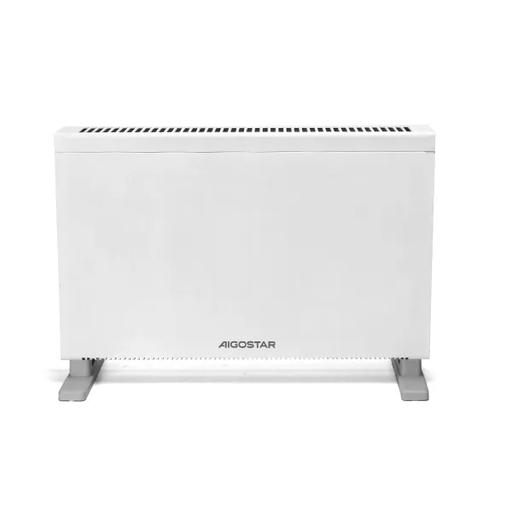
Why this product suits the profile: The convection design is appealing to users who prefer a heater without a conventional fan and want to regulate the temperature across a larger area.
The power settings, thermostat range and timer function are clearly described in the product data, making them easier to verify.
Natural convection, LED touch controls, remote control and stated tip-over protection.
We have put together a complete, regularly updated list of products that fully meet these strict selection criteria and the safety regulations applicable in the EU.
Before switching the heater on, read the instruction manual and the information on the rating plate. The fan heater should:
A CE mark is relevant for many electrical appliances sold in the EU, but it does not indicate heating output or suitability for your individual needs. Information such as GS, RoHS or CE should be clearly stated in the product description or visibly marked on the appliance.
At full power, consumption is approximately 2 kWh per hour of operation. The actual cost depends on your individual electricity tariff and the running time. A thermostat, timer and lower power settings can reduce the operating time or average power consumption.
This depends on the instruction manual and safety requirements for the particular model. Even with tip-over and overheat protection, a fan heater remains an actively heating electrical appliance. For use at night, ensure that it is positioned securely, has an unobstructed air supply, is kept away from textiles and features automatic shut-off. When you are away, the appliance should be switched off and unplugged.
Its lifespan depends, among other things, on operating time, exposure to dust, storage conditions and the quality of the cable, switch and heating element. Clean the air inlets regularly in accordance with the manufacturer’s instructions, avoid moisture and do not use an appliance with visible damage.