
Lieferung heute & morgen

Qualitätsgarantie

Willkommens-Angebote freischalten: KOSTENLOSE Lieferung | Bis zu 80 % RABATT | Kostenlose 30-Tage-JoyPlus-Testphase
App herunterladen
An electric fan heater can warm a room temporarily without requiring a permanently installed heating system. This makes a portable electric heater practical for bedrooms, home offices, offices or smaller living areas. However, high wattage ratings, vague energy-efficiency claims and missing safety information often lead to poor purchasing decisions.
This guide explains which technical specifications really matter, which features are worthwhile and which model suits different usage scenarios.
An electric 2,000-watt fan heater delivers substantial heating power, but at full output it also consumes 2 kWh per hour of operation. At an assumed electricity price of €0.35 per kWh, this works out at around €0.70 per hour. The actual cost depends on your electricity tariff and operating time.
An energy-efficient fan heater does not automatically use less electricity simply because it features PTC ceramic technology or an ECO mode. Savings can result when a thermostat regularly switches the heating element off or reduces its output. The control system therefore matters more than the heating element alone.
The noise level of a fan heater is particularly important at night or in an office. Claims such as “quiet operation” are difficult to assess without a decibel rating. According to the manufacturer, a model rated at 34 dB should be assessed differently from a device rated at less than 51 dB. However, the figures may vary depending on the measuring distance and operating mode.
An overheating-protected fan heater should interrupt the power supply if the temperature becomes unusually high. An additional tip-over protection feature switches the appliance off if it loses its stable position. Neither function replaces safe placement. The device must not be covered and should be kept away from curtains, paper, clothing and furniture.
For targeted heating at a desk or in a small home office, a lower power setting may be sufficient. Models rated at 1,500 to 2,000 watts offer greater reserves for larger interiors, but they also increase electricity costs during longer periods of use.
Look for:
A thermostat switches the heating element on and off based on the measured room temperature. It cannot maintain an exactly constant temperature in every room, but it can help prevent unnecessary continuous heating.
A ceramic fan heater or PTC fan heater uses a ceramic heating element with a positive temperature coefficient. Its electrical output changes depending on the temperature of the element. This does not automatically mean lower energy consumption than with other electric heaters. What matters is how the power settings, thermostat, timer and airflow work together.
A PTC fan heater may be appealing when rapid warmth, compact dimensions and multiple operating modes are priorities. With every model, you should also consider the air outlet, stability and ease of cleaning.
A fan heater with timer can switch off automatically after a preset period. This is useful for limited periods of use in a home office or before going to sleep. Depending on the model, the timer may range from 1 to 12 hours or up to 24 hours.
A remote control makes it easier to operate the device from the sofa or bed. A fan heater with oscillation distributes warm air across a wider angle. This can be useful in a shared room, but it does not replace suitable heating power or unobstructed air circulation.
Connect the fan heater directly to a suitable, grounded wall socket. With appliances rated at 1,500 to 2,000 watts, avoid multi-socket adapters and unsuitable extension cables. Before buying, check the information on overheating protection, tip-over protection, the housing, mains plug and user manual.
CE marking and, where applicable, GS certification should be clearly verifiable on the product and in the accompanying documentation. CE marking indicates compliance with applicable EU requirements, but it is not a general quality rating.
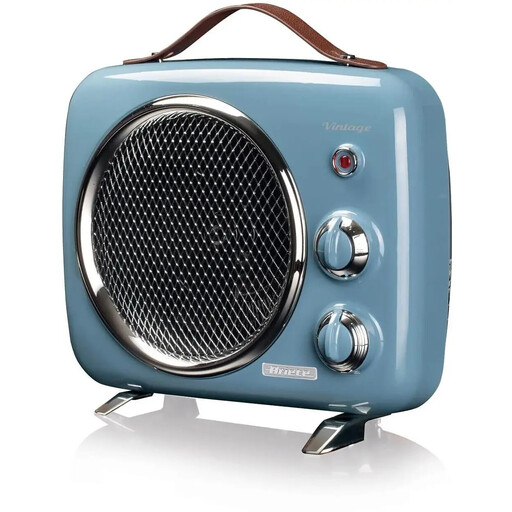
Why is this model a good fit? This portable fan heater offers 2,000 watts, an adjustable thermostat and a carry handle. It is therefore well suited to changing locations such as a home office, bedroom or living room.
The product description specifies automatic overheating shut-off and an adjustable thermostat rather than simple continuous heating.
2,000 watts, carry handle, adjustable thermostat and compact dimensions according to the product specifications.

Why is this model a good fit? Four heating modes, a remote control, a 24-hour timer, a thermostat ranging from 5 to 35°C and oscillation cover a wide range of everyday situations.
The stated noise level ranges from approximately 38 to 50 dB depending on the setting. This puts the claim of quiet operation into a more meaningful context.
Remote control, ECO mode, oscillation, plus overheating and tip-over protection according to the product description.
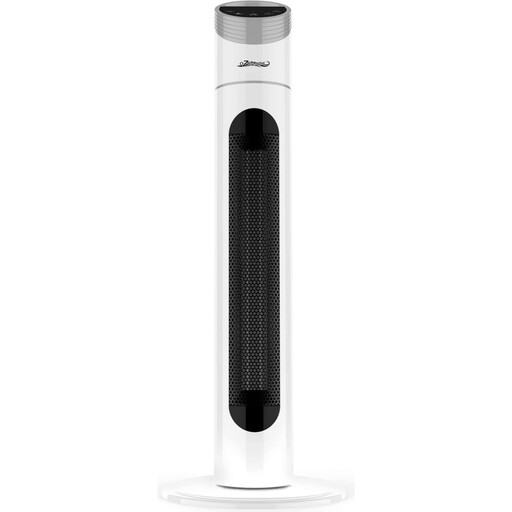
Why is this model a good fit? This compact PTC fan heater is suitable for users looking for a portable supplementary heater with two power settings and 120-degree oscillation.
The description explicitly mentions tip-over protection, overheating protection and a minimum distance of approximately one metre from flammable objects.
2,000 watts, PTC ceramic technology, 120-degree oscillation and portable design according to the product data.
The Electric Heaters category features a current selection of appliances with different power settings, controls and safety features.
At full power, a 2,000-watt appliance uses 2 kWh per hour. At €0.35 per kWh, this equates to approximately €0.70 per hour of operation. A thermostat, ECO mode and a lower power setting can reduce the time spent operating at full output. Your actual costs depend on your electricity tariff.
Unattended operation should generally be avoided. If the manufacturer provides a timer function, it can limit the operating time. Place the appliance on a hard, level surface, keep the air outlet and air inlet clear, and follow the instructions in the user manual. In a bedroom, you should also take the noise level into account.
Its service life depends on operating time, exposure to dust, storage conditions and the condition of the cable and plug. Clean the air openings regularly while the appliance is switched off and has cooled down. If the cable is damaged or you notice an unusual smell, sparks or repeated automatic shut-offs, stop using the appliance.