Flatbread makers with limited worktop space
If you make individual flatbreads, you’ll need to balance the cooking surface, external dimensions and the space needed to use the appliance.


For making individual thin flatbreads, a flat crepe maker is an obvious choice; what matters is its full external dimensions and the cooking surface you need. If you want to use the same appliance for other dishes, a deeper multi-purpose pan may be a better fit – but its sides and extra space requirements will need to suit both your flatbread and your worktop. Measure the space where you plan to use it and check the dimensions of the specific model, rather than comparing cooking-surface diameters alone.
If you make individual flatbreads, you’ll need to balance the cooking surface, external dimensions and the space needed to use the appliance.
If you’d like to make other dishes as well as flatbreads, consider whether the extra versatility of a pan with sides and a lid is worth the space it takes up.
If you put the appliance away after use, consider not only its footprint but also its cable storage, removable parts and cleaning requirements.
When worktop space is at a premium, your choice depends on whether footprint, flatbread size, versatility or ease of cleaning matters most.
| Consideration | What to check before buying | Who is it important to? |
|---|---|---|
| Worktop space and storage | Check the full external dimensions, including controls, and allow room to turn the flatbread and position the appliance safely. | If the available worktop space is my main constraint, the full footprint, including room to use the appliance, matters most. Around 36% of consumers put available space first. |
| Cooking surface and ease of use | Compare your preferred flatbread diameter with the cooking surface, and check whether a flat or deep design suits the way you spread and turn the dough. | If I want to make flatbreads of a particular size and turn the dough easily, the cooking surface needs to be right. Around 29% of consumers prioritise flatbread size and ease of use. |
| Versatility | Think about what else you’d like to cook, then compare the sides, lid, capacity and cooking surface of the specific model. | If I want to make other dishes as well as flatbreads with one appliance, its extra functions need to justify the space it takes up. Around 21% of consumers prioritise versatility. |
| Cleaning and storage | Check separately whether parts are removable and dishwasher-safe; also consider the cleaning instructions and storage space required. | If I need to clean and put the appliance away after cooking, I pay particular attention to care and storage. Around 14% of consumers put these considerations first. |
The diameter of the cooking surface doesn’t necessarily tell you the appliance’s full external dimensions. For the CM 2198 and CM 1300 crepe makers, Severin and CASO Design respectively list footprints larger than the cooking diameter. You’ll also need enough room to use the appliance.
Measure your worktop and storage space, then compare them with the product’s full dimensions, not just the plate size.
Sides, a lid and a larger capacity can make other types of cooking possible, but they also affect how you spread and turn thin flatbreads.
First decide whether thin flatbreads or other dishes are your priority, then check the design of the specific model.
According to the manufacturer, the plate on the Severin CM 2199 is removable, but the individual parts are not dishwasher-safe.
Check whether parts are removable and dishwasher-safe separately in the instructions for the specific model.
The CM 2198 and CM 2199 differ in cooking-surface size, removability and the space they require.
The PZ-2964 and PZ-9135 multi-purpose pans combine a cooking surface with other functions, but differ in diameter and capacity.
The CM 1300 is a rimless electric plate for buyers who want to make a larger thin flatbread on a flat cooking surface.
Cloer offers crepe and pancake makers as other flat-appliance options.
The electric Party-Time Crepe Maker 202 is another plate designed for crepes; Ariete also suggests using it to make filled wraps.
This selection includes crepe makers and griddles for thin flatbreads. Compare the listed sizes with your available worktop and floor space, and check the product identity, required markings and safety information for the specific appliance.
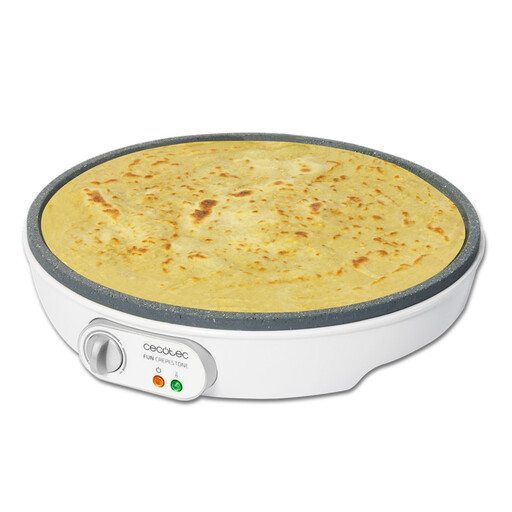 No image available
The flat crepe-maker design is made for thin flatbreads; compare the cooking surface with the space you have available.
30,5 cm diameter; 1.000 W; adjustable temperature; non-stick coating; spatula and batter spreader included.
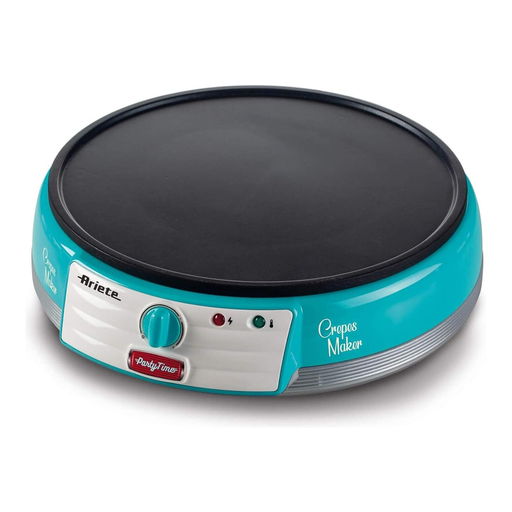 No image available
The flat crepe-maker design may suit thin flatbreads, provided the listed appliance dimensions fit your kitchen.
33 × 33 × 9,5 cm; 1.000 W.
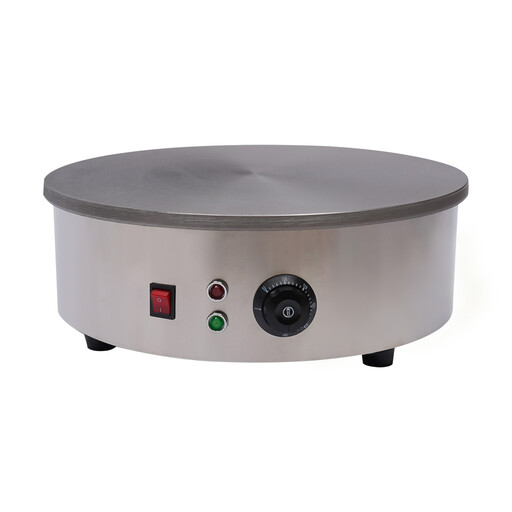 No image available
This crepe-maker design is intended for thin flatbreads; check that you have enough worktop space for the listed size of 17.7 Inch.
3 kW; temperature control; batter spreader and spatula included; described as a commercial model.
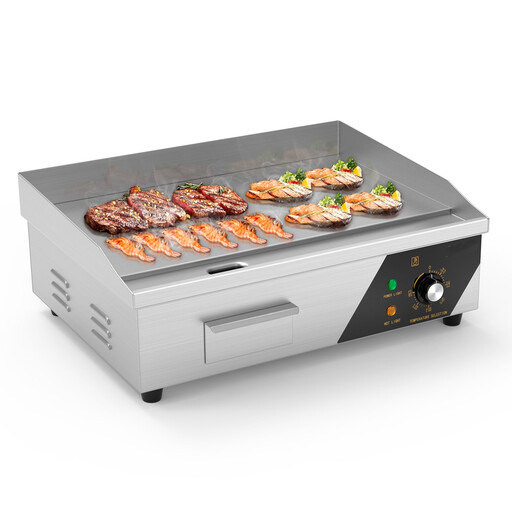 No image available
The listed size of 22 Inch suggests a generous cooking surface; check that the appliance and room to use it will fit your worktop.
3.000 W; 220 V; stainless steel.
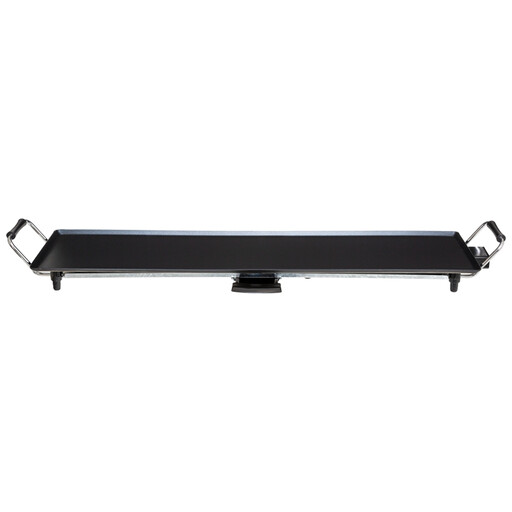 No image available
At 90 cm, this model is only an option if you have enough space to set it up and store it.
Electric plancha.
No, the plate diameter alone doesn’t show how much worktop space the appliance needs. Severin lists a 30 cm cooking diameter and external dimensions of 30,5 × 34,5 cm for the CM 2198; CASO Design gives a 33 cm cooking diameter and a footprint of 33 × 35,5 cm for the CM 1300. Allow extra room to use the appliance safely.
Follow the instructions for the specific appliance. Severin advises against using sharp or metal utensils with the CM 2198 and states that its individual parts are not dishwasher-safe. The removable plate on the CM 2199 doesn’t automatically mean it can go in the dishwasher either.
When you buy from a retailer in Germany, your statutory consumer rights are a claim against the seller; a guarantee is an extra, voluntary promise with its own terms. The Verbraucherzentrale explains that, if a product is faulty, the first step may be to ask for it to be repaired or replaced.
No, a required CE mark is not official safety approval. According to information from the European Union’s Your Europe service, it forms part of the applicable EU conformity requirements for the products concerned; in general, the manufacturer uses it to declare that the product complies. For a specific listing, check the appliance identity, markings and required safety information.
No, old electrical appliances must be collected separately. The German Environment Agency explains the take-back and disposal rules under Germany’s Electrical and Electronic Equipment Act; check which return option is available locally.