
Lieferung heute & morgen

Qualitätsgarantie

Willkommens-Angebote freischalten: KOSTENLOSE Lieferung | Bis zu 80 % RABATT | Kostenlose 30-Tage-JoyPlus-Testphase
App herunterladen
An electric food chopper promises to drastically reduce tedious prep time in the kitchen. No more tears when chopping onions, no more endless dicing of herbs or meat. But the reality is often different: many devices turn out to be a bad investment, causing more frustration than joy. Before you decide on a model, it's crucial to know the typical weaknesses that often only become apparent after the purchase.
As your Joybuy Product Recommendation Officer, I'm here to help you separate the wheat from the chaff. We'll look at which features truly matter and how you can find a device that performs its job reliably and safely.
Many buyers are swayed by marketing promises instead of paying attention to the technical details. This often leads to disappointment. Here are the three most common problems:
To avoid these pitfalls, you should check three core aspects before buying. These determine whether a multi-chopper will be a genuine help or just another unused gadget in your cupboard.
The pure wattage is only half the story. A 300-watt motor can be more efficient than a 500-watt motor if it is better engineered. The crucial factor is the maximum continuous runtime specified by the manufacturer. Reputable manufacturers provide a clear duty cycle, for example, "40 seconds of operation, followed by a 2-minute pause." This specification is an indicator of the motor's durability and protects you from the overheating problem. A device without this information should be viewed with caution.
The choice of container directly impacts hygiene, longevity, and handling.
The capacity is also important. For quickly chopping an onion or some herbs, 0.5 litres is sufficient. For preparing meals for the whole family, such as minced meat or larger quantities of vegetables, 1.5 to 2 litres are recommended.
The efficiency of a mini chopper depends heavily on its blades. Models with four blades (a quad-blade system) arranged at different heights ensure a more even result than simple two-blade systems. The material of choice is rust-free 304 stainless steel, as it is food-grade, robust, and corrosion-resistant.
An indispensable feature is a functioning safety lock. The motor should only start when the lid is correctly attached and locked in place. A non-slip rubber ring on the base of the container provides additional stability during operation.
Based on these objective criteria, we have identified a few models that are well-suited for different user profiles.
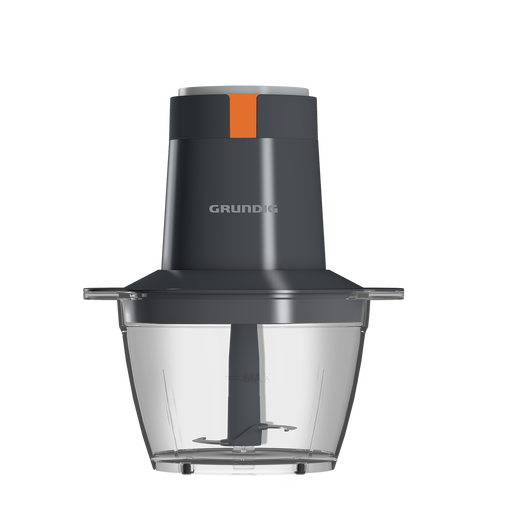
Why it's a great fit: With its compact 0.5-litre glass bowl and powerful 500-watt motor, this kitchen chopper is ideal for daily use in smaller households. It's perfect for quickly chopping an onion, herbs, or nuts without taking up much space.
The robust glass bowl prevents staining and odour absorption (Pitfall 2). The safety lock and non-slip base ensure safe operation (Pitfall 3).
The hygienic and dishwasher-safe glass bowl is a clear plus in this compact class. Two speed settings offer control over the final texture.

Why it's a great fit: With a large 2-litre glass bowl, this vegetable and meat chopper is ideal for preparing family-sized meals. It effortlessly handles larger quantities, whether for bolognese, meatballs, or vegetable salads.
The manufacturer specifies a clear duty cycle (40s on, 2 min off), which prevents the motor from overheating (Pitfall 1). The large glass bowl is hygienic and easy to clean (Pitfall 2).
The large 2-litre capacity, combined with a glass bowl and two speed settings, offers flexibility for both soft and hard ingredients in family-sized portions.

Why it's a great fit: This set is designed for maximum versatility. With two separate glass bowls (2L and 0.6L) and two sets of blades, you can process different ingredients consecutively without mixing flavours—ideal for preparing baby food, pesto, and meat in one session.
The two-bowl system completely solves the problem of flavour transfer and offers the hygienic benefits of glass (Pitfall 2). The clear operating instructions help you use the motor efficiently (Pitfall 1).
Two separate, dishwasher-safe glass bowls and blade sets for different portion sizes and to prevent cross-contamination—the ultimate in flexibility.
We've compiled a complete, up-to-date list of products that fully meet these strict selection criteria and German safety regulations.
Generally, no. Most electric food choppers are designed for chopping vegetables, fruits, herbs, nuts, and raw, boneless meat. Chopping extremely hard materials like ice cubes, frozen blocks of food, or coffee beans can damage the blades and the motor. Always check the manufacturer's instructions to see if your model is explicitly approved for such tasks.
Safety first: Always unplug the device before disassembling or cleaning it. The blades are extremely sharp; handle them only by the plastic shaft. Most glass bowls, lids, and blade attachments are dishwasher-safe, which makes cleaning much easier. The motor unit must never be submerged in water—simply wipe it with a damp cloth.
A multi-chopper or electric onion chopper is a specialist for chopping, puréeing, and mixing small to medium quantities. It is compact and ready for use quickly. A food processor is a much larger and more versatile appliance that can also handle tasks like slicing, grating, kneading, or juicing with various attachments. For daily, quick ingredient prep, a chopper is often the more practical and space-saving solution.