
Lieferung heute & morgen

Qualitätsgarantie

Willkommens-Angebote freischalten: KOSTENLOSE Lieferung | Bis zu 80 % RABATT | Kostenlose 30-Tage-JoyPlus-Testphase
App herunterladen
An electric food chopper can make everyday food preparation much easier. Depending on the model, onions, herbs, vegetables, nuts, meat and cooked ingredients can be processed in next to no time. However, appliances vary considerably when it comes to motor power, bowl capacity, controls and the foods they are suitable for.
If you only look at the wattage or bold promises in the product description, you can easily overlook important details. Three common buying misconceptions are particularly relevant:
Motor power is measured in watts. Models with 300 to 500 watts are designed for many typical household tasks, such as chopping soft vegetables, herbs, onions, fruit or smaller quantities of meat. However, wattage alone does not indicate how long the appliance can be operated without a break.
Two speed settings or a pulse function are practical features. A lower setting is generally suitable for softer ingredients and controlled, coarse chopping. A higher setting can be useful for firmer ingredients. Appliances with a limited operating time should be allowed to rest as specified. If you regularly process larger quantities, a multi-function food chopper with clear information about the maximum operating time is a better choice than a model without such guidance.
Food choppers with stainless steel blades are widely used in everyday kitchens. The material is not the only important factor: the number and arrangement of the blades also matter. Multi-level or curved blades can reach ingredients in different areas of the bowl. This can improve distribution, but it does not replace filling the bowl in portions and using short pulses.
Before buying, check the following:
An electric meat grinder is not the same as every kitchen food chopper. If you regularly process meat, look for explicit suitability, an appropriate bowl capacity and a recommended operating time.
The stated capacity is not always the same as the recommended working quantity. Ingredients need room to move so they can be chopped evenly. A 0.5-litre bowl is suitable for smaller portions, while models with 2 litres or more may be more practical for family-sized quantities.
Glass does not absorb odours or become easily discoloured, but it can be heavier and may be damaged by sudden temperature changes. Stainless steel is robust and opaque. Plastic is often lightweight and transparent, but should be cared for according to the manufacturer's instructions. For everyday use, removable dishwasher-safe parts are a clear convenience. The motor unit must never be immersed in water.
A mini food processor is sufficient if you mainly prepare onions, garlic, herbs or small quantities of vegetables. For sauces, fillings, minced meat or larger portions, a roomier appliance with several speed settings is a sensible choice. If you want to prepare baby food, look for a suitable bowl capacity, easy cleaning and explicit suitability for cooked ingredients. Hot or boiling food may only be processed if the manufacturer expressly permits it.
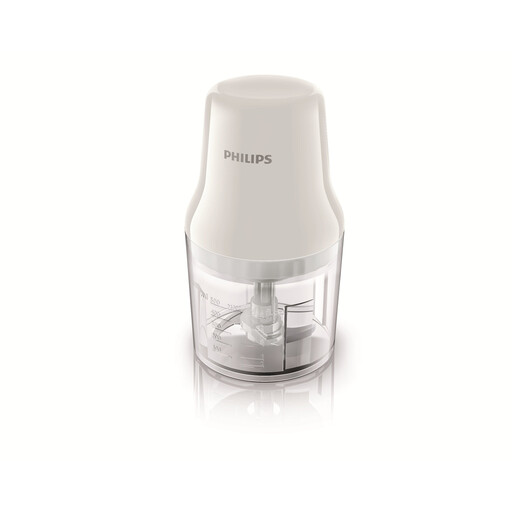
Why this product suits this profile: The 0.7-litre bowl and one-button control are designed for smaller everyday preparation tasks such as chopping onions, herbs, vegetables or nuts.
The transparent bowl lets you monitor the ingredients, while short pulses help prevent small portions from being overprocessed.
450 watts, stainless steel blade, 0.7-litre capacity and removable dishwasher-safe parts.
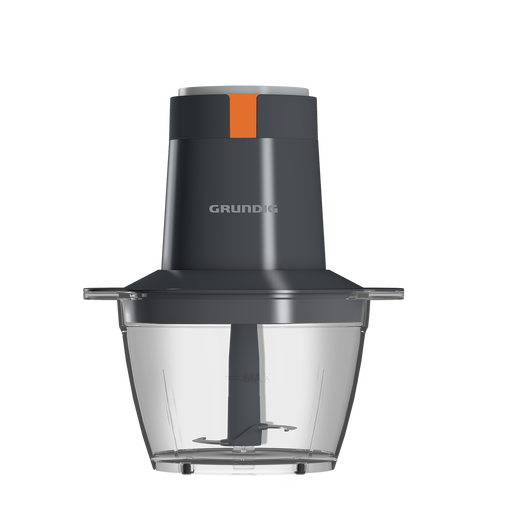
Why this product suits this profile: Two speed settings and a 0.5-litre glass container provide controlled processing for smaller quantities of fruit, vegetables and nuts.
The glass container is transparent and, according to the product details, dishwasher-safe; the safety lock prevents operation if the appliance is assembled incorrectly.
500 watts, two speed settings, removable stainless steel double blade and a 0.5-litre glass container.
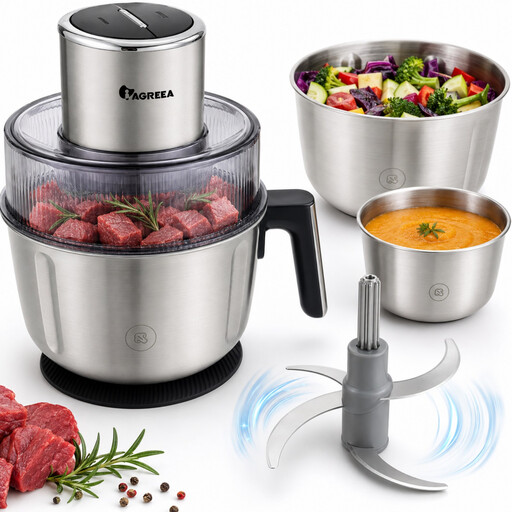
Why this product suits this profile: Three stackable stainless steel bowls with capacities of 1.8, 2.2 and 2.5 litres are designed for families and users working with different quantities of ingredients.
The separate bowls reduce the risk of different ingredients being mixed together; the stated pulse duration of up to 30 seconds makes it easier to plan each task.
Three 304 stainless steel bowls, two speed settings and a triple-curved stainless steel blade.
We have put together a complete, regularly updated list of products that fully meet these strict selection criteria and the safety regulations applicable in the EU.
For typical tasks such as chopping vegetables, onions, herbs and soft nuts, 300 to 500 watts is often sufficient. When processing meat or firmer ingredients, the blade design, bowl capacity and permitted operating time are also crucial. A higher wattage alone does not guarantee even processing.
That depends on the model. Some appliances are specified as electric meat grinders or multi-function food choppers and are approved for processing meat. With nuts, there are often restrictions on quantity or hardness. Check the information on suitable and prohibited foods before use.
Its service life depends on the materials, workload, cleaning and compliance with the recommended rest periods. Overfilling, continuous operation and hard ingredients that have not been approved for use can put strain on the motor and blades. An appliance with removable parts, clear operating instructions and a sturdy bowl is generally easier to use reliably in everyday life.