
Lieferung heute & morgen

Qualitätsgarantie

Willkommens-Angebote freischalten: KOSTENLOSE Lieferung | Bis zu 80 % RABATT | Kostenlose 30-Tage-JoyPlus-Testphase
App herunterladen
An electric food chopper can make preparing onions, garlic, vegetables, fruit, nuts and meat much easier. But not every appliance is right for every household. Unclear power ratings, bowls that are too small and blades that are difficult to clean can all lead to disappointing purchases.
This buying guide explains which specifications really matter and which kitchen chopper is best suited to different needs.
A 300-watt chopper may be powerful enough for soft ingredients and smaller portions. A 500-watt chopper or a 550-watt model offers more power in reserve if you regularly process harder ingredients. However, wattage alone doesn’t tell you how evenly the ingredients will be chopped. Blade design, bowl size and the recommended running time also matter.
A bowl with a 2-litre capacity isn’t necessarily suitable for filling to the brim with every type of food. Hard or fibrous ingredients often need to be processed in smaller batches so the blades can work evenly. For onions, herbs or garlic, a mini chopper with a capacity of 0.5 to 0.6 litres may be more practical than a larger appliance.
A chopper with a glass bowl feels robust for everyday use and lets you keep an eye on the ingredients as they’re being processed. Even so, check whether the bowl and blades are actually dishwasher-safe. A secure lid lock, non-slip feet and clear instructions on running times are also important. Always unplug the appliance before removing and cleaning sharp stainless steel blades.
Glass is odour- and flavour-neutral, and lets you see how the ingredients are being processed. However, many glass containers aren’t suitable for use in the microwave or for sudden changes in temperature. Always follow the manufacturer’s instructions.
Stainless steel blades are corrosion-resistant and suitable for many types of food. Multiple blades can reach ingredients from different angles. What matters most is whether the blades can be removed and how they should be cleaned.
Appliances with 2 speed settings give you more control over the chopping process: use a slower setting for softer ingredients and a faster one for firmer foods. A pulse function can also help you check the consistency step by step.
Some appliances are designed to run continuously for only a short time. Follow the processing cycle specified for your model to prevent the motor from overheating. Many kitchen choppers aren’t suitable for bones, ice cubes, frozen foods or very hard, dry ingredients.
So when choosing a meat chopper, don’t look at motor power alone. Also check:

Why it suits this type of user: Two glass bowls, with capacities of 0.6 and 2 litres, are handy for everything from small prep jobs to larger portions. The stated power is 300 watts.
The two bowls mean you don’t have to process small quantities in an oversized bowl. The two stated speed settings make it easier to adjust the appliance for softer or firmer ingredients.
Two glass bowls, two sets of blades and 2 speed settings; according to the product details, the bowls and lids aren’t microwave-safe.
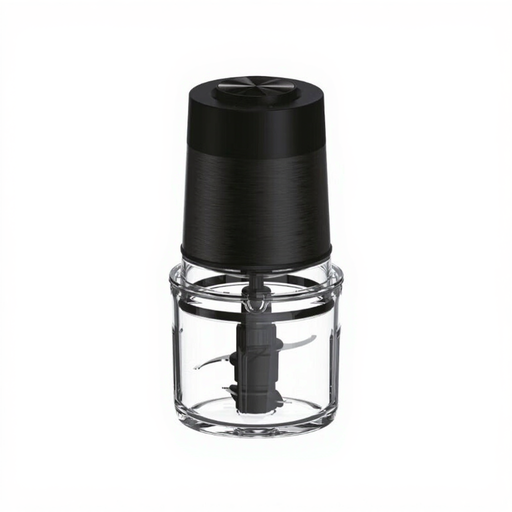
Why it suits this type of user: This model combines a 0.5-litre glass bowl with four stainless steel blades, 550 watts of power and a pulse function for short, controlled bursts.
The product details specify the number and material of the blades, the power and the bowl capacity. This makes it easier to compare the appliance with vague marketing claims.
Four stainless steel blades, 550 watts of power and a glass bowl; according to the product description, the bowl and blades are dishwasher-safe.

Why it suits this type of user: The 2-litre glass bowl and design for chopping vegetables and meat make this a good fit for households that regularly prepare larger quantities.
The product details specify a maximum continuous running time of 40 seconds, followed by a pause. Dry ingredients, bones, ice and very hard foods are also excluded.
2-litre glass bowl, two speed settings and 304 stainless steel blades; the motor housing must not be immersed in water.
We’ve put together a complete, regularly updated list of products that meet these strict selection criteria and fully comply with the safety regulations in force in the EU.
For onions, garlic, soft fruit and herbs, a compact appliance is often enough, depending on the quantity. For meat, nuts or firm vegetables, 300 to 550 watts is a common power range. More important than wattage alone are the ingredients the appliance can handle, the blade arrangement and the running time.
Its lifespan depends on how you use and clean it, and whether you follow the manufacturer’s instructions. Overfilling, continuous running and using unsuitable ingredients can put strain on the motor and blades. A model with removable parts is easier to maintain regularly.
A glass bowl is odour-neutral and lets you keep an eye on the ingredients as they’re being chopped. However, it can be heavier than plastic and, depending on the model, may not be suitable for sudden changes in temperature. When choosing a chopper, consider the material, permitted uses and cleaning instructions together.