
Lieferung heute & morgen

Qualitätsgarantie

Willkommens-Angebote freischalten: KOSTENLOSE Lieferung | Bis zu 80 % RABATT | Kostenlose 30-Tage-JoyPlus-Testphase
App herunterladen
An electric food chopper can prepare onions, vegetables, herbs, nuts or meat in next to no time. That is practical for households, keen home cooks and busy professionals – provided the appliance suits the quantities and ingredients you actually plan to use. Not every compact kitchen appliance is suitable for hard foods or regular use.
Anyone who focuses solely on wattage and product images often overlooks important details. The following criteria will help you assess marketing claims and choose a kitchen chopper that suits your household.
Motor power is often given prominent billing. However, it does not by itself show how evenly a multi-purpose chopper will work. The blade shape, number of blades, bowl geometry and permitted operating time are also crucial.
An appliance with 300 watts may be sufficient for soft ingredients, while meat, nuts and firm vegetables require a suitable blade arrangement and sturdy construction. Check the maximum running time and recommended breaks before buying.
A 2-litre container does not automatically hold 2 litres of food ready for processing. To chop ingredients evenly, the bowl usually must not be filled completely. For one person, a mini food processor with a capacity of 0.5 to 0.7 litres can save space. Families or users who prepare larger quantities are more likely to benefit from several containers or a larger working capacity.
With a chopper with a glass container, the bowl and blades may be dishwasher-safe. However, the motor unit, lid with seals or certain plastic parts may have different care instructions. Before cleaning, disconnect the blades and container from the power supply or completely detach them from the motor attachment.
Moderate power is often sufficient for soft foods such as cooked vegetables, fruit, garlic and herbs. For an electric vegetable chopper that is also intended to process nuts or meat, a powerful motor and suitable blade arrangement are advisable.
A pulse function allows short bursts instead of continuous operation. This gives you greater control over the consistency: short pulses tend to produce coarser pieces, while longer or more frequent pulses create a finer result. The manufacturer’s information about permitted ingredients remains decisive. Coffee, ice and very hard materials are expressly excluded for many appliances.
Glass is resistant to odours and discolouration, and allows you to monitor the contents directly. However, it is heavier and can be damaged by sudden changes in temperature. Plastic containers are usually lighter, but you should check their suitability for food contact, care instructions and potential susceptibility to scratches.
For small portions, 0.5 to 0.7 litres is often sufficient. If you regularly prepare meat fillings, larger portions of vegetables or several dishes one after another, consider larger containers or a set with different bowls.
Removable stainless-steel blades make cleaning easier but require particular care. Only handle the blades by the safe central section. A safety lock, non-slip base and a lid that stays securely in place during operation are important features.
You should also check the following before buying:
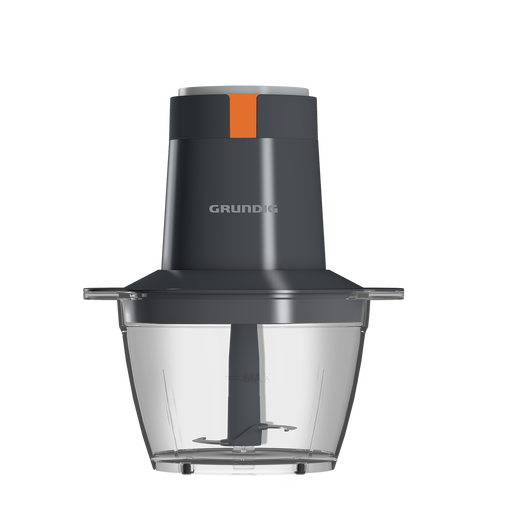
Why this product suits the profile: This compact chopper combines 500 watts with a 0.5-litre glass container and two speed settings. It is suitable for typical small kitchen tasks such as chopping onions, fruit, vegetables and herbs.
The two speed settings offer more control than a simple on/off operation. The glass container makes it easier to monitor the contents and, according to the product information, is less prone to absorbing odours and becoming discoloured.
500-watt motor, two stainless-steel blades, 0.5-litre glass container, non-slip base and safety lock.
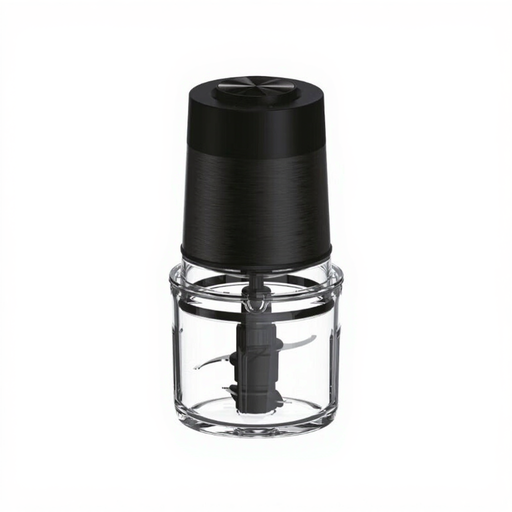
Why this product suits the profile: The Haier chopper is designed for users looking to combine a glass container, multiple stainless-steel blades and easy cleaning.
The product specifications explicitly state that it has two speed settings with a pulse function and removable blades. This makes operation and care easier to understand.
550 watts, four stainless-steel blades, 0.5-litre glass container and, according to the product information, a dishwasher-safe bowl and blades.
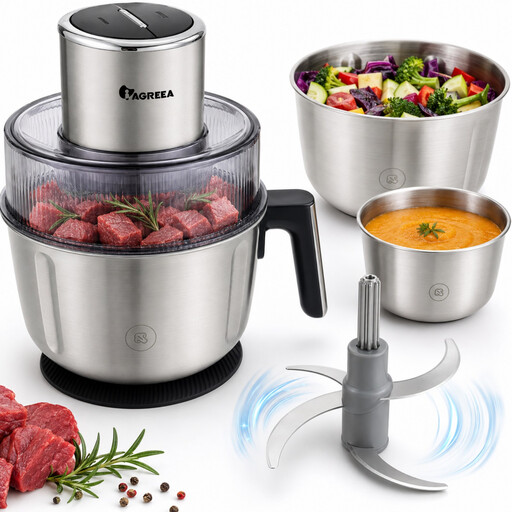
Why this product suits the profile: Three stackable stainless-steel bowls with capacities of 2.5, 2.2 and 1.8 litres appeal to users who prepare different ingredients and larger quantities.
The separate bowls make it easier to process ingredients one after another. The stated pulse duration of up to 30 seconds per cycle gives a clearer indication of the operating limit.
Three 304 stainless-steel bowls, two speed settings, triple-curved stainless-steel blades and a non-slip base ring.
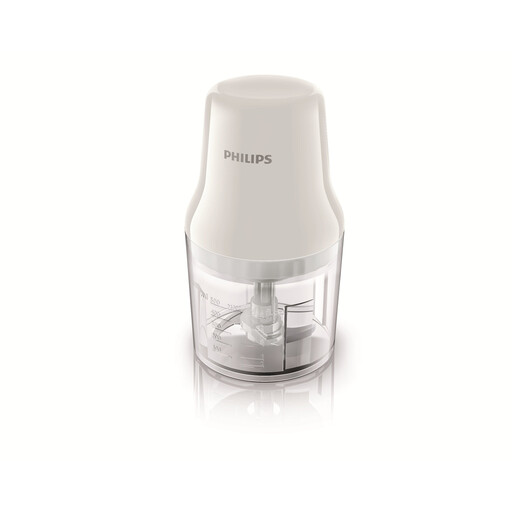
Why this product suits the profile: With 450 watts, a 0.7-litre container and one-button operation, it is designed for simple, frequent food preparation tasks.
The product description states the maximum filling level and recommends short pulses. This helps prevent overfilling, which can put extra strain on the motor and blades.
450 watts, 0.7-litre bowl, stainless-steel blade, one-button operation and, according to the product information, removable dishwasher-safe parts.
An electric food chopper makes sense if you regularly process larger quantities or firmer ingredients. It usually requires less effort and delivers consistent results when used with suitable portions. However, motorised appliances need a power connection, more storage space and thorough cleaning.
A manual onion chopper with a pull mechanism works without electricity and is often very compact. It is suitable for small quantities and occasional use. However, chopping meat or preparing several portions can require more effort. A mandoline slicer or vegetable chopper is an interesting alternative when slices and strips are more important than finely chopped ingredients. Whichever option you choose, hand protection remains essential.
We have put together a complete, regularly updated list of products that fully meet these strict selection criteria and the safety regulations applicable in the EU.
Its lifespan depends on motor load, ingredients, filling level, cleaning routine and proper storage. Hard or unsuitable foods can put additional strain on the blades and motor. Short pulses, breaks between several batches and following the manufacturer’s instructions can help reduce the load. Wattage alone cannot be used to determine a general service life.
Electricity costs normally depend on energy consumption and operating time. A 500-watt appliance uses approximately 0.083 kilowatt-hours after ten minutes of actual running time. As many choppers operate in pulse mode for only a few seconds at a time, household consumption is usually lower than with kitchen appliances that run for longer periods. Your electricity tariff and actual usage time are the key factors for an accurate estimate.
That depends on the model. A meat chopper should be expressly designed for this purpose and have suitable blades and a suitable container. For baby food, ingredients must first be allowed to cool sufficiently; many appliances must not be used to process boiling-hot liquids. The relevant product and safety instructions from the manufacturer are decisive.