
Lieferung heute & morgen

Qualitätsgarantie

Willkommens-Angebote freischalten: KOSTENLOSE Lieferung | Bis zu 80 % RABATT | Kostenlose 30-Tage-JoyPlus-Testphase
App herunterladen
An electric food chopper can make meal preparation much easier. Depending on the model, onions, herbs, vegetables, nuts, sauces and minced meat can be chopped at the touch of a button. However, the appliances vary considerably in terms of motor power, bowl capacity, blade design and permitted operating time.
Anyone who focuses only on a high wattage or an especially large number of accessories may overlook important details. The following buying guide explains what households, families and home cooks in Germany should look out for.
A high power rating initially sounds convincing. However, it does not by itself indicate how evenly an appliance works or how long it can be operated continuously. Some manufacturers distinguish between rated power and maximum motor power. These figures are not directly comparable.
The following factors are therefore more important:
A compact mini chopper with 240 or 300 watts may be sufficient for herbs, onions and soft vegetables. For regular meat processing, the design should explicitly be intended for this purpose.
A small bowl saves space and is suitable for individual portions. A capacity of 0.5 litres is practical for dips, herbs or small amounts of vegetables, but may require several batches when preparing family-sized portions.
Models with 1.5 to 2 litres of working capacity are more suitable for larger quantities. However, the bowl should not be filled to the brim. When processing meat, nuts or fibrous vegetables, working in portions is generally more sensible so that the ingredients reach the blades and the motor is not placed under unnecessary strain.
A food chopper with several discs, sausage-filling tubes or kubbe attachments can be used for a wide range of tasks. However, these parts require additional storage space and must be cleaned thoroughly after use. For a household that mainly chops onions, herbs and sauces, a simply designed vegetable chopper with a blade attachment is often sufficient.
Before buying, check:
A chopper with stainless steel blades is suitable for many kitchen tasks. It is not only the number of blades that matters, but also their arrangement and whether they can be removed for cleaning. Multiple blade levels can support processing in a taller bowl.
A chopper with a glass bowl allows you to monitor the contents directly and generally absorbs odours or staining less readily than certain plastics. However, glass is heavier and can be damaged by sudden changes in temperature. Pay attention to the stated heat resistance.
Two speed settings cover many everyday applications: a lower setting for soft ingredients and a higher setting for firmer foods. A pulse function allows short operating intervals. This makes it easier to control the consistency, whether you want roughly chopped onions or a finer purée.
When permitted operating times are very short, the instruction manual is the deciding factor. When processing larger quantities, prescribed breaks may be necessary.
Safety locks prevent many appliances from operating if the lid or bowl has not been fitted correctly. This reduces the risk of accidental activation, but does not replace careful handling of sharp blades.
The following points are important for everyday use:
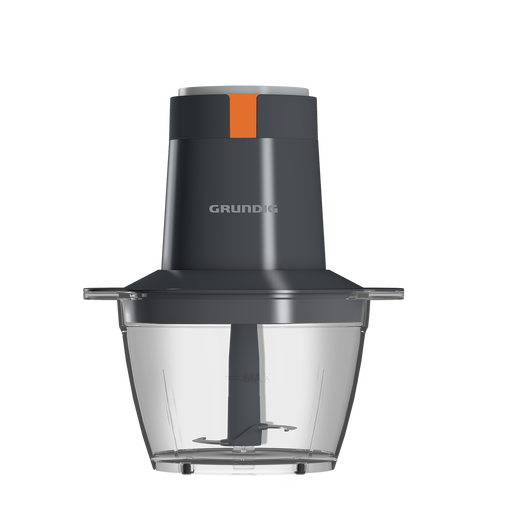
Why this product suits this profile: This compact electric kitchen chopper combines 500 watts, two speed settings and a 0.5-litre glass bowl for small everyday portions.
The glass bowl capacity and two speed settings are clearly specified. This makes it easier to assess whether the appliance is intended for small quantities rather than large family portions.
500-watt motor, removable stainless steel double blade, non-slip base and safety lock.
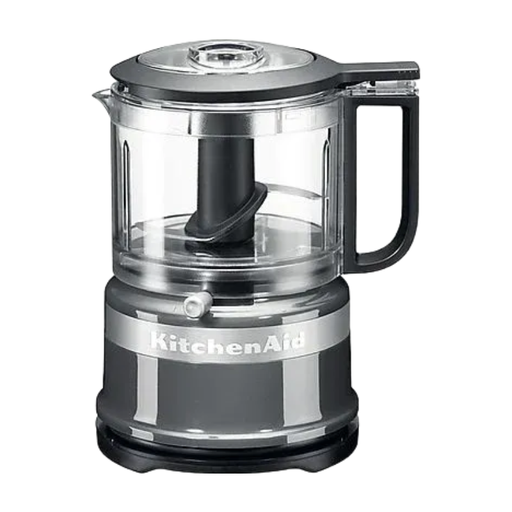
Why this product suits this profile: The 0.83-litre working bowl with pouring spout, two speed settings and pulse function is suitable for sauces, dressings, herbs, pesto and smaller quantities of ingredients.
The stated 240-watt power rating is linked to specific applications and a limited bowl capacity, rather than suggesting that the appliance is suitable for every ingredient.
BPA-free 0.83-litre bowl, stainless steel multi-purpose blade and removable dishwasher-safe parts.
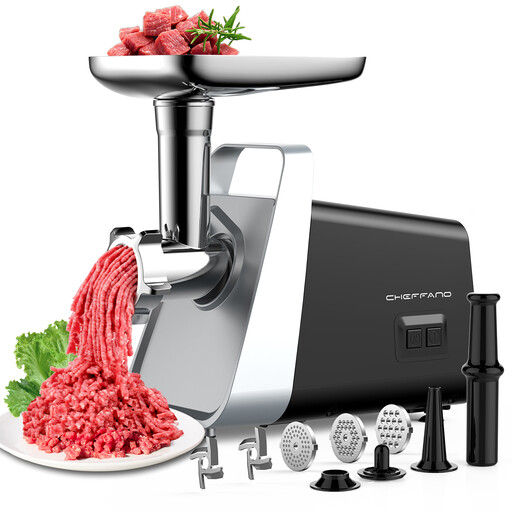
Why this product suits this profile: As an electric meat grinder, this model is aimed at households that want to prepare minced meat, sausages or kubbe using several mincing discs.
The three mincing discs make it clear what textures can be achieved. Nevertheless, the contents of the package should be checked against the relevant product page before ordering.
Three mincing discs, two stainless steel blades, sausage-filling tube and kubbe accessories for different meat preparations.

Why this product suits this profile: The 2-litre glass bowl provides more working capacity for vegetables, meat and larger preparations, provided the ingredients are portioned according to the instructions.
The operating limit of no more than 40 seconds and a break of at least two minutes are clearly specified. This prevents the bowl capacity from being confused with continuous operation.
2-litre capacity, 300-watt motor, two speed settings and three-dimensional stainless steel blades.
We have put together a complete, regularly updated list of products that fully meet these strict selection criteria and the safety regulations applicable in the EU.
The two appliance categories overlap, but they are not identical. A classic multi-purpose chopper usually works with rotating blades in a bowl. It is suitable for vegetables, herbs, nuts, sauces, purées and, in some cases, raw meat.
A meat chopper, or meat grinder, instead feeds the meat through an auger and a mincing disc. This produces defined textures. Sausage-filling tubes and suitable attachments are essential for making homemade sausages. A meat grinder is often larger, heavier and more time-consuming to clean than a compact vegetable chopper.
For small kitchens, the following therefore applies:
That depends on the individual model. The product description must explicitly state that meat is a suitable application. Meat should be cut into small pieces, well chilled and processed in limited quantities. Bones, frozen foods and very hard ingredients are excluded for many appliances.
It is not possible to give a universal lifespan. It depends on frequency of use, cleaning, overloading and compliance with the recommended breaks. Anyone who does not exceed the maximum operating time, avoids unsuitable ingredients and handles the blades carefully can reduce avoidable strain.
The actual cost depends on the rated power and operating time. An appliance rated at 500 watts that runs for only a few minutes per meal will generally use considerably less electricity in everyday use than a kitchen appliance operated continuously. For comparison, rated power, operating time and frequency of use should be considered together.