
Lieferung heute & morgen

Qualitätsgarantie

Willkommens-Angebote freischalten: KOSTENLOSE Lieferung | Bis zu 80 % RABATT | Kostenlose 30-Tage-JoyPlus-Testphase
App herunterladen
Freshly sliced bread, paper-thin prosciutto, or uniformly thick slices of cheese—the quality and flavour of freshly prepared foods are unparalleled. An electric food slicer offers the precision and control that are nearly impossible to achieve with a knife, all while reducing packaging waste. However, the market is flooded with options. This guide will help you understand the key features and make an informed decision on an appliance that meets your standards for quality and durability.
Choosing the right appliance depends on your individual needs. Three key criteria will help guide your decision.
The build quality is crucial for the appliance's stability and longevity. While plastic models are often lighter, a metal food slicer or a full-metal construction offers superior stability. This is especially important if you regularly slice hard foods like crusty bread or cured ham. A solid construction prevents the machine from vibrating or slipping during operation, which leads to more uniform slicing results. Look for a sturdy base plate and a robust food carriage.
The motor's power and the blade's quality determine the slicing performance. There are two common motor types:
Furthermore, there are two types of blades to choose from:
Easy and safe operation is essential in everyday kitchen use. A removable carriage makes cleaning significantly easier. Safety features like momentary and continuous switches, a blade cover, and an end-piece holder protect your fingers. For households that value German engineering, an appliance Made in Germany can be an indicator of thoughtful design and high manufacturing quality.
Based on the criteria above, we have curated a selection of appliances that cater to different needs.
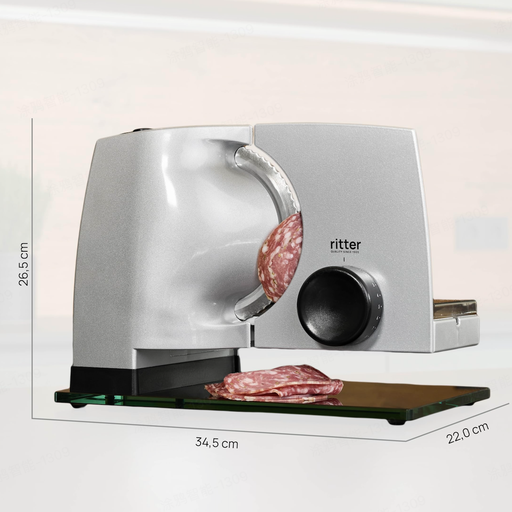
What Makes It Stand Out The ritter sono? food slicer stands out with its cantilevered metal construction. Sliced food can be caught directly on a plate or in a bowl placed underneath the blade. The safety glass base plate not only gives the appliance an elegant look but is also durable and easy to clean.
Advantages
Who Is It For? For quality-conscious households looking for a durable and functional appliance for daily use, who also value design and the Made in Germany label.
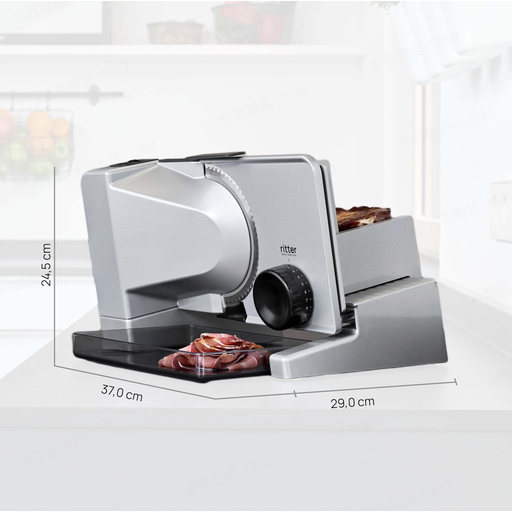
What Makes It Stand Out The serano? is designed as a professional-grade food slicer for the demanding home user. Its tilted, full-metal design ensures optimal stability and slicing results. The powerful DC motor with electronic speed control allows for precise adjustment to any type of food.
Advantages
Who Is It For? For hobby chefs and connoisseurs who demand the highest standards of precision and performance—for example, to slice homemade prosciutto paper-thin or to effortlessly process large loaves of bread. An investment in lasting culinary excellence.

What Makes It Stand Out As a complement to a traditional slicer, this electric meat grinder gives you complete control over meat processing. With its robust stainless steel housing and extensive accessories, you can not only make your own ground meat but also create custom sausages.
Advantages
Who Is It For? For anyone looking to take their food processing to the next level. Ideal for hunters, barbecue enthusiasts, and anyone who values fresh, homemade sausage and ground meat without additives.
Our selection covers specific use cases. If you are looking for other models or features, you can find more appliances that might suit your needs in our comprehensive category.
Explore the Full Range of Electric Slicers Here
1. How do you properly clean an electric food slicer? Always unplug the appliance from the power outlet before cleaning. Many models feature removable parts like the carriage, the blade cover plate, and sometimes even the blade itself. These parts can usually be washed by hand with warm water and dish soap. The housing can be wiped down with a damp cloth. Always follow the manufacturer's specific instructions.
2. Which blade is suitable for which food? A serrated blade is the all-rounder. It effortlessly cuts through hard crusts (bread) and firm rinds (salami) without crushing the soft interior. A smooth blade is the specialist for paper-thin, clean slices. It is perfectly suited for soft foods like cooked ham, cheese, or carpaccio, where a serrated blade would leave a frayed or torn edge.
3. Is a metal food slicer really necessary? For occasional use, such as slicing soft bread or cheese, a high-quality plastic model may suffice. However, anyone who slices regularly, values maximum stability, or often processes hard foods will benefit from the durability and stability of a metal food slicer. The heavier weight reduces vibrations and allows for more precise, uniform slices.