
Lieferung heute & morgen

Qualitätsgarantie

Willkommens-Angebote freischalten: KOSTENLOSE Lieferung | Bis zu 80 % RABATT | Kostenlose 30-Tage-JoyPlus-Testphase
App herunterladen
An electric food slicer should reliably cut bread, sausage, cheese, meat and vegetables into even slices. In practice, however, models vary considerably when it comes to the blade, materials, cutting-thickness adjustment and ease of use. Focusing only on wattage or a low price can mean overlooking important details.
Three common buying misconceptions are particularly likely to lead to disappointment:
An electric food slicer with two blades offers greater flexibility than a model with just one blade. A serrated blade is typically suitable for bread and firmer foods. A smooth blade is useful for sausage, ham, cheese or tender cuts of meat, as it can produce an even cutting surface.
The minimum and maximum cutting thickness are equally important. A wide adjustment range allows you to cut both very thin slices and thicker pieces. According to the product description, the specified cutting thickness of the Ritter serano⁷ ranges from very thin up to 23 mm. The Ritter Sono¹ is designed for slices of up to around 20 mm. Always compare these figures with your own requirements: the ideal range for breakfast bread will differ from that needed for ham, roast meat or cheese platters.
A metal electric food slicer can be a suitable choice for regular use when the housing and stressed components are appropriately constructed. An angled design uses the weight of the food to support slicing and can make it easier to guide. Non-slip feet, a sturdy carriage and easy access to the cutting area are also important.
Look for a removable carriage, an easily accessible blade cover and a collection tray. These features reduce the effort required to clean the slicer after use. With models featuring a glass base or metal surfaces, check whether these parts can simply be wiped clean or removed completely.
An electric meat slicer or electric bread slicer should offer more than just an on/off switch. Electronic speed control can be useful when processing different types of food. Soft bread, firm sausage and dense cheese do not necessarily require the same setting.
For domestic use, relevant features include momentary and continuous operation, a finger guard, a securely locked carriage and a stable base. Sharp blades should only be removed or cleaned when the appliance is unplugged. The operating and cooling times specified in the instruction manual should also be followed.
A compact food slicer is usually sufficient for occasional bread slicing and small quantities. If you regularly slice loaves of bread, sausage, cheese and meat, you are likely to benefit more from a sturdy construction, a longer slicing path and convenient cutting-thickness adjustment.
A Made in Germany food slicer may appeal to buyers who value manufacturing quality, repair options and durable materials. However, country of origin alone is no substitute for comparing products. You should also check the blades supplied, carriage length, motor control, availability of spare parts and cleaning requirements.
The following recommendations group different appliances according to specific usage profiles. It is important to note that choppers and food processors are not full substitutes for an electric food slicer. They are designed for other tasks, such as chopping, puréeing or grating.

Why this product suits this profile: The full metal construction, angled design and electronic speed control will appeal to households that regularly want to slice different foods with precision.
Rather than highlighting a high wattage alone, the product description specifies electronic speed control, two blades and a cutting-thickness range of up to 23 mm.
Serrated and smooth blades, a 24 cm slicing path, removable carriage and collection tray for sliced food.

Why this product suits this profile: This model is designed for regular use with bread, fruit and vegetables, combining a compact design with adjustable cutting thickness.
The product specifications identify specific components such as the carriage, safety glass base and Eco motor, rather than relying solely on a general performance claim.
Removable carriage with an 18 cm slicing path, serrated blade and cutting thickness of up to around 20 mm.
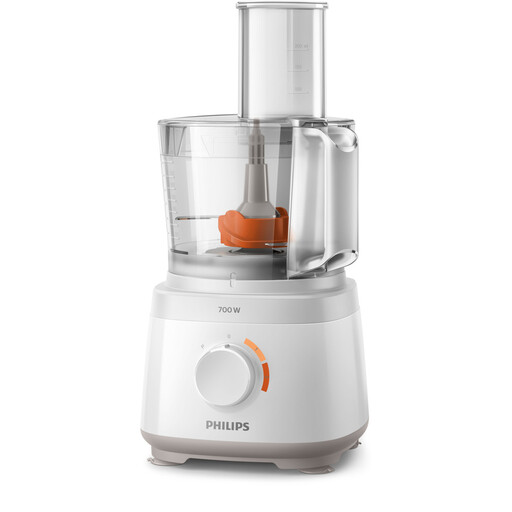
Why this product suits this profile: If you also want to chop, grate, knead or emulsify as well as slice, this food processor handles several preparation tasks. However, it is not a traditional slicing machine.
This clear distinction helps prevent a common mistake: a food processor cannot replace an electric food slicer for evenly sliced bread, sausage or cheese.
700 W motor, 2.1-litre bowl, slicing and grating discs, kneading attachment and removable dishwasher-safe parts.
We have put together a complete, regularly updated list of products that fully meet these strict selection criteria and the safety regulations applicable in the EU.
For bread and everyday cold meats, a range from thin slices up to around 20 mm is practical. If you also want to cut thicker slices of meat or cheese, look for the widest possible range, with either stepless or finely adjustable settings.
That depends on how you plan to use it. If you regularly buy bread, slice your own cold meats or handle larger quantities of cheese, having your own appliance can save time. For occasional chopping of small quantities of ingredients, however, a compact chopper with a bowl is often more suitable.
Correct use, regular cleaning and a sharp, correctly fitted blade are all essential. Do not cut unsuitable hard materials, observe the operating times and unplug the appliance before every cleaning session. With a model designed for long-term use, you should also check the availability of repair services and spare parts.