For thin, even slices of cooked ham, first check whether the specific model variant actually includes a smooth ham blade, whether you can adjust the slicing thickness and whether the carriage guides the food safely. If the machine will be shared, also consider how easy it is to clean, whether it has a food holder and how you’ll manage separate utensils and chilled storage. For commercial use, you’ll need to check separately whether the specific model is approved for that purpose.
Who will be using the slicer at the cookery class?
Class leaders focusing on ham
If you’re preparing even slices for several people, compare the blade, slicing-thickness adjustment and carriage. If the class is run as a business, you’ll also need to check whether the specific appliance is intended for commercial use.
Hygiene-conscious groups
If you’ll be sharing utensils and equipment, plan how you’ll clean them and keep separate utensils for raw and cooked foods. The German Federal Institute for Risk Assessment also recommends storing perishable foods in the fridge at 2 °C to a maximum of 7 °C.
Occasional cookery-class hosts
If you’ll only need the food slicer for a weekend class, weigh up storage space against the features you need. A foldable base plate, as described by SEVERIN for the AS 3912, makes it easier to store, but doesn’t automatically make it suitable for slicing cooked ham.
What should you look for when buying?
First check the blade and slicing thickness for ham, then consider cleaning and ease of use during the class. If you’ll only use the appliance occasionally, take its footprint and storage requirements into account too.
| What matters |
What to check before buying |
Who is it important to? |
| Thin, even slices |
Smooth ham blade included, adjustable slicing thickness and a guided carriage. |
If you want to slice soft cooked ham as evenly as possible, the exact blade supplied is crucial. Around 33% of consumers put fine slices of ham first. |
| Cleaning and chilled storage |
Access to the blade and carriage as described in the instructions, plus a plan for separate utensils and chilled storage. |
If you’re slicing ready-to-eat ham in a shared kitchen, plan how you’ll clean and chill it. Around 27% of consumers prioritise this hygiene routine. |
| Safe operation |
Food holder, finger guard, switch and instructions for safe setup and cleaning. |
If different people, or less experienced users, will operate the appliance, check its safety features and controls in advance. Around 20% of consumers prioritise straightforward operation. |
| Space after the class |
Compare the dimensions for use and storage separately from the blade supplied and access for cleaning. |
If you’ll only use the food slicer occasionally, you’ll also want to think about where to keep it after the class. Around 20% of consumers prioritise space-saving storage. |
Common buying mistakes
-
Assuming every “food slicer” comes with a ham blade
What’s included varies by model. GRAEF lists an additional smooth blade for the G52 TWIN, while ritterwerk describes the E 16 as having a serrated blade.
Check what’s included with the exact model variant and make sure the right blade is explicitly listed.
You may need to buy an additional blade; check that it’s compatible with your specific model.
-
Using a domestic appliance commercially without checking first
The manufacturer’s instructions for the ritter E 16 rule out commercial use. Describing other models as domestic appliances doesn’t mean they’re approved for commercial use either.
If you’ll be using the appliance commercially, check the instructions and manufacturer’s information for the specific model before the class.
-
Planning for slicing performance alone
A removable blade makes it easier to access for cleaning, but it doesn’t replace separate utensils or chilled storage for the ham.
Before the class, decide how you’ll slice and clean the ham, and how you’ll keep it chilled in between. The German Federal Institute for Risk Assessment recommends using separate kitchen utensils for raw, cooked and ready-to-eat foods.
Using shared equipment means allowing extra time and planning for your routine.
Brands and relevant product ranges
GRAEF
The G52 TWIN is worth considering if you’re looking for a compact domestic appliance that includes an additional smooth blade for finely sliced meats.
- GRAEF lists the smooth blade as an additional feature of the G52 TWIN.
- This information applies only to this model, not other GRAEF appliances. The instructions and exact model variant are what matter.
SEVERIN
The AS 3915 and foldable AS 3912 suit different priorities: blade and cleaning access with the former, storage space with the latter.
- The AS 3915’s specification sheet lists a ham blade and tilting carriage; SEVERIN describes the AS 3912 as having a foldable base plate.
- The features and accessories of the AS 3915 and AS 3912 aren’t interchangeable.
ritterwerk
The E 16 is a domestic option with an angled metal design, removable carriage, and momentary and continuous-operation switches.
- The manufacturer lists a removable carriage and two switch modes.
- The E 16 is described as having a serrated blade; according to the manufacturer, it isn’t intended for commercial use.
Berkel
The Home Line 200 PLUS is a larger domestic food slicer for regular use, if you have the space and budget for it.
- For this model, Berkel lists a chromium-plated steel blade and rubberised feet.
- The manufacturer’s description of it as a domestic appliance doesn’t mean it’s approved for commercial use at a cookery class.
DOMO
The MS171 is a simpler domestic alternative, mentioned by F.A.Z. Kaufkompass in its food slicer comparison.
- F.A.Z. Kaufkompass describes the model as a more affordable alternative, with some compromises.
- That description doesn’t mean it comes with a smooth ham blade or is suitable for commercial use at a cookery class.
Joybuy picks for sliced meats
The Joybuy models below are electric food slicers for sliced meats. Compare the blade supplied with the specific model and how easy it is to clean against the needs of your cookery class.
 No image available
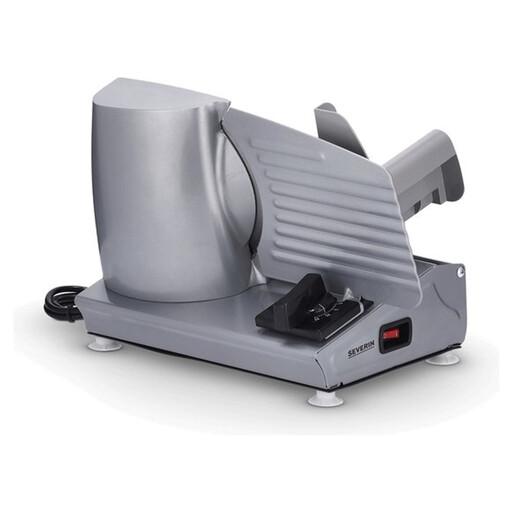
SEVERIN AS 3917 electric food slicer, 130 W, grey
Described as suitable for general slicing. If you need a ham blade for cooked ham, check what’s included with the specific variant before buying.
The slicing thickness is continuously adjustable from 0 to 23 mm. The blade and food tray are described as removable.
View at Joybuy
 No image available
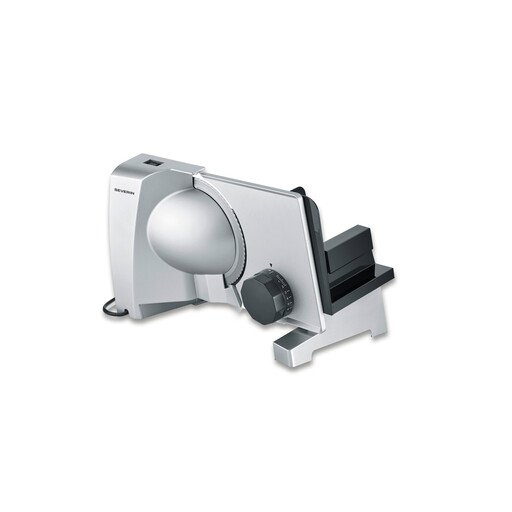
SEVERIN AS 3915 food slicer with ham blade, 180 W, silver
If you specifically want a ham blade included, this model’s product name lists one. Check the contents of the variant before your class.
The slicing thickness is stated as 0 to 15 mm. The description lists a smooth blade for meat, removable blades and a tilting carriage.
View at Joybuy
Frequently asked questions
Do I need a smooth blade for cooked ham?
Not every appliance is sold with a smooth ham blade. If your main aim is to slice soft meats thinly, compare what’s included with the specific variant: GRAEF lists an additional smooth blade for the G52 TWIN, while SEVERIN lists a ham blade for the AS 3915. This doesn’t prove that the two appliances produce identical results.
How should I plan slicing and cleaning for the class?
Follow the instructions for the specific appliance, use the food holder and unplug it before cleaning. The German Federal Institute for Risk Assessment recommends using separate utensils for raw, cooked and ready-to-eat foods. It also recommends storing perishable foods in the fridge at 2 °C to a maximum of 7 °C.
Is a domestic food slicer suitable for a paid cookery class?
There’s no straightforward yes-or-no answer. ritterwerk’s instructions expressly prohibit commercial use of the E 16, so check the instructions and manufacturer’s information for the specific model you plan to use for the class.
What hygiene requirements might apply to class leaders in Germany?
If people handle meat or meat products commercially and come into direct contact with them, or handle them through work equipment, Berlin’s public health authority describes a briefing and certificate under § 43 IfSG before starting the activity for the first time. § 4 LMHV sets out the knowledge requirements for handling perishable foods. Whether these requirements apply to a particular class depends on how it’s organised and the work involved; this article doesn’t claim that they apply to a private class.
What should I check when buying an extra blade or accessory?
Check that any extra blade or cleaning accessory you need is explicitly compatible with the exact model. Accessories for a similarly named product range aren’t automatically compatible.


