
Lieferung heute & morgen

Qualitätsgarantie

Willkommens-Angebote freischalten: KOSTENLOSE Lieferung | Bis zu 80 % RABATT | Kostenlose 30-Tage-JoyPlus-Testphase
App herunterladen
An electric food slicer can portion bread, sausage, cheese, fruit and vegetables evenly, replacing several individual kitchen appliances. However, the term “food slicer” does not mean that every model is suitable for all foods or slicing techniques. Before buying, households, keen cooks and small catering businesses should therefore carefully check which design and features match their intended use.
A high wattage alone says little about how cleanly an appliance cuts. Important factors include the blade design, the stability of the carriage, power transmission and the ability to adjust the slice thickness precisely. Even a machine with a powerful motor can produce uneven results if the carriage is unstable.
When it comes to meat and sausage products, it is also worth noting that a conventional food slicer does not perform the same function as a meat mincer. If you want to make mince or sausage meat, you need an electric food processor or a meat mincer with a suitable mincing plate.
For bread, a few millimetres up to around 15 millimetres is often sufficient. For cheese, ham or larger foods, a longer cutting range can be more practical. So do not just check the maximum adjustable slice thickness. Also consider:
A short carriage can make handling large loaves or longer pieces of sausage more difficult.
Food residue tends to collect around the blade mount, carriage guide and collection surface. A removable carriage and an easily accessible blade make cleaning easier. For removable parts, you should also check whether the manufacturer says they must be washed by hand or whether they are dishwasher-safe.
Important safety features include a momentary and continuous switch, non-slip feet and a finger guard. Never clean the blade by hand while the appliance is plugged in. Appliances with exposed blades should also never be operated by children without supervision.
A serrated blade is typically suitable for bread and foods with a firm outer structure. A smooth blade can be a good choice for ham, cheese or finely sliced cold meats. If you process a variety of foods, interchangeable blades or a design suitable for several food groups can be beneficial.
Metal constructions can provide a stable base for frequent use. Glass surfaces are hygienic and can usually be wiped clean with a suitable cloth, but they need to be protected from hard impacts. Check the specifications for the materials used, the appliance’s weight and its feet. A lightweight appliance is easy to store, but it may slide around more during slicing if the base does not provide sufficient grip.
For regular slicing, consistent running and controllable speed are more important than an isolated maximum power figure. Some appliances have a safety momentary switch and a continuous switch. Choppers and meat mincers, on the other hand, often have specified operating and cooling times. These instructions must be followed, as an electric kitchen appliance is not automatically designed for continuous operation.
The designation Made in Germany should also be considered in specific terms. According to the product information, development and manufacturing of the ritter sono¹ are carried out in-house at the company’s site in Gröbenzell near Munich. Such statements refer to the individual product and should not automatically be applied to other models.
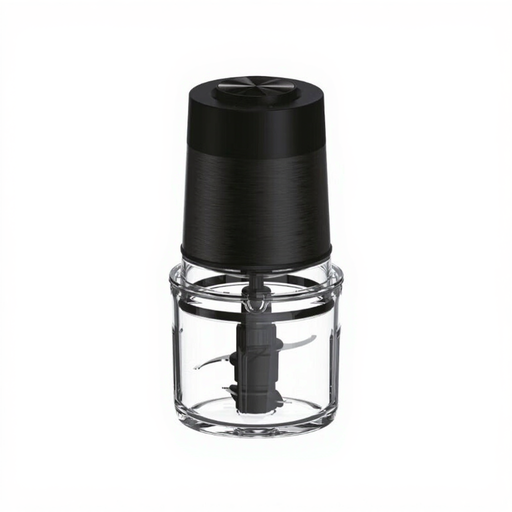
Why this product suits this profile: This compact chopper is ideal for users who want to chop ingredients such as onions, fruit or vegetables quickly without investing in a large food processor.
The 0.5-litre glass bowl and two pulse settings make its intended use clearer than generic food-slicer advertising. According to the product information, the bowl and blades are dishwasher-safe.
550 W, four stainless-steel blades, glass container and removable blades.
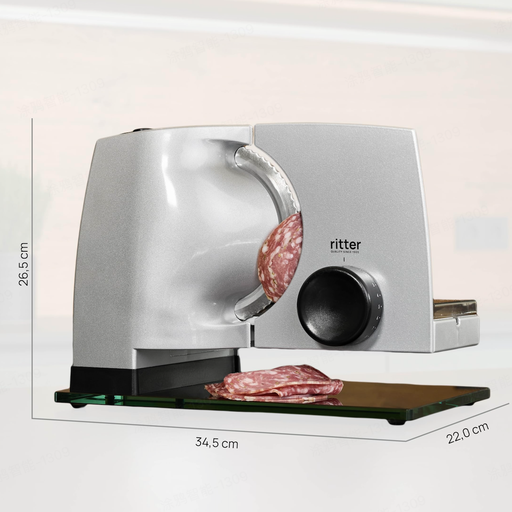
Why this product suits this profile: This electric food slicer is designed for households that want to process bread, fruit, vegetables and cold meats with a sturdy, stationary construction.
The removable carriage makes it easier to access the appliance for cleaning. The product information states that the slice thickness can be adjusted from wafer-thin to around 20 mm, with an 18 cm cutting range.
Safety-glass base plate, ECO motor, plus momentary and continuous switches; according to the product information, Made in Germany.
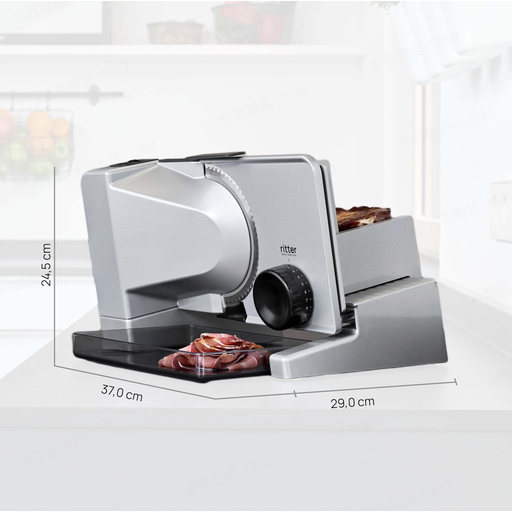
Why this product suits this profile: This model is designed for regular, precise slicing and could be a good choice for bread, cheese, sausage and other firm foods.
The features go beyond a simple wattage figure: the product information lists an electronically adjustable speed, a removable carriage and two blades.
All-metal construction, angled design, slice thickness of up to 23 mm and a 24 cm cutting range according to the product description.
A multifunction slicer with blades for julienne strips, slicing and grating is more suitable for raw vegetables than a conventional cold-meat slicer. A model such as the 5five 3 Blades Slicer is operated manually and is therefore not an electric food slicer. For mince or homemade sausages, the Adler and Mesko meat mincers with mincing plates and sausage-filling attachments are more suitable. However, a meat mincer cannot replace a food slicer for bread or cheese.
We have put together a complete, regularly updated list of products that fully meet these strict selection criteria and the safety regulations applicable in the EU.
Depending on the blade and the manufacturer’s approval, these appliances are often suitable for bread, sausage, cheese, fruit and vegetables. Very soft, frozen or bony foods may only be processed if this is expressly permitted in the instructions. You should check the specific suitability before buying and before each use.
First, switch off the appliance and unplug it. Then remove and clean the blade, carriage and collection surfaces in accordance with the instructions. The motor housing must generally not be immersed in water. After cleaning, all parts must dry completely before they are refitted or stored away.
Its service life depends on the quality of the materials, care, workload and availability of spare parts. Regular cleaning, correct operation and avoiding unsuitable foods help reduce wear and tear. For frequent use, repairable designs and replacement blades that are readily available are important selection criteria.