Thinly slicing roast beef
If you want to serve roast beef in thin slices, look for a suitable smooth blade and adjustable slice thickness. This is highlighted in information from GRAEF and SEVERIN, as well as ritterwerk’s guide to slicer blades.


For particularly thin slices of roast beef, choosing a smooth slicing blade that’s compatible with the specific model is important; a serrated blade is better for bread. Manufacturer information for models such as the GRAEF G52 TWIN and SEVERIN AS 3915 lists blades for different foods, but you should check exactly what’s included and which version you’re buying. At a holiday cottage, you’ll also need to consider the worktop space required, storage and cleaning after slicing.
If you want to serve roast beef in thin slices, look for a suitable smooth blade and adjustable slice thickness. This is highlighted in information from GRAEF and SEVERIN, as well as ritterwerk’s guide to slicer blades.
If you need to put the slicer away after a meal, compare its dimensions both in use and when folded. ritterwerk describes the icaro 7 as a foldable model.
If you want to use one appliance to slice different foods, check the blade types and what’s included with the specific version. GRAEF and SEVERIN describe models with different blades.
First decide what matters most to you: thin slices, the space it takes up, cleaning or switching between different foods.
| Priority | What to check when buying | Who it matters most to |
|---|---|---|
| Thin slices of roast beef | A suitable smooth blade included and adjustable slice thickness | If I want to serve roast beef in particularly thin slices, a suitable slicing blade is my top priority. Around 33% of consumers put thin slicing first. |
| Safe operation and cleaning | Food holder, stable base, removable parts and cleaning instructions | If I need to remove meat residue after slicing, I look for easily accessible parts and safe handling. Around 27% of consumers prioritise ease of use and hygiene. |
| Counter space and storage | Dimensions when in use, space required for the carriage and storage dimensions | If worktop space at my holiday cottage is limited, I need to make sure there’s room for both the slicer and the space needed to move it while slicing. Around 20% of consumers put storage first. |
| Slicing other foods | Serrated and smooth blades, and whether they’re actually included | If I want to slice bread as well as roast beef, I check that the blades supplied are suitable for both. Around 20% of consumers prioritise versatility. |
The blade type affects what an appliance is suitable for: smooth blades are described as suitable for thin slices, while a serrated blade is important for bread. Some models list a ham-slicing blade separately.
Before you decide, check what’s included and whether the blade is compatible with the exact model version.
A ham-slicing blade is listed separately for the Unold Metall Plus 78826, so check whether the blade you want is included or needs to be bought separately.
Even a foldable slicer needs space for the carriage while in use, as well as a stable surface. For the ritter icaro 7, the manufacturer’s stated 10.0 cm refers to its width when folded.
Measure the available worktop space and room to move the slicer while cutting, not just the space in your cupboard.
The German Federal Institute for Risk Assessment recommends storing perishable foods at 2 °C to no more than 7 °C, and keeping them chilled when travelling.
Slice only what you need and chill the remaining meat appropriately. Clean any utensils you’ve used, and keep utensils for raw and cooked foods separate.
The manufacturer distinguishes between a serrated blade and an additional smooth blade included with the G52 TWIN; the Master M20 comes with a smooth blade.
According to the manufacturer, the AS 3915 is a freestanding appliance with removable blades and an adjustable slice thickness of 0 to 15 mm.
Models such as the icaro 7 are described by the manufacturer as foldable, making them worth considering if storage space is limited.
The Metall Plus 78826 is a freestanding appliance with a serrated blade and a manufacturer-stated slice thickness range of 0 to around 23 mm.
The manufacturer’s description of the MS171/N lists a lightly serrated stainless steel blade and adjustable slice thickness of up to 15 mm.
The range includes electric food slicers for roast beef, including foldable versions and models designed for different foods.
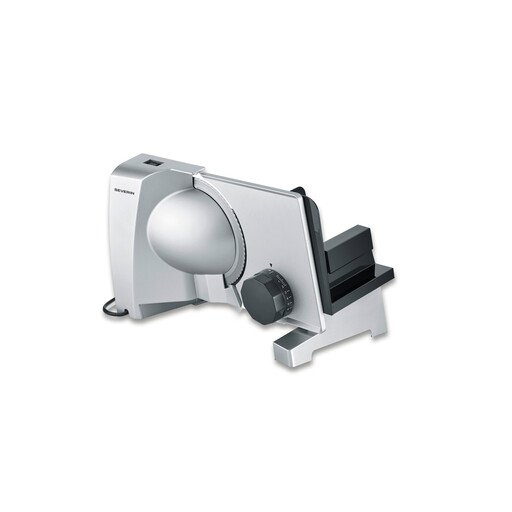
 No image available
The product name lists meat as a suitable food and describes a foldable design for when storage space matters after use.
Slice thickness: 0–15 mm. Stainless steel blade.
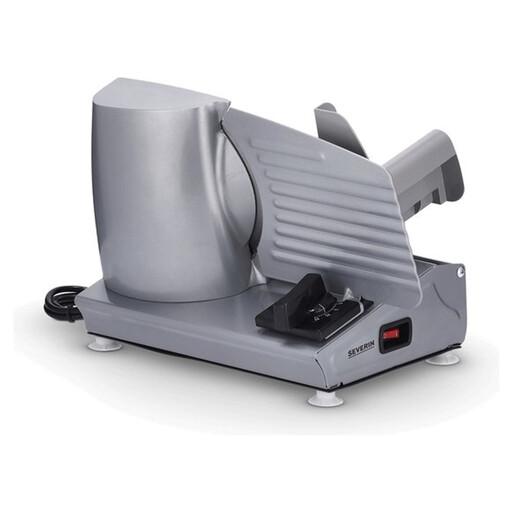
 No image available
The product name lists bread and sliced foods among its uses; check that the blades are suitable for what you plan to slice before buying.
Slice thickness: 0–23 mm. Metal housing. 130 W.
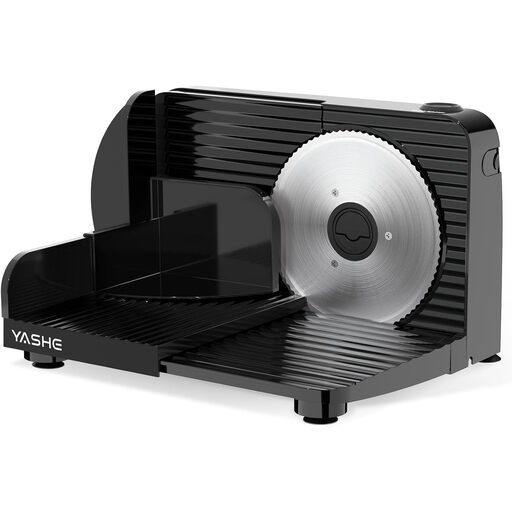
 No image available
The product name lists a ham-slicing blade, making this a good starting point if roast beef is your main priority; check what’s included with the specific version.
180 W. Ham-slicing blade and stainless steel blade according to the product name.
 No image available
The product name describes a foldable design for limited storage space. If you want particularly thin slices of roast beef, bear in mind that the blade is serrated.
Slice thickness: 0–15 mm. Blade: 17 cm, stainless steel, serrated. 180 W.
Not for every slice thickness, but manufacturers describe smooth blades as suitable for particularly thin slices. A serrated blade is important if you also want to slice crusty bread. What matters is which blade comes with the specific version of the appliance.
Unplug the appliance before cleaning and follow the instructions for the blade and carriage for your particular model. Use separate utensils for raw and cooked foods, and clean them after use.
The German Federal Institute for Risk Assessment recommends storing perishable foods in the fridge at 2 °C to no more than 7 °C, and keeping them chilled when travelling. Slice only what you need and chill the remaining meat appropriately.
In Germany, the seller’s statutory liability for defects is separate from any voluntary manufacturer’s guarantee. The Verbraucherzentrale (German consumer advice centre) notes that, for new goods, retailers are generally responsible for defects that were already present when the goods were handed over for two years. Check separately that any extra blade is approved for your model and included in the package.
Electric food slicers covered by the EU Low Voltage Directive 2014/35/EU must meet electrical safety requirements and carry the CE marking. Parts that come into contact with food are covered by Regulation (EC) No 1935/2004. The German Federal Network Agency notes that the CE marking is the manufacturer’s declaration, not an independent safety test.