Cooking for a crowd
You want to make small drop scones in several batches for a bring-and-share meal, and are mainly comparing usable cooking area and temperature control.


Choose an electric frying pan based on how many small drop scones you want to cook at once, and how much worktop and storage space you have. A larger usable cooking surface gives you more flexibility when arranging them, but takes up more room; a compact appliance is more likely to mean cooking in several batches. Adjustable heat can be useful when cooking successive batches, while wattage and capacity alone don’t tell you how many portions will fit or whether they’ll brown evenly.
You want to make small drop scones in several batches for a bring-and-share meal, and are mainly comparing usable cooking area and temperature control.
You can plan to cook in several batches, but need to find a safe spot for an electric frying pan and somewhere to store it afterwards.
You want to use the appliance for other pan-fried dishes too, so its depth, lid and cleaning requirements will also influence your choice.
First, compare the usable cooking surface with the batch size you have in mind. Then check the temperature control and where you’ll put the appliance. Finally, decide whether extra features for cooking other dishes justify the space it takes up.
| What matters | What to check | Who is this important to? |
|---|---|---|
| Usable cooking surface | Compare the cooking surface or internal dimensions with your portions, and leave room to turn them; the capacity in litres doesn’t tell you the size of the base. | When I’m cooking for several guests, I want to fit as many portions as possible on the pan at once, with space between them. Around 36% of consumers put usable cooking area and batch size first. |
| Temperature control | Check whether it has a thermostat and how you can adjust it; test the temperature with a small batch first. | When I have several batches to cook one after another, I want to keep an eye on the heat and adjust it if needed. Around 29% of consumers focus mainly on temperature control. |
| Worktop and storage space | Allow for the appliance’s external dimensions, handles, cable and a safe place to set it up; don’t compare the pan diameter alone. | When space is limited, I want to set the appliance up safely and put it away after the meal, even if that means cooking more batches. Around 21% of consumers prioritise the space it takes up. |
| Other uses and cleaning | Check the depth, lid, removable parts and cleaning instructions for the specific model. | If I want to use the pan for other dishes too, suitable features and easy-to-manage cleaning matter to me. Around 14% of consumers prioritise versatility and care. |
The capacity in litres tells you the volume, not how much base space is available for placing portions of batter side by side.
Compare the cooking surface or internal dimensions, and leave enough space to turn the scones.
Handles and the power connection need extra room. On the Bartscher 150340, the internal and external dimensions are quite different.
Measure the space where you plan to put it, and check the appliance’s full dimensions and cable routing.
An appliance feature doesn’t prove what temperature the food actually reaches. For heated food that is being kept hot, the German Federal Institute for Risk Assessment recommends at least 60 °C throughout.
Plan transport and serving around the food. If you need to keep it hot for longer, check its temperature rather than relying on the appliance’s feature name alone.
The PZ-9145 and PZ-9135 frying pans have different stated cooking surface sizes within the range.
The PP 3401 is a more compact party pan with a continuously adjustable thermostat and a lid for added versatility.
The 150340 multi-purpose pan is a square option if internal dimensions matter for arranging portions and for using it later with other pan-fried dishes.
These appliances have crêpe or griddle cooking surfaces, offering alternatives for cooking individual portions of batter. When comparing them, check that the cooking surface and temperature control suit the batch size you have in mind.
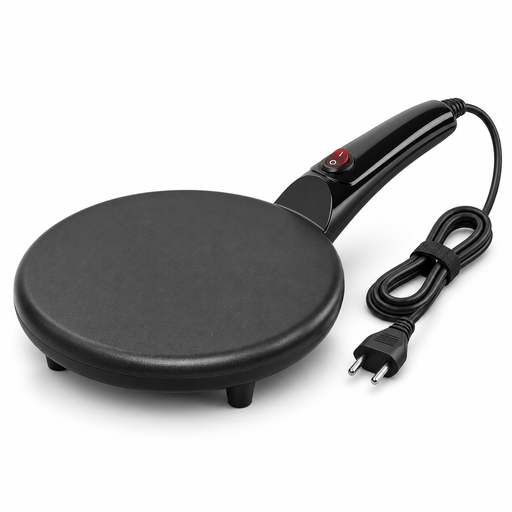 No image available
A cooking surface for individual portions of batter could be a good option if you check it’s large enough for the quantity you have in mind.
The product title specifies 800 W and a non-stick plate.
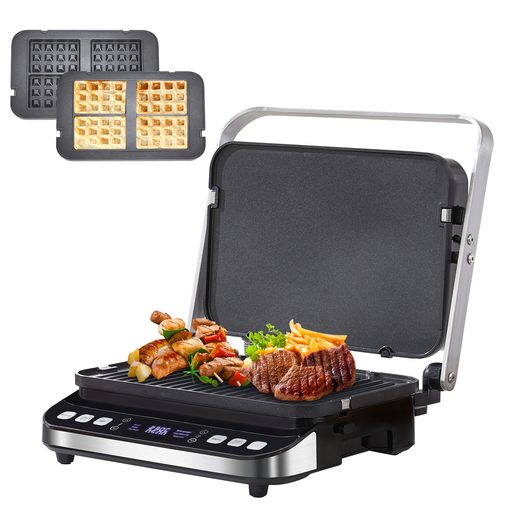 No image available
Adjustable temperature can be useful when cooking successive batches; check that the cooking surface suits the arrangement you have in mind.
The product title specifies 2000 W, a timer and non-stick plates. The description says it has two removable plates that can be used independently.
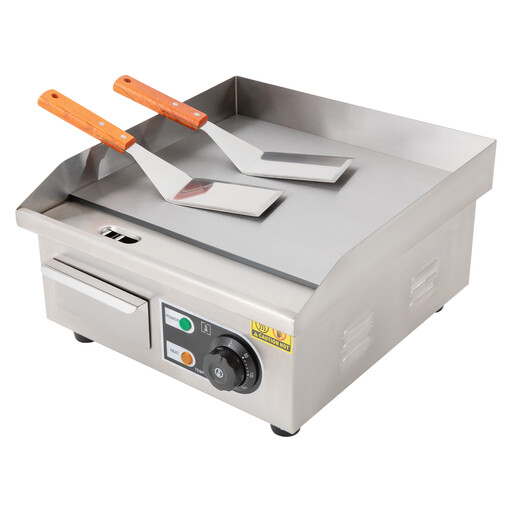 No image available
The stated cooking surface and adjustable temperature are worth considering if you’re planning to cook several batches.
The product title specifies an 8 mm thick plate, a non-stick surface and a temperature range of 122–572 °F.
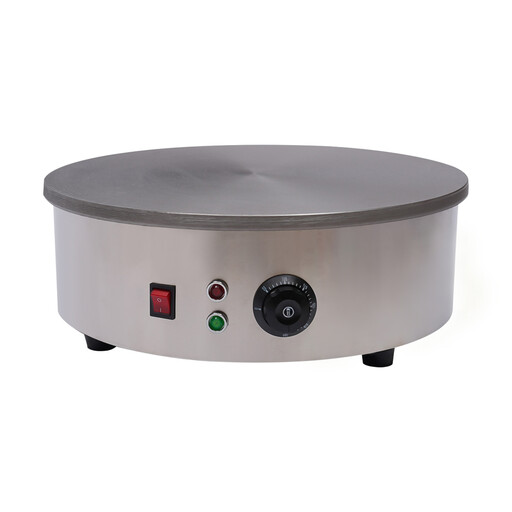 No image available
If you’re looking for a larger cooking plate, compare its dimensions with your available space and the portions you plan to make.
The product title specifies 220 V and a cast-iron plate. The description specifies a 17.7-inch cooking plate, adjustable temperature, a batter spreader and a turner.
No. The WDR recipe describes spoonfuls of batter cooked in a frying pan and turned once bubbles appear. For choosing an appliance, it’s therefore useful to check the usable cooking surface and how easy the temperature is to adjust; the recipe isn’t a test of electric frying pans.
Allow time for several batches and keep an eye on how they brown. The WDR recipe suggests keeping cooked scones on a plate under a clean tea towel while you finish cooking; this recipe tip isn’t advice on keeping food hot safely for a long time.
Keep perishable side dishes properly chilled during transport. For heated food that is actually being kept hot until it’s eaten, the German Federal Institute for Risk Assessment recommends at least 60 °C throughout, particularly in catering and communal food service. An appliance feature called ‘keep warm’ doesn’t prove that the food has reached this temperature; this recommendation isn’t a general legal temperature requirement for every private bring-and-share meal.
Electrical equipment covered by the EU Low Voltage Directive must meet its requirements; the directive applies to AC voltages from 50 to 1 000 V. According to the European Union, once the manufacturer has established conformity, they affix the CE marking and draw up an EU Declaration of Conformity. CE is a manufacturer’s declaration, not an independent quality mark; a model name alone can’t confirm whether a specific listing complies.
Check the instructions for the specific model to see which parts can be removed and how to clean the pan and its connection. Manufacturers specify removable thermostats or power cables for some models; that doesn’t mean the whole appliance is dishwasher-safe or that replacement parts will cost a particular amount.