Getting breakfast ready for a group
If you’re cooking pancakes in batches, you’ll need enough usable space to portion and turn them. The diameter alone won’t tell you how many pancakes will fit with enough room to flip them.


If you want to vary the size and shape of your pancakes and use the pan for other dishes too, an adjustable electric frying pan with plenty of clear cooking space could be a good choice. For several evenly sized pancakes at once, a model with moulds is more suitable; a flat crêpe plate is better for thin batter or batter spread freely across the surface. The manufacturer’s dimensions alone don’t tell you how many pancakes will fit at once or how evenly they’ll brown.
If you’re cooking pancakes in batches, you’ll need enough usable space to portion and turn them. The diameter alone won’t tell you how many pancakes will fit with enough room to flip them.
If consistent portions matter more than choosing your own sizes, fixed moulds can be useful. Check that the number and diameter of the moulds suit the pancakes you want to make.
If you’re cooking repeatedly, you’ll need to consider how to care for the coated surface and cool the finished pancakes safely. Also check how the appliance should be cleaned and stored.
A good choice if: you want to choose the size and portions of your pancakes, and use the appliance for other pan-fried dishes too.
Consider: the height of the sides and the room you need for a spatula can reduce the usable cooking area.
A good choice if: making several evenly sized pancakes at once matters more than choosing your own shapes.
Consider: the moulds determine the portion size and shape. Rommelsbacher specifies four moulds, each 13.5 cm in diameter, for the PC 1800.
A good choice if: you mostly want to make thin crêpes or spread batter freely across the surface.
Consider: without moulds, there are no fixed cooking spaces to determine how many smaller pancakes you can make at once.
| Priority | What to check when buying | Who is it important to? |
|---|---|---|
| Usable surface and batches | Check the cooking surface dimensions, side height and room for turning separately. Tristar gives a diameter of 30 cm for the PZ-2963, while Clatronic gives 42 cm for the PP 3570 C. | If you’re cooking in batches for several people, you’ll need room to portion and turn the pancakes; around 36% of consumers prioritise usable surface area. |
| Consistent portions | Compare the number and diameter of the moulds with your preferred pancake size. Rommelsbacher specifies four moulds, each 13.5 cm in diameter, for the PC 1800. | If you want evenly sized pancakes in each batch, you may prefer fixed moulds; around 29% of consumers place particular importance on consistent portions. |
| Coating and storage | Check the coating material and care instructions for the specific model. The German Federal Institute for Risk Assessment advises against heating PTFE-coated cookware strongly when empty. | If you’re cooking repeatedly and preparing pancakes for later, plan for care and cooling too; around 21% of consumers prioritise these considerations. |
| Versatility and storage space | Check the external dimensions, height and where you’ll store the appliance. Princess gives a diameter of 35 cm and a height of 7 cm for the 162367; Rommelsbacher says the PC 1800 can be stored upright. | If you want to use the appliance for other pan-fried dishes while also taking storage space into account, you’ll need to weigh up both needs; around 14% of consumers prioritise this combination. |
Capacity in litres describes the pan’s volume, not how many pancakes will fit at once with enough space to turn them.
Check the usable surface, side height and planned portion size separately. For fixed moulds, compare their number and diameter with what you need.
If the usable surface is smaller than you expected, you may need to cook additional batches.
A keep-warm function isn’t a substitute for properly chilling pancakes you plan to eat later.
The German Federal Institute for Risk Assessment recommends cooling leftovers to below +7 °C within a few hours and eating them within two to three days when kept chilled. Spread larger quantities across shallow dishes to help them cool.
The German consumer advice centre points out that the claim ‘PFOA-free’ doesn’t rule out the use of another fluorinated coating.
If you want to avoid a particular coating, check the material used on the specific model. Don’t assume that coating information applies to other appliances from the same brand.
The PZ-2963 is an adjustable electric frying pan with an open cooking surface.
The PP 3570 C is a larger, deeper party pan with a ceramic coating and stepless thermostat.
The PC 1800 Pam is a pancake maker with four fixed moulds.
The 162367 Multi Wonder Chef Pro is a versatile electric frying pan.
The CM 2198 is a flat, adjustable crêpe plate for thin batter or batter spread freely across the surface.
The Joybuy products below are flat electric crêpe plates which, according to their product details, are also suitable for pancakes. They aren’t electric frying pans with deep sides or appliances with fixed pancake moulds.
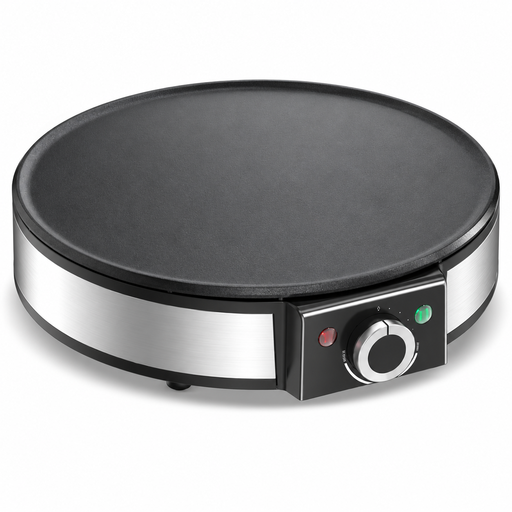 No image available
For making pancakes and crêpes on a flat plate; a batter spreader and spatula are included.
1200 W; temperature control; stainless steel; batter spreader and spatula.
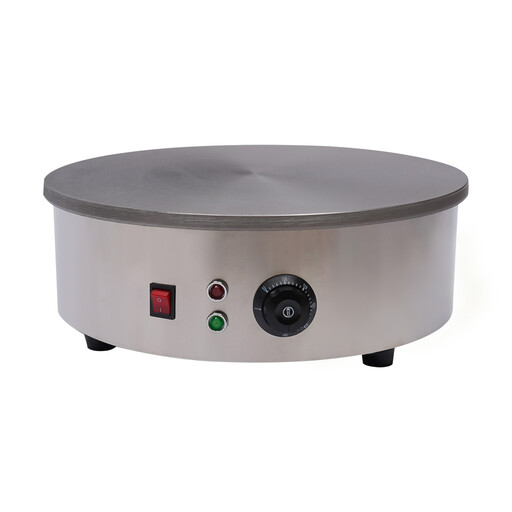 No image available
A flat plate with adjustable temperature is worth considering if you want to change the heat while cooking.
17.7 Inch; 3 kW; adjustable temperature; batter spreader and spatula.
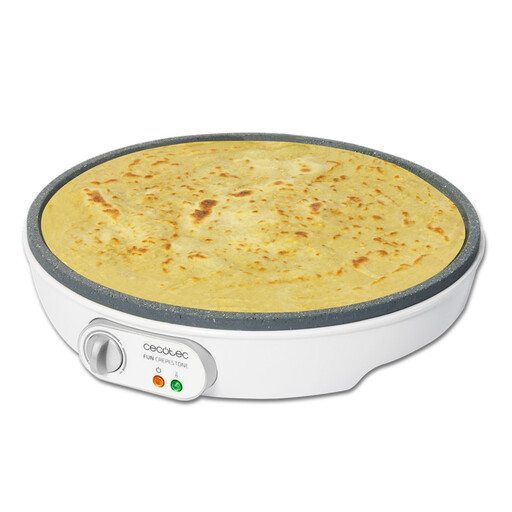 No image available
For making pancakes on a flat plate; the adjustable temperature and accessories for spreading and turning the batter are useful for cooking.
30.5 cm diameter; 1000 W; temperature control; RockStone non-stick coating; batter spreader and spatula.
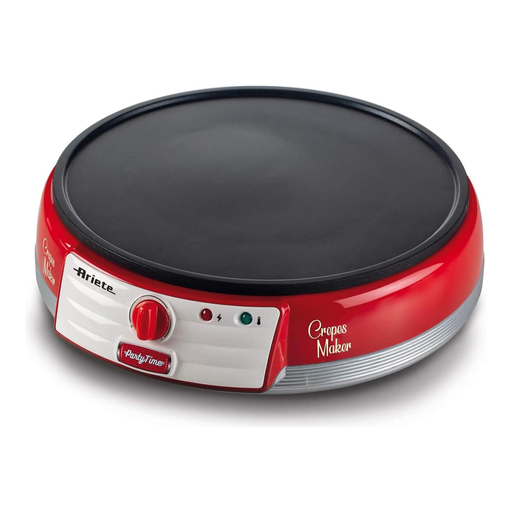 No image available
A flat, coated cooking plate is an option if you want to make pancakes or crêpes without fixed moulds.
1000 W; two wooden spatulas.
Not necessarily. An open cooking surface is a better fit if you want to vary the sizes or use the appliance for other pan-fried dishes too. Moulds are more suitable if evenly sized portions are your priority. If you choose a pan, also check the height of the sides and the room you’ll need to turn the pancakes.
Follow the instructions for your specific appliance and avoid sharp or metal utensils if the manufacturer advises against them. The German Federal Institute for Risk Assessment also recommends not heating PTFE-coated cookware strongly when empty.
Don’t use the pan as a way to cool pancakes for storage. The German Federal Institute for Risk Assessment recommends cooling leftovers to below +7 °C within a few hours and eating them within two to three days when kept chilled. You can spread larger quantities across shallow dishes to help them cool.
For mains-powered appliances with a rated voltage of 230 V, the EU Low Voltage Directive applies to electrical equipment operating at 50 to 1,000 V AC. According to the European Commission, the manufacturer uses the CE marking to declare that the product complies with the relevant product rules; it isn’t an independent quality mark for pancake-making performance.