Batch bakers making large flatbreads
If you make large pieces of dough or cook lots of small flatbreads one after another, weigh up the usable cooking surface against the space the appliance will take up on your worktop and in your cupboard.


Choose a cooking surface based on the diameter of your flatbreads and how many pieces of dough you want to cook at once. A large, open surface gives bigger flatbreads more room, while a deeper multi-purpose pan can also be used for other pan-fried dishes. A flat crêpe plate is better suited to thinly rolled dough. Check the temperature controls, space requirements and cleaning instructions for the specific model: manufacturer specifications alone don’t prove that it will brown a whole batch evenly.
If you make large pieces of dough or cook lots of small flatbreads one after another, weigh up the usable cooking surface against the space the appliance will take up on your worktop and in your cupboard.
If you roll your dough out thinly, a flat plate that’s easy to reach may be a good option. Check that its diameter suits the size of your dough pieces.
If you’re looking for an extra appliance for smaller flatbreads, consider not just the cooking surface but also where you’ll use it, how easy it is to clean and where you’ll store it.
When choosing an electric cooking surface for batch-baking flatbreads, start by finding the right size, then compare the temperature controls, cleaning requirements and space needed.
| Buying criterion | What to look for | Who will find this most important? |
|---|---|---|
| Cooking surface and batch size | Compare the diameter of your dough pieces with the stated cooking surface. Allow for the rim and handles, and check the appliance’s overall dimensions too. Tristar lists a 40 cm surface for the PZ-9145, Clatronic lists 32 cm for the PP 3401, and Severin gives an approximate 30 cm diameter for the CM 2198. | If I want to cook large flatbreads or prepare several smaller ones at once, the usable surface is key. Around 33% of consumers are likely to prioritise space for their dough. |
| Adjustable heat | Check whether the control offers set heat levels or a stepless adjustment. The rated power or maximum temperature alone tells you nothing about how evenly the heat is distributed. | If I’m cooking several flatbreads one after another, I want to be able to set the heat to suit. Around 27% of consumers are likely to prioritise this. |
| Cleaning | Check the manual to see which parts can be removed and how the cooking surface should be cleaned. According to the manufacturer, no parts of the Severin CM 2198 can be removed. | After cooking a large batch, I want to know how easy it is to remove dough residue and which parts I can clean. Around 20% of consumers are likely to focus mainly on cleaning. |
| Positioning and handling | Measure your available worktop and storage space, and check the cable length, feet and instructions in the user manual. | If my kitchen has little spare space, the extra appliance needs to sit securely and be easy to put away afterwards. Around 20% of consumers are likely to prioritise space and ease of handling. |
The stated diameter alone doesn’t tell you how much room there really is for your dough. The rim and overall design also affect how you place and turn the dough.
Measure your usual dough pieces and compare them with the stated frying or plate surface of the specific model.
If there’s less usable space than you expected, you may need to cook extra batches or make smaller flatbreads.
Rated power and temperature settings describe technical features, but they don’t replace a comparative test of heat distribution across the whole surface and over several batches.
Use these figures to narrow down your options, then check whether there are reliable test results for the specific appliance and your type of dough.
Severin describes the CM 2198 as suitable for crêpes and galettes. That doesn’t automatically mean it can also be used to make thick or filled flatbreads.
Choose a flat design mainly for thinly rolled dough, and check separately whether it’s suitable for thicker recipes.
Tristar offers both a larger and a smaller electric multi-purpose pan for making flatbreads.
The PP 3401 is a medium-sized electric party pan, which the manufacturer says is also designed for other pan-fried dishes.
The CM 2198 is a flat crêpe plate and an alternative to a deeper electric pan.
The following Joybuy products include flat electric cooking surfaces and other electric cookers that you can compare by surface area, temperature control and cleaning requirements. The product information doesn’t include tested results for cooking flatbreads.
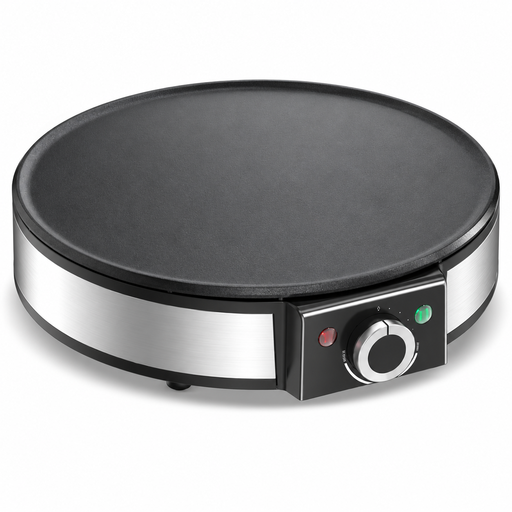 No image available
Designed for thinly rolled dough; the description lists a stainless steel cooking plate and adjustable temperature.
1200 W; a batter spreader and spatula are included, according to the description.
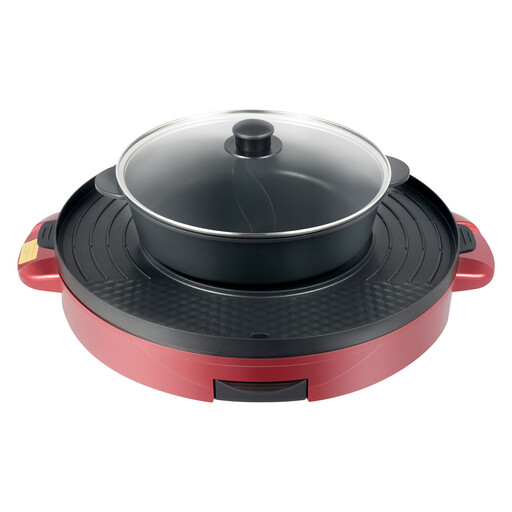 No image available
An electric cooking surface with two independently controlled temperature zones; the product description lists removable cooking surfaces.
220 V, 2200 W; the surfaces are described as non-stick.
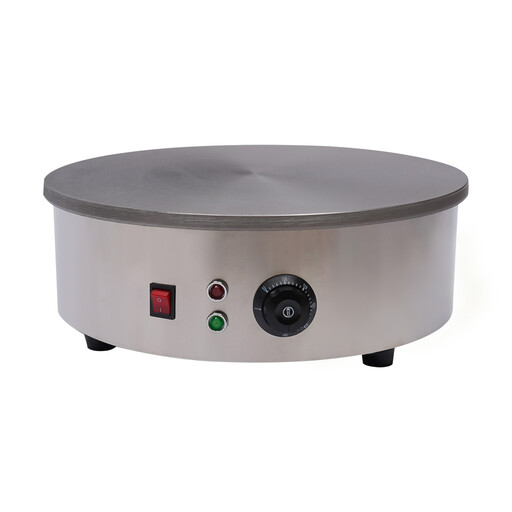 No image available
Designed for thin batters; the product information lists adjustable temperature and a 17.7-inch cooking surface.
3 kW; a batter spreader and spatula are mentioned in the title.
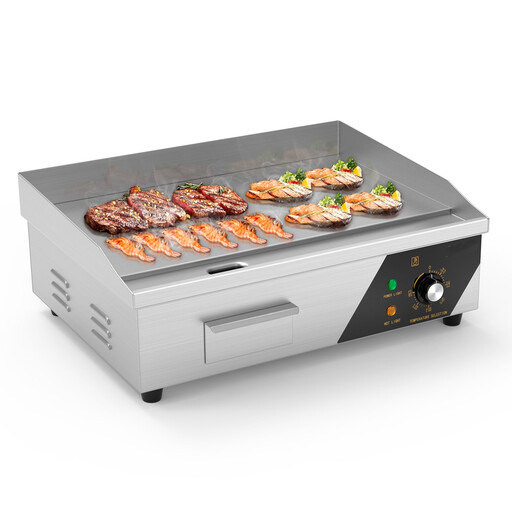 No image available
A larger electric cooking surface; the description says the temperature is steplessly adjustable.
22 inches, 3000 W, 220 V; the surface is described as stainless steel. It gets very hot during use. Do not leave the appliance unattended while it is operating.
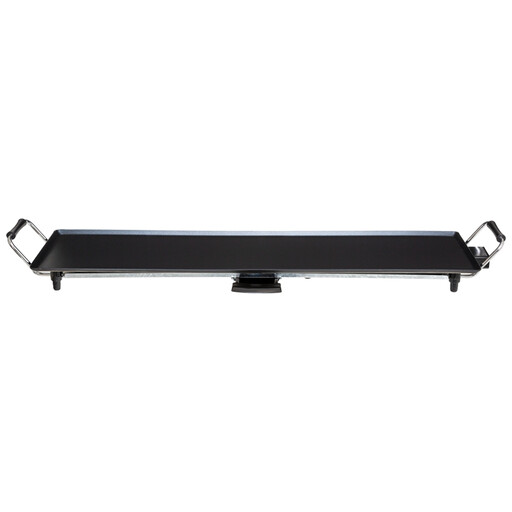 No image available
Designed for larger batches; the product description lists adjustable temperature and a non-stick surface.
90 cm cooking surface; a removable drip tray is also mentioned.
First, compare the diameter of your rolled-out flatbreads with the usable cooking surface. A flat plate such as the Severin CM 2198 may suit thin dough; for larger flatbreads or other pan-fried dishes, you could consider a multi-purpose pan of the right size. These design specifications don’t prove that it will brown food evenly.
Follow the instructions for the specific appliance. For the CM 2198, Severin recommends using wooden or heat-resistant plastic utensils rather than metal or sharp turners, to avoid damaging the coating.
The Federal Centre for Nutrition recommends freezing bread while it’s as fresh as possible and in portions. The Consumer Advice Centre also explains how to freeze bread and defrost only what you need. For homemade flatbreads, you should also consider their size, filling and packaging: this general advice doesn’t specify how long every recipe will keep.
For a defect in the goods, § 439 BGB generally provides for the seller to remedy the fault or supply a fault-free product; § 438 BGB normally sets a two-year limitation period for standard purchases. As for electricity use, a rated power of 1500 W works out at a maximum of 1.5 kWh for one hour of continuous operation at full rated power. Actual consumption may vary when the thermostat is in use.
According to information from the European Union, the manufacturer is responsible for ensuring that a product meets the applicable EU requirements and carries the CE marking, where required. The CE marking is the manufacturer’s declaration of conformity, not an independent quality mark. Also check the electrical specifications and instructions for the specific appliance.