
Lieferung heute & morgen

Qualitätsgarantie

Willkommens-Angebote freischalten: KOSTENLOSE Lieferung | Bis zu 80 % RABATT | Kostenlose 30-Tage-JoyPlus-Testphase
App herunterladen
An electric heated blanket can provide individually adjustable warmth in bed, on the sofa or at your desk. Before buying, however, it is worth taking a close look at the technical specifications and care instructions. Many products look similar at first glance, but differ considerably in temperature control, timer functions, washability and intended use.
A high number of settings may sound convincing at first. What matters, however, is whether the controls remain easy to understand and whether the temperature adjustment suits the intended use. For an electric underblanket in bed, three clearly identifiable settings may be sufficient. If you want to apply warmth specifically to your back, legs or seating area, five or ten settings may be more beneficial.
For a model with an LED display, you should also check whether the display is easy to read and which functions can actually be accessed via the controller.
A heated blanket with automatic switch-off reduces the risk of the appliance being left on unnecessarily for too long. It is not, however, a substitute for reading the instructions. A heated blanket should not be creased, folded or secured with sharp objects. You must also follow the instructions regarding use while sleeping, moisture and people who may be particularly vulnerable.
With a machine-washable heated blanket or a heating pad, the connection between the controller and the textile section can generally be disconnected. Only the removable textile component may be washed in accordance with the care instructions. The controller, cable and plug must not be placed in the washing machine or immersed in water. After washing, the textile must dry completely before it is connected again.
For one person on the sofa, a compact blanket or heating pad may be sufficient. A 140 x 160 cm heated blanket, on the other hand, is more suitable for one person in bed or for covering a larger area of the body. Couples should look for a double heated blanket with separate controllers, allowing each side to be adjusted independently.
It is also important to distinguish between an overblanket and an electric underblanket. An underblanket is placed on the mattress and covered with a suitable bed sheet. It is not designed to be used folded or heavily creased.
Look out for the following details:
A timer with several duration options is practical, but should not be seen as a licence to leave the appliance unattended. The safety instructions for the individual product remain decisive.
Objective product information is more important than general advertising claims. Relevant features include overheating protection, overcurrent protection, fuses in the controller and a suitable plug for the German power supply. The products mentioned here include CE, CB or UKCA markings, among others. These details refer to the respective product descriptions and should be checked again on the product page before purchase.
For Germany, the electrical specifications are also relevant: models with 220–240 V and 50–60 Hz are designed for the local mains supply, provided the product details expressly state this.

Why this product suits this profile: Measuring 160 x 140 cm, with three temperature settings and two controllers, it covers the basic requirements for a double heated blanket.
The detachable connection allows the textile section to be machine washed. The description lists timer options of 2, 4 or 12 hours, as well as overheating and overcurrent protection.
Two controllers, LED display, three heat settings and detachable connection.
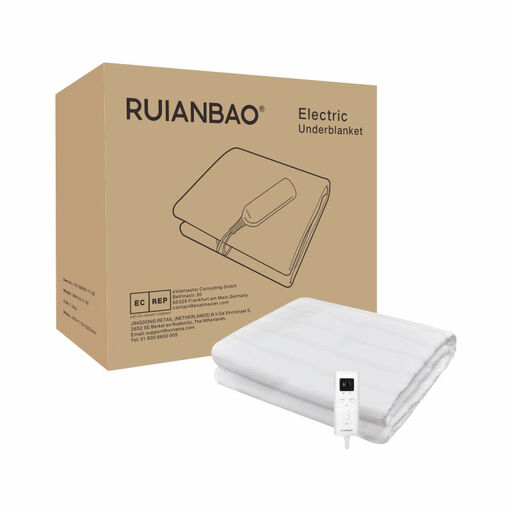
Why this product suits this profile: If you are looking for a precisely adjustable electric underblanket, this model offers ten heat settings, an LED display and several automatic switch-off options.
The product description specifies a detachable, machine-washable design and several safety functions. Please note: according to the specifications, only heat setting 7 is available when the switch-off time is set to 1 or 2 hours.
140 x 160 cm, 10 temperature settings, LED display, Instant Preheat function and 60 W power.
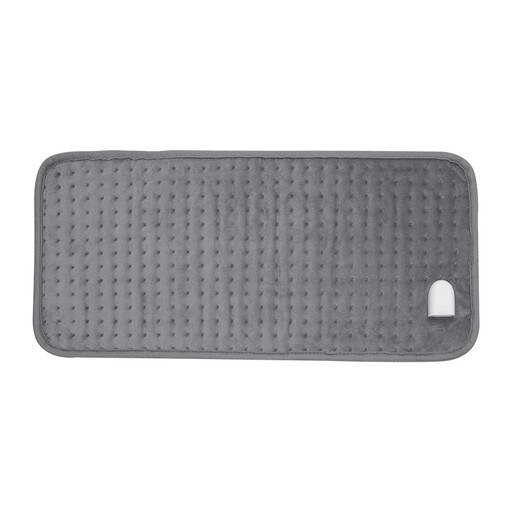
Why this product suits this profile: Measuring 30 x 60 cm, the compact heating pad can be targeted at the seat, back, legs or shoulders and is designed for regular use.
Five temperature settings and automatic switch-off after 90 minutes prevent the heat from being adjusted only in broad increments. The controller must be completely removed before washing.
Compact design, five heat settings, 90-minute automatic switch-off and machine-washable textile section.
We have put together a complete, regularly updated list of products that fully meet these strict selection criteria and the safety regulations applicable in the EU.
Before first use, make sure the connection is secure and the cable is unobstructed. The blanket must not be creased, rolled up or trapped beneath heavy objects. If you notice visible damage to the cable, discolouration or unusual heat generation, stop using the product immediately and unplug it from the mains.
When cleaning:
People who may not reliably be able to perceive heat, as well as babies or people requiring assistance, should not use these products without suitable supervision. An electric heated blanket is also not a medical device and does not replace medical advice.
Consumption depends on the power rating, the selected temperature setting and how long the blanket is used. A 60 W model uses a maximum of approximately 0.06 kWh after one hour of operation, if the stated power is drawn continuously. The actual cost depends on your electricity tariff and may be lower when thermostat control or breaks reduce power consumption.
This should only be done if the instructions for the particular model expressly permit it. An automatic switch-off function provides an additional time limit, but does not replace the safety requirements. For preheating, a timer or Booster function is generally more suitable than leaving the appliance switched on continuously.
It is not possible to give a blanket lifespan that applies in every case. It depends on the material, workmanship, storage and care. Creasing, moisture, heavy mechanical stress and improper washing can shorten its service life. Regular visual checks of the cable, plug and surface can help identify potential damage at an early stage.