
Lieferung heute & morgen

Qualitätsgarantie

Willkommens-Angebote freischalten: KOSTENLOSE Lieferung | Bis zu 80 % RABATT | Kostenlose 30-Tage-JoyPlus-Testphase
App herunterladen
By the Joybuy Product Recommendation Officer, July 16, 2026
A targeted heat source can significantly enhance comfort in specific areas of your home. Whether it's a chilly bathroom in the morning, a draughty home office, or a rarely used guest room, an electric heater offers a flexible and often easy-to-install solution. However, with the sheer variety of models and technologies available, making a choice can be overwhelming.
This guide is designed to provide clarity. We'll explain the key criteria for buying an electric heater and present a selection of models for different needs. Our goal is to give you a factual basis for your decision.
To find the right appliance for your needs, three aspects are particularly important: the heater type, its features, and choosing the right power output.
Electric heaters use different technologies to generate heat, making them suitable for various applications.
Modern devices offer features that not only increase comfort but also help control energy consumption. An energy-efficient electric heater is often distinguished by its smart controls.
A key feature is a heater with a thermostat. The thermostat measures the room's temperature and automatically turns the unit off once the desired temperature is reached. It switches back on when the temperature drops. This prevents unnecessary continuous operation and lowers electricity costs. A timer function also allows you to schedule heating periods in advance.
A heater's power output is measured in watts (W). As a rule of thumb for rooms with standard insulation and a ceiling height of about 2.5 metres:
Therefore, for a 15 m? room, a heating output of around 1,500 watts is a good benchmark. A portable heater with this capacity can be used flexibly in different rooms of a similar size. For rooms with poor insulation or high ceilings, you should factor in a higher wattage.
Based on the criteria mentioned, we have compiled a selection of products for various applications.
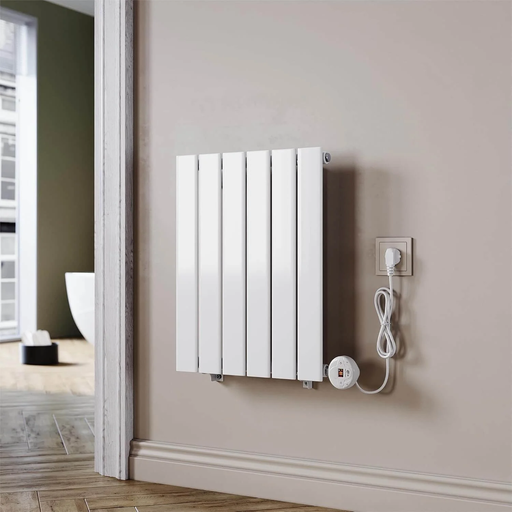
Why It Stands Out: This model combines the function of a room radiator with that of a towel warmer. The programmable thermostat and timer function allow for precise control over temperature and heating schedules, making it an efficient solution for the bathroom. Its SPCC steel construction ensures good heat conduction and durability.
Pros:
Who It's For: Users looking for a permanently installed, energy-efficient heating solution for the bathroom who also appreciate the added comfort of pre-warmed towels.
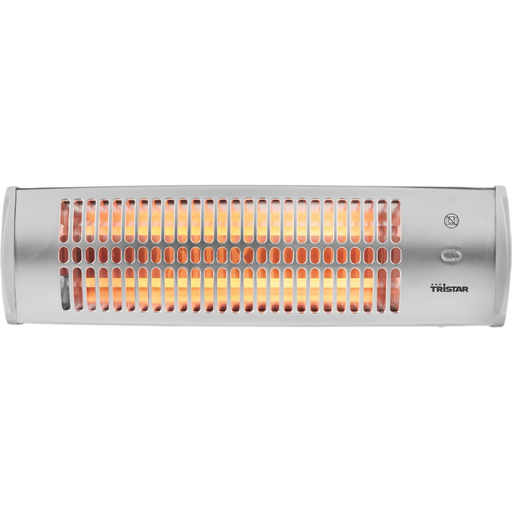
Why It Stands Out: The Tristar KA-5086 is a straightforward and compact heater. With 1200 watts of power, it's suitable as a portable heater for quickly warming up smaller rooms. Its simple operation and light weight make it a flexible helper for occasional use.
Pros:
Who It's For: Users who need an affordable, portable, and easy-to-use heater for occasional use in various spaces like a home office or workshop.
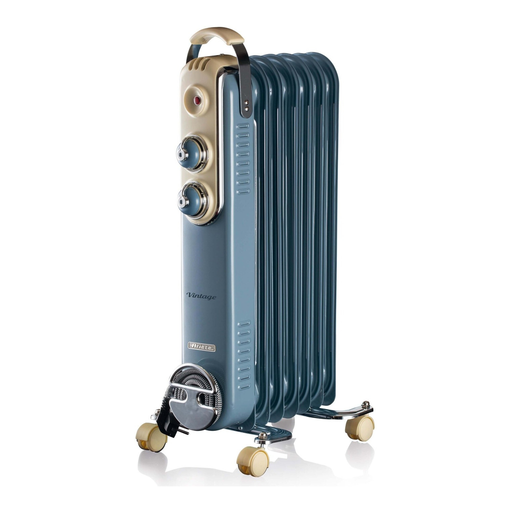
Why It Stands Out: This oil-filled radiator from Ariete combines a distinctive retro design with the proven technology of an oil radiator. With 1500 watts of power and seven fins, it delivers even, long-lasting radiant heat. According to the manufacturer, it is suitable for rooms up to 20 m?. The three heat settings allow you to adjust the thermal output.
Pros:
Who It's For: Design-conscious users looking for a quiet and consistent heat source for medium-sized living rooms or bedrooms who value distinctive aesthetics.
If you prefer a particularly durable and aesthetically pleasing heating solution, stone radiators could be an interesting alternative. These devices use natural stone as a thermal storage medium and emit a pleasant radiant heat.
Discover our selection of Electric Stone Radiators for a durable and stylish heat source.
Power consumption depends directly on the appliance's wattage and how long it's used. A 1,500-watt (1.5 kilowatt) heater running for one hour at its highest setting will consume 1.5 kilowatt-hours (kWh) of electricity. Models with a heater with a thermostat and a timer function help reduce consumption because they don't run continuously.
Following the rule of thumb (100 W per m?), a heating output of around 2,000 watts would be recommended for a 20 m? room. Models like the 1,500-watt Ariete oil-filled radiator can also be sufficient if the room is well-insulated. The choice also depends on ceiling height, insulation, and the desired heating speed.
Yes, but only if they are explicitly designed for it. Electrical appliances for the bathroom must have a specific protection rating against moisture, indicated by the IP code (e.g., IPX4 for splash protection). An electric bathroom radiator meets these requirements. Installation should always be carried out according to the manufacturer's instructions and applicable safety regulations.