By the Joybuy Product Recommendation OfficerLast updated: July 17, 2026
When the temperatures drop, a reliable heat source becomes essential. Central heating isn't always the most flexible or cost-effective solution, especially when you only need to heat a single room, like a home office or bedroom, quickly and precisely. An electric heater offers a practical alternative as a supplemental heat source.
This guide is designed to help you understand the different types of electric heaters and make the right choice for your needs. We'll outline objective criteria and present a selection of models that stand out for their features and specific applications.
Choosing the Right Electric Heater: What to Look For?
Selecting the right device depends on the size of your room, your desired heating speed, and personal preferences. Three criteria are particularly important.
1. Fan Heater, Convector, or Oil-Filled Radiator: Which Type for Which Purpose?
The technology determines how quickly and in what manner a room is heated.
- Fan Heaters: These devices draw in cold air, heat it over an element (often ceramic, also known as PTC), and distribute the warm air throughout the room using a fan. They are excellent for providing quick, targeted heat to smaller areas, such as a bathroom before a shower or a personal workspace.
- Convector Heaters: A convector heater warms the air that flows through it. The heated, lighter air rises, while cooler air is drawn in from below. This natural cycle ensures even and silent heat distribution throughout the room. Convectors are a great choice for living rooms and bedrooms.
- Oil-Filled Radiators: These units are filled with a special oil that is electrically heated, which then radiates warmth into the room via metal fins. While an oil-filled radiator takes longer to heat up, it retains heat for some time even after being turned off. As a silent electric heater, it is ideal for extended use, such as overnight in a bedroom.
2. Key Features for Comfort and Efficiency
Modern electric heaters offer more than just warmth. Features like a built-in thermostat can make their operation more efficient.
- Heater with a Thermostat: A thermostat measures the ambient room temperature and automatically turns the unit off once the desired temperature is reached. It switches back on when the temperature drops. This prevents unnecessary power consumption and makes the electric heater energy-efficient.
- Timer and Remote Control: A timer allows you to pre-set the heating duration, preventing the unit from running accidentally. A remote control enhances convenience, allowing you to adjust settings comfortably from your sofa or bed.
- Safety Features:Overheat protection and tip-over protection are essential safety standards. Overheat protection shuts the device off if it gets too hot, while the tip-over switch cuts the power if the unit is knocked over.
3. The Right Power for Your Room Size
Heating power is measured in watts (W). As a rule of thumb for rooms with standard insulation and a ceiling height of about 2.5 metres, you'll need approximately 80 to 100 watts of power per square metre (m?).
Therefore, for a heater for a 20 m? room, a unit with a power output of 1600 to 2000 watts would be a suitable choice. Many models offer multiple power levels to flexibly adjust the heat output.
Our Selection: Portable Heaters for Various Needs
Based on the criteria above, we have curated a selection of heaters that cater to different requirements.
1. Aigostar PTC Fan Heater with Remote Control
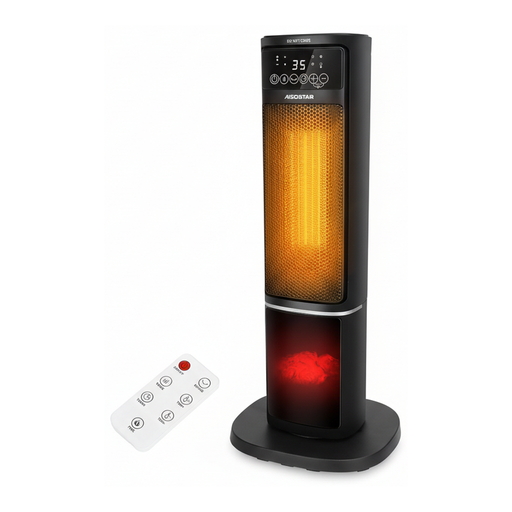
This portable heater combines rapid heating with useful extra features and an attractive design.
- Why It Stands Out: The unit uses PTC ceramic heating elements for fast and efficient warming. A special feature is the optional 3D flame effect, which creates a cosy atmosphere. Five operating modes, including an ECO mode for automatic power adjustment and a fan-only mode, offer excellent flexibility.
- Advantages:
- Fast heat-up time with 2000W PTC heating technology
- 60° oscillation for wide heat distribution
- Control via LED touch panel or infrared remote
- Built-in 24-hour timer and thermostat (5–35 °C)
- Comprehensive safety features including overheat and tip-over protection
- Who Is It For? Users looking for a fast and flexible heat source for rooms up to 20 m?, who also value convenience features like a remote control and timer.
2. Aigostar Convector Heater with Remote Control
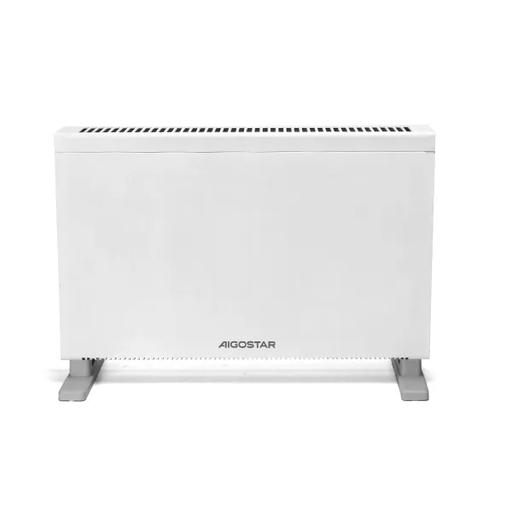
This convector heater is designed for silent and even heating of larger rooms.
- Why It Stands Out: Thanks to natural convection, this heater operates almost silently. With a power output of up to 2000W, it can efficiently heat rooms from 20 to 25 m?, according to the manufacturer. It can be controlled via an LED touch display or the included remote control.
- Advantages:
- Silent operation, ideal for bedrooms and living rooms
- Two power settings (1250W / 2000W) plus an ECO mode
- Suitable for rooms up to 25 m?
- Safety features like tip-over and overheat protection
- Easy to operate via touch display and remote control
- Who Is It For? Individuals who need a silent and powerful electric supplemental heater for medium to large living spaces and prefer a consistent room temperature.
3. Ariete Vintage Oil-Filled Radiator
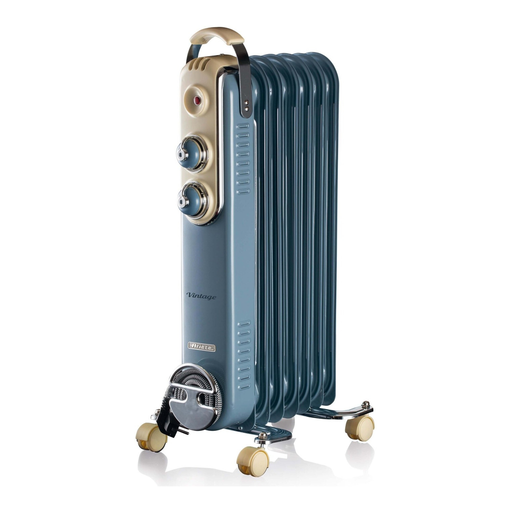
This oil-filled radiator combines functionality with a striking retro design, perfect for long-lasting, silent warmth.
- Why It Stands Out: Its vintage-style design makes this heater an eye-catching piece. Functionally, it delivers all the benefits of an oil-filled radiator: it continues to release heat for a while after being turned off and operates in complete silence.
- Advantages:
- Long-lasting and even heat distribution
- Completely silent operation
- Three heat settings to adjust the 1500W output
- Compact design and integrated carrying handle
- Built-in overheat protection
- Who Is It For? Design-conscious users looking for a completely silent and consistent heat source for rooms up to 20 m?, such as a bedroom or a quiet workspace.
Looking for More Options?
The models featured here cover common use cases. However, if you need different designs, power levels, or specific features, you might find the perfect unit for your home in our broader selection of electric heaters.
Discover More Electric Heaters
Frequently Asked Questions (FAQ)
How much electricity does an electric heater use?
Consumption depends directly on the power rating (watts) and the duration of use. A 2000-watt (2-kilowatt) heater running for one hour on its highest setting will consume 2 kilowatt-hours (kWh) of electricity. A heater with a thermostat and an ECO mode can significantly reduce consumption, as it only turns on when needed.
Which electric heater is suitable for continuous operation?
For extended or continuous use, oil-filled radiators and convector heaters are often the better choice. They distribute heat more evenly and operate silently, which is particularly pleasant in living rooms and bedrooms. Fan heaters, due to their fan noise, are better suited for short-term use.
Modern electric heaters sold in the EU must meet strict safety standards. When buying, look for certified safety features like overheat protection and tip-over protection. It is important not to cover the units, to maintain sufficient distance from flammable materials, and not to use them in damp environments unless they are explicitly designed for it (e.g., with an IP rating).


