
Lieferung heute & morgen

Qualitätsgarantie

Willkommens-Angebote freischalten: KOSTENLOSE Lieferung | Bis zu 80 % RABATT | Kostenlose 30-Tage-JoyPlus-Testphase
App herunterladen
An electric heater can be a flexible supplementary heating solution in rented homes, bathrooms, bedrooms or home offices. It can usually be used without modifying the central heating system and moved from one room to another when needed. However, fan heaters, ceramic fan heaters, oil-filled radiators and electric radiators differ considerably in terms of heat distribution, noise levels, installation and ease of use.
If you focus only on a high wattage or eye-catching design, you may overlook important details. The following criteria will help you assess marketing claims objectively and choose the right electric heater for your household.
A 2000-watt heater delivers more power than a 750 or 1500-watt model, but at full power it also uses correspondingly more electricity. You can calculate the approximate cost using this formula:
Power in kW × operating hours × electricity price per kWh = cost
A 2 kW fan heater running for two hours uses 4 kWh. The key factor is therefore not just the maximum power output, but whether the appliance has a thermostat, several heat settings, an Eco mode or a timer.
Claims such as “suitable for 25 m²” depend on ceiling height, insulation, window area, outdoor temperature and the desired room temperature. A 2000-watt appliance may be used differently in a well-insulated room than in a draughty period property. For small rooms used occasionally, a compact fan heater is often more practical. For longer heating periods, an oil-filled radiator or wall-mounted heater may provide more even heat distribution.
A bathroom heater must be suitable for the intended area of use. An IP rating describes protection against dust and water according to the marking, but it does not replace an assessment of the local installation conditions. Appliances must not be immersed in water or operated directly next to water sources. Distances, sockets, residual-current protection and the manufacturer’s instructions must be observed. A permanently mounted wall heater should be installed by a qualified electrician.
Several power settings are more useful when choosing a heater than a single maximum-power figure. 750 watts may be sufficient for a small, well-insulated room or short periods of use. 1500 watts offer more reserve, while 2000 watts can provide heat more quickly but increase electricity consumption.
A radiator with a thermostat adjusts the heating output according to the set temperature. A heater with a timer is useful when you want to limit operating time. A heater with a remote control makes it easier to operate the appliance from the sofa or bed, but it is no substitute for positioning the heater carefully.
A ceramic fan heater distributes heat using a fan and usually responds quickly. However, fan noise can be disruptive in a bedroom. 90° oscillation can distribute warm air more widely around the room. An oil-filled radiator heats up more slowly, but releases its stored heat without a continuous airflow. A wall-mounted heater saves floor space, but requires a suitable wall and professional installation.
Look for overheat protection, tip-over protection and automatic shut-off. These features reduce certain operating risks, but do not make unattended use safe as a general rule. Heaters must not be covered and need to be kept away from curtains, furniture and bedding. Before moving a portable heater, switch it off and allow it to cool down.
For an IP66 rating, check whether it actually applies to the specific model and intended area of use. The Komodo appliance is listed as having this rating according to the product details; at the same time, the usage instructions state that it must not be immersed in water or used directly next to water sources.
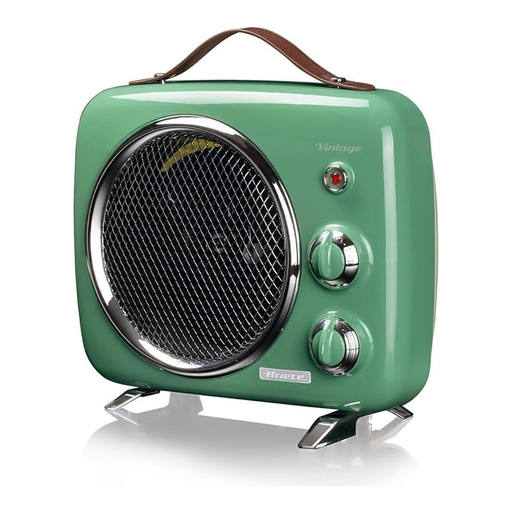
Why does it suit this profile? This compact fan heater has a carry handle, so it can be used flexibly in the bedroom, hallway or home office.
Two speed settings and an adjustable thermostat avoid restricting you to a single heat setting. The room size must still be assessed individually.
2000 W heating output, warm- and cool-air function, carry handle and compact dimensions of 31,5 × 13,5 × 27,5 cm.
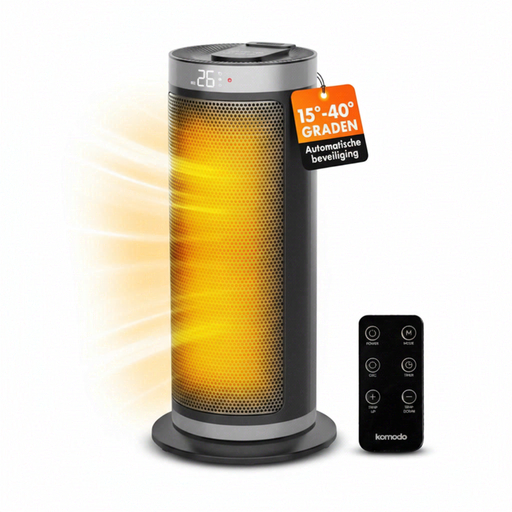
Why does it suit this profile? If you value temperature selection, remote control and flexible positioning, this heater offers several ways to control it in rooms up to the stated size of 25 m².
Three power settings, a thermostat, Eco mode and a timer help you adjust the operating time and output to suit your needs. Before using it in a bathroom, the IP66 rating should be checked against the local conditions.
750/1500/2000 W, 15–40 °C, 90° oscillation, LED display, remote control, plus overheat and tip-over protection according to the product details.
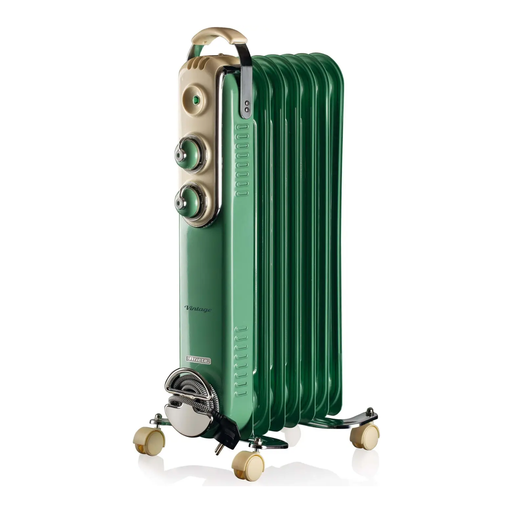
Why does it suit this profile? This portable heater is ideal for users who prefer a quieter heat source without a running fan.
The three power settings allow you to adjust usage instead of running the heater permanently at full power. Because it heats up gradually, it is less suitable when you need immediate warmth.
1500 W, seven heating elements, carry handle and four castors for moving it between rooms.
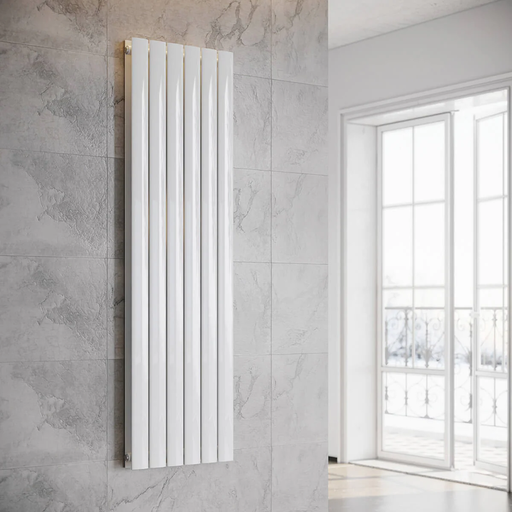
Why does it suit this profile? Wall mounting keeps the floor clear and can be suitable for permanently planned heating solutions in living rooms or hallways.
Before buying, check the connection type, wall clearances and exact product dimensions. The product details refer to different measurements, so the current product page must be checked.
Flat white design, centre connection and low-carbon stainless-steel construction according to the product description.
In the full category, you will find an ever-changing selection of heaters and accessories for different rooms, power settings and installation types.
The cost depends on the power output, operating time and electricity tariff. A 2 kW appliance uses 2 kWh when running at full power for one hour. A thermostat, timer and lower power settings can reduce the operating time or average power consumption. It is not possible to make a general claim that a heater is “energy-saving” without considering how it is used.
Its lifespan depends on the design, operating time, exposure to dust and level of care. With fan heaters, it is particularly important to keep the air inlet clean. Oil-filled radiators need unobstructed heat dispersion and must not be covered. The manufacturer’s maintenance and safety instructions apply to each model.
Only if the specific model is intended for this use according to the manufacturer. An IP rating alone does not answer all questions about installation zones, sockets and residual-current protection. Before use, check the product documentation and local electrical requirements; if in doubt, consult a qualified electrician.