
Lieferung heute & morgen

Qualitätsgarantie

Willkommens-Angebote freischalten: KOSTENLOSE Lieferung | Bis zu 80 % RABATT | Kostenlose 30-Tage-JoyPlus-Testphase
App herunterladen
An electric heater can be a flexible source of extra warmth in the bedroom, living room, office or bathroom. But not every model is right for every room. If you focus solely on wattage or eye-catching advertising claims, you could end up paying for features that offer little practical benefit.
A 2000 W fan heater can warm a room quickly. At full power, however, it uses 2 kWh per hour of operation. At an assumed electricity price of 0.35 euros per kWh, that would cost around 0.70 euros per hour. Your actual costs will depend on your tariff, how long you use it and how the thermostat operates.
So an energy-efficient fan heater isn’t necessarily one with particularly low power consumption. What matters is adjustable heat settings, a thermostat, a timer and choosing a model suited to the size of your room. In everyday use, a 2000 W heater that warms a room briefly and then switches off can work differently from one that runs continuously.
Manufacturers often state the size of room a heater can warm. However, this depends on insulation, ceiling height, outdoor temperature, window area and the temperature you want to reach. An electric fan heater for 10 to 15 m² isn’t necessarily suitable for a poorly insulated room in an older building.
As well as the advertised floor area, check the heat output, where the heater can be positioned and how it distributes warmth. Oscillation can spread warm air more widely, but it doesn’t make up for choosing the wrong size.
A fan heater with tip-over and overheat protection has additional built-in safety features. Even so, it must be placed on a stable, level surface and must not be covered. Keep fabrics, curtains and furniture at a safe distance.
For bathrooms and patios, the IP rating is particularly important. A rating such as IP24 or IP65 must be suitable for how you intend to use the heater. An IP rating doesn’t mean you can submerge a heater in water. Always follow the instruction manual and the manufacturer’s guidance on where the product can be used.
The typical models in this selection have a heat output of 800 to 3000 W. According to the product details, an 800 W infrared panel is designed for rooms up to 20 m², while compact 1500 W ceramic heaters are more suited to smaller personal spaces. A 2000 W model may be suitable for medium-sized rooms, provided you take insulation and ceiling height into account.
Wattage indicates the maximum electrical power consumption, not how long the heater will actually run. A fan heater with a thermostat can reduce its heat output or pause heating depending on the room temperature.
A heater with a remote control or app makes it easier to adjust from the sofa or bed. A fan heater with a timer can also switch off after a set period. For a bedroom or office, check the stated decibel level. However, manufacturer figures such as 34 dB or 50 dB are only comparable under certain conditions.
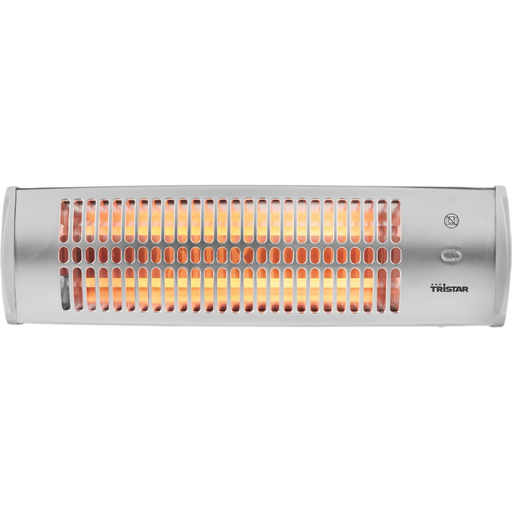
Why this product suits this need: This 1200 W electric heater is designed to be easy to use and has a timer that can be set from 1 to 12 hours.
Its limited output helps you avoid choosing a larger heater than you need for a small area. Before buying, check the room size and the distance from flammable materials.
1200 W, a timer settable from 1 to 12 hours and a ceramic heating element, according to the product description.

Why this product suits this need: For bedrooms, offices and living areas, the manufacturer states a noise range of 25 to 42 dB and an adjustable temperature from 5 to 35 °C.
The stated room size range of 15 to 25 m² makes it easier to assess than a vague advertising claim with no floor area specified. Its actual suitability depends on the conditions in your room.
2000 W, oscillation, remote control, a 12-hour timer, plus overheat and tip-over protection, according to the product details.
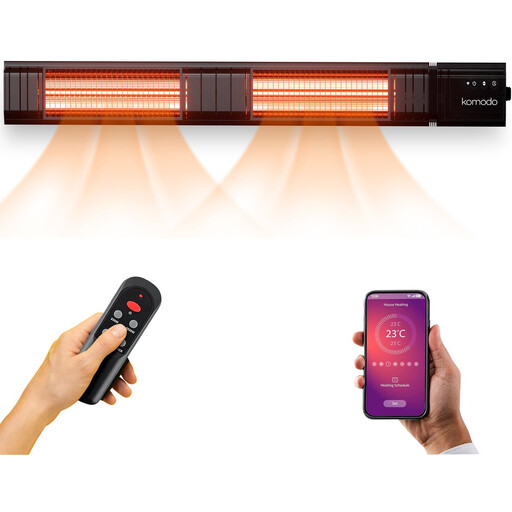
Why this product suits this need: This infrared patio heater is designed for indoor and outdoor use according to the product description, and has an IP65 rating.
The stated IP65 rating gives you a specific indication of its suitability for outdoor use. However, the heater must not be submerged and should be kept at a safe distance from flammable materials.
3000 W, nine heat settings, 180-degree oscillation, remote control, app control and a 24-hour timer, according to the manufacturer.

Why this product suits this need: The manufacturer states a noise range of 25 to 42 dB, temperature control from 5 to 35 °C and a compact design.
A specific decibel rating can help you shortlist heaters for rooms where noise matters. It’s still worth checking how loud the heater is under your own set-up and operating conditions.
1500 W, remote control, a 12-hour timer and several safety features, according to the product description.
We’ve put together a complete, regularly updated list of products that meet these strict selection criteria and fully comply with the safety regulations applicable in the EU.
Before use, bear the following points in mind:
A 2000 W heater uses 2 kWh per hour when running at full power. Calculate the cost using: power in kW × hours of operation × electricity price per kWh. The thermostat, heat setting and room insulation all affect actual consumption.
Quiet ceramic fan heaters, oil-filled radiators and compact infrared heaters are all options for a bedroom. Look for a clearly stated decibel rating, a timer, a thermostat and tip-over protection. Don’t leave the heater running unattended or under a blanket.
Its lifespan depends on how often it is used, dust levels, storage and build quality. Regularly cleaning the air inlets, keeping air circulation unobstructed and following the instruction manual can help support safe operation. A specific lifespan can’t be guaranteed without clear warranty details or information from the manufacturer.