
Lieferung heute & morgen

Qualitätsgarantie

Willkommens-Angebote freischalten: KOSTENLOSE Lieferung | Bis zu 80 % RABATT | Kostenlose 30-Tage-JoyPlus-Testphase
App herunterladen
An electric heater is quick to set up and works well as a portable supplementary heater for bedrooms, living rooms, offices or smaller indoor spaces. The choice ranges from compact fan heaters and ceramic fan heaters to electric radiators, convector heaters and oil-filled radiators. However, high wattages or terms such as “Eco” alone reveal little about whether a heater is suitable for your room and usage habits.
A 2,000-watt heater can warm a room more quickly than a 1,000-watt model. However, electricity consumption depends largely on the power setting, operating time and thermostat control. At full power, a 2,000-watt appliance uses 2 kWh per hour of operation in theory. To calculate the running cost, multiply this consumption by your electricity tariff.
An “energy-saving heater” does not automatically produce more heat from the same amount of electricity. An Eco mode may reduce or pause the heat output once the target temperature has been reached. The key question is therefore whether the appliance offers clear, reliable temperature control.
A fan heater uses a fan. The noise can be disruptive in a bedroom or study, even if the product description calls the appliance quiet. Look for a stated sound pressure level in dB and check whether it is provided for several operating settings. The OmniHeat model, for example, specifies values of up to 50, 45 and 38 dB for different settings. Information like this is more useful than a simple marketing claim.
Overheating protection and tip-over protection can cut off the power supply in certain fault conditions. However, they do not prevent every hazard caused by curtains, clothing, furniture or blocked air outlets. A room heater must not be covered and should be placed on a stable, level, hard surface. The instructions provided by the relevant manufacturer always take priority.
A fan heater with a ceramic or PTC heating element warms the air quickly and distributes it using a fan. This is suitable for rooms that need to be heated for short periods. A convector heater warms the air through natural or assisted convection and often operates without a fan. It can be a good option for longer, more even heating.
An oil-filled radiator releases heat more slowly, but retains it in the casing for longer. It is usually heavier and less convenient to move around at short notice. Stated suitable areas, such as 15–20 m² or 20–25 m², are intended only as a guide. Insulation, ceiling height, outdoor temperature and the amount of glazing all affect the actual heating requirement.
A heater with a thermostat should offer a clearly adjustable target temperature and straightforward control. Digital displays, multiple heat settings and timer shut-off are useful features. A heater with a timer, for example, may switch off after 12 or 24 hours. This does not replace supervision while the appliance is running, but it reduces the risk of the heater operating unnecessarily for too long.
A heater with a remote control is useful if you want to adjust the settings from the sofa or bed. Also check whether the temperature, timer and oscillation can actually be controlled using the remote.
High-powered electric heaters should be connected directly to a suitable wall socket. For the 1,800-watt OmniHeat model, the instructions specifically state that an extension lead should only be used if it is rated for at least this level of power. Avoid using multi-way extension blocks with other high-powered appliances.
Observe the clearances specified by the manufacturer from furniture, curtains and other flammable materials. Appliances without explicit approval for use in damp areas should not be used in the bathroom.
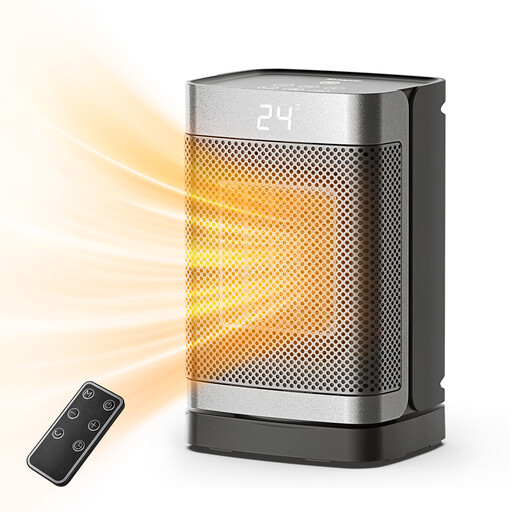
Why this product suits this profile: This compact PTC heater is designed for bedrooms, offices, studies and personal spaces. Two heat settings, an LED display, remote control and a 12-hour timer cover the most important everyday functions.
The power settings are clearly specified, while the timer, tip-over protection and overheating protection are all listed as features.
Compact design, remote control, digital temperature adjustment and oscillation.
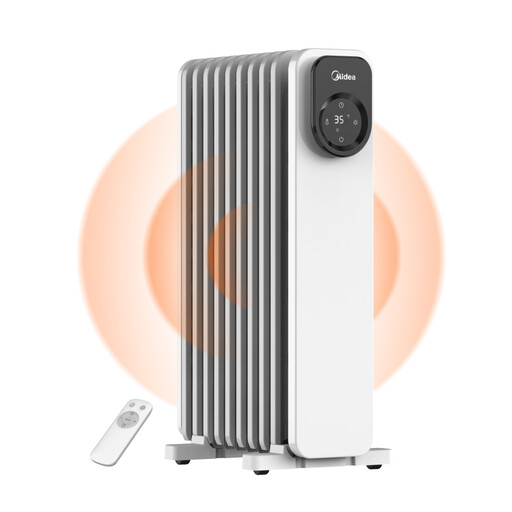
Why this product suits this profile: With 2,000 watts, nine fins, a thermostat, four modes, a remote control and an LED touchscreen, this portable oil-filled radiator is designed to provide even supplementary heat in well-insulated rooms or during occasional use.
The product description specifies use in well-insulated rooms or for occasional heating, rather than making a blanket claim about the area it can heat.
Oil-filled design, four operating modes, thermostat, plus overheating and tip-over protection.

Why this product suits this profile: Four heating modes, an ECO function, a thermostat covering 5 to 35 °C, a 24-hour timer, oscillation and a remote control offer plenty of adjustment options for living rooms and workspaces.
The description specifies temperature ranges, timer duration and noise levels. Tip-over protection and overheating protection are also listed.
Wide temperature range, 24-hour timer, ECO mode and three specified noise levels.
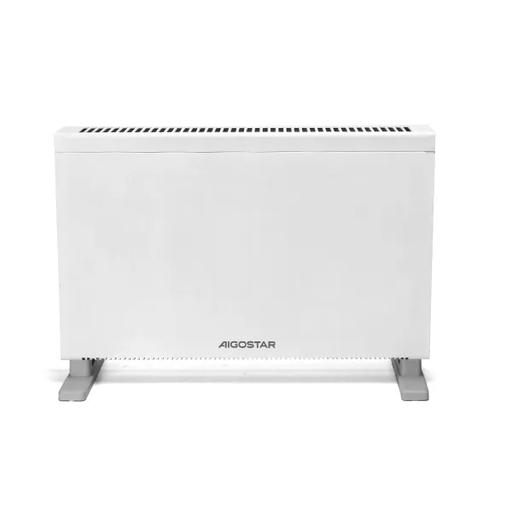
Why this product suits this profile: According to the product information, this convector heater is designed for 20 to 25 m² and uses natural convection. LED touch controls, a remote control and a 24-hour timer support regular use.
The area specification is clearly identified as manufacturer information and is not presented as universal suitability for every room size.
Natural convection, two power settings, a temperature range from 5 to 35 °C, plus tip-over and overheating protection.
We have put together a complete, regularly updated list of products that fully meet these strict selection criteria and the safety regulations applicable in the EU.
This depends on the rated power and operating time. An appliance rated at 1,500 watts uses 1.5 kWh per hour at full power, while a 2,000-watt heater uses 2 kWh. Thermostats, timers and reduced heat settings can limit the actual operating time and therefore consumption. An electric heater is particularly useful as a targeted supplementary heat source.
For a bedroom, a low noise level, adjustable temperature and a timer are particularly important. A ceramic fan heater with documented dB levels can provide warmth quickly. An oil-filled radiator operates without a fan, but requires more space and takes longer to heat up. Regardless of the model, the appliance should not be operated unattended or covered.
Its service life depends on build quality, operating time, dust exposure, transport and proper use. If you have a fan heater, clean the air inlet regularly, allow the appliance to cool before moving it, and check the cable and plug. If you notice smoke, sparks, unusual noises or damage, stop using the appliance immediately.