
Lieferung heute & morgen

Qualitätsgarantie

Willkommens-Angebote freischalten: KOSTENLOSE Lieferung | Bis zu 80 % RABATT | Kostenlose 30-Tage-JoyPlus-Testphase
App herunterladen
An electric heater can warm rooms quickly and be used flexibly – for example in a home office, bedroom, living room or as an additional source of heat in the bathroom. The range extends from compact fan heaters to permanently wall-mounted radiators. However, wattage is not the only factor that matters.
Many poor purchases result from three common marketing traps:
The required power depends on the room size, insulation, ceiling height, outside temperature and desired heating speed. Manufacturers’ recommended room-size figures should therefore only be used as a guide.
A 1500 W appliance may be sufficient for a small bedroom or workspace. Models with 1800 to 2000 W are more suitable for larger rooms or when you need more heat quickly. An electric fan heater with too little power may run for a long time without warming the room sufficiently. An oversized appliance, on the other hand, can draw more electricity than necessary if it is frequently used on a high setting.
The basic consumption calculation is:
Power in kW × operating time in hours = energy consumption in kWh
A 2000 W appliance uses 2 kWh when operated at full power for one hour. To calculate the actual cost, multiply this figure by your electricity tariff.
A ceramic fan heater uses a PTC heating element and distributes the heat via a fan. This enables rapid heating and a compact housing. Oscillation can spread warm air more widely around the room. However, it also creates air movement and audible operating noise.
A convection heater works mainly through natural air circulation. It often takes a little longer to warm up, but can operate without a fan. A wall-mounted heater or panel heater is a different design: it is permanently installed and is better suited to a designated permanent location than flexible use.
For the bathroom, an electric bathroom radiator or electric heated towel rail may be worth considering. Before buying, you must check whether the specific model is approved for use in humid rooms. General indoor suitability is not enough.
A fan heater with thermostat adjusts the heating output according to the set target temperature. This can prevent the appliance from heating continuously for longer than necessary. A fan heater with timer is suitable for a limited operating period, for example while warming up a room. A remote control makes operation easier, but is not a substitute for an easily accessible way of disconnecting the appliance from the mains.
At a minimum, look for:
If you have children, pets or easily flammable textiles, you should also maintain a sufficient safety distance. The manufacturer’s specific instruction manual takes priority.

Why this product suits this profile: This compact appliance offers Fan, 750 W, 1500 W and ECO modes, as well as a remote control. This allows you to adjust the power for smaller rooms and short heating periods.
Several power settings and a timer ranging from 1 to 12 hours help prevent the appliance from unnecessarily running at full power. Overheat and tip-over protection are specified.
PTC ceramic heating, LED display, remote control, oscillation and 1500 W maximum power.

Why this product suits this profile: For living rooms or workspaces that regularly need additional heat, this model offers an adjustable temperature of 5 to 35 °C, remote control, timer and oscillation.
The product specifications state 25 to 42 dB, a 12-hour timer and several safety mechanisms. This makes the advertised features verifiable against specific figures.
2000 W, PTC heating element, temperature control in 1-degree increments according to the product description, and tip-over protection.
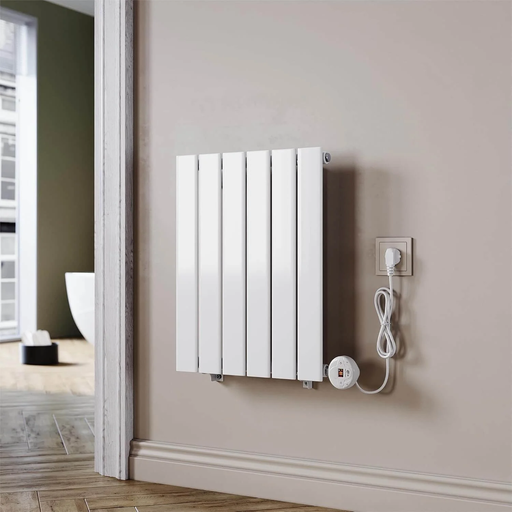
Why this product suits this profile: According to the product description, this permanently installed panel heater features a programmable thermostat and timer and can be used as a towel warmer or indoor heater.
The design is intended for wall or panel mounting and should not be confused with a portable fan heater. Before using it in the bathroom, check the manufacturer’s specifications to confirm that it is suitable for humid rooms.
SPCC material, programmable thermostat, timer function and dimensions of 71 × 66,5 × 11 cm according to the product data.

Why this product suits this profile: This portable model is specified for smaller rooms of around 10 to 20 m² and combines compact dimensions with temperature control, a timer and a remote control.
The product description states a noise range of 25 to 42 dB and graduated power settings from 900 to 1500 W. This allows you to choose between quieter operation and rapid heating.
PTC ceramic heating, 12-hour timer, thermostat range of 5 to 35 °C and tip-over protection according to the product specifications.
We have put together a complete, regularly updated list of products that fully meet these strict selection criteria and the safety regulations applicable in the EU.
Consumption depends on the power rating and the actual operating time. A 1500 W appliance uses 1.5 kWh when operated at full power for one hour, while a 2000 W model uses 2 kWh. A thermostat, timer and ECO mode can reduce the operating time or power setting. However, they do not make heating free or independent of your electricity tariff.
Only if the specific appliance is expressly approved for use in humid rooms and the prescribed protection zones are observed. According to their instruction manuals, many portable fan heaters are not suitable for bathrooms or use near sinks or showers. An electric bathroom radiator must therefore be selected according to its IP rating, installation location and the manufacturer’s approval.
Service life depends on build quality, operating time, dust exposure and proper use. The air intake and outlet should be cleaned regularly when the appliance is disconnected from the mains. Damaged cables, plugs or housings are reasons to stop using the appliance. For permanently installed radiators, the fixings, connections and thermostat must also be checked regularly.