
Lieferung heute & morgen

Qualitätsgarantie

Willkommens-Angebote freischalten: KOSTENLOSE Lieferung | Bis zu 80 % RABATT | Kostenlose 30-Tage-JoyPlus-Testphase
App herunterladen
An electric heater can be a practical flexible heating solution for the bedroom, living room, home office or bathroom. The choice ranges from electric fan heaters and oil-filled radiators to infrared heaters. However, wattage is not the only deciding factor. If you focus solely on quick heat or modern design, you can easily overlook running costs, safety clearances and whether the heater is genuinely suitable for the room.
A 2,000-watt heater uses approximately 2 kWh per hour of operation when running at full power. At an assumed electricity price of 0.35 euros per kWh, that works out at around 0.70 euros per hour. An appliance with an ECO mode or thermostat can reduce how long it runs, but it cannot change the physical output while it is heating.
That is why you should look for several heat settings, a clear thermostat control and a timer. The term ‘energy-saving heater’ should always be assessed against specific features such as temperature control, automatic switch-off or an ECO mode.
Manufacturers’ room-size recommendations usually apply under specific conditions. Insulation, ceiling height, window area, outdoor temperature and the desired room temperature all affect heat requirements. An electric fan heater for 10 m² is not automatically suitable for a poorly insulated 20 m² living room.
For short bursts of warmth at your desk, a compact appliance is often sufficient. For longer use, a mobile heater such as an oil-filled radiator can provide more even heat without fan noise. An electric heater also does not automatically replace an existing central heating system.
Remote controls, app control, displays and oscillation make an appliance more convenient to use. However, overheat protection, tip-over protection, a stable base and clear operating instructions are more important. A heater with a thermostat should be able to regulate the target temperature; a simple dial without a temperature display offers less control.
For appliances used in damp areas, the IP rating is also crucial. A standard electric heater is not automatically suitable for the bathroom. You must check the specific manufacturer’s approval and the stated protection rating before buying.
Common electric heaters have outputs of around 800 to 2,000 W. Higher output can warm a room more quickly, but it also increases electricity consumption when the appliance runs continuously. Check the following:
Extension leads and multi-socket adapters can be problematic at high power. The electrical installation must be designed to handle the stated load.
Noise levels are relevant when choosing an electric heater for the bedroom or office. Fan heaters make noise from their fan, while an oil-filled radiator operates without moving air. A remote control is convenient, but it does not replace safe positioning.
The appliance must not be covered. Curtains, bedding, furniture and other flammable materials should be kept at a sufficient distance. Patio or balcony heaters must be explicitly designed for outdoor use. An IP rating such as IP65 describes protection against dust and water jets, but does not mean the appliance is suitable for immersion.
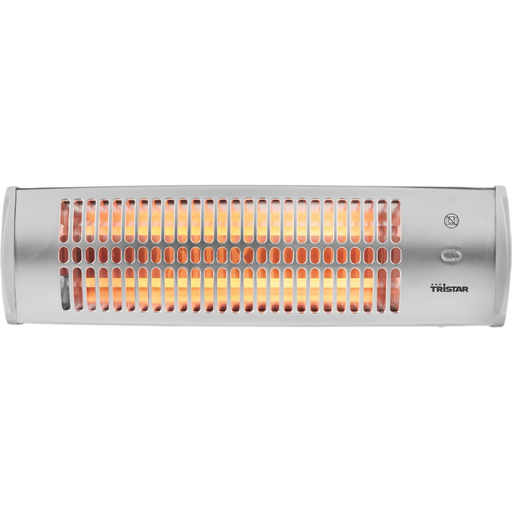
Why this product suits this profile: This plug-in 1,200-watt appliance is designed to provide simple, occasional warmth in individual rooms. According to the product details, it has a timer ranging from 1 to 12 hours.
The timed switch-off helps limit unnecessary continuous operation. The fan heater must not be covered or used near water.
1,200 W output; timer from 1 to 12 hours according to the product description.

Why this product suits this profile: For the office, living area or bedroom, the product description states a temperature range of 5 to 35 °C, 70° oscillation and a noise level of 25 to 42 dB.
The technical specifications provide concrete figures rather than relying solely on claims of ‘quiet operation’. Tip-over and overheat protection are also listed.
2,000 W, temperature selection in 1-degree increments according to the specifications, remote control and child lock.
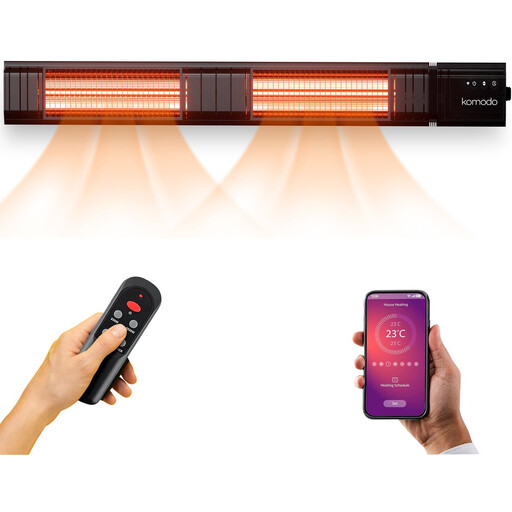
Why this product suits this profile: According to the product description, this patio heater is designed for indoor and outdoor use and offers infrared heat, nine settings, a remote control and app control.
The stated IP65 rating is not confused with complete waterproofing: the appliance must not be immersed and needs sufficient clearance from flammable materials.
3,000 W, 180° oscillation, nine heat settings and a 24-hour timer according to the product data.
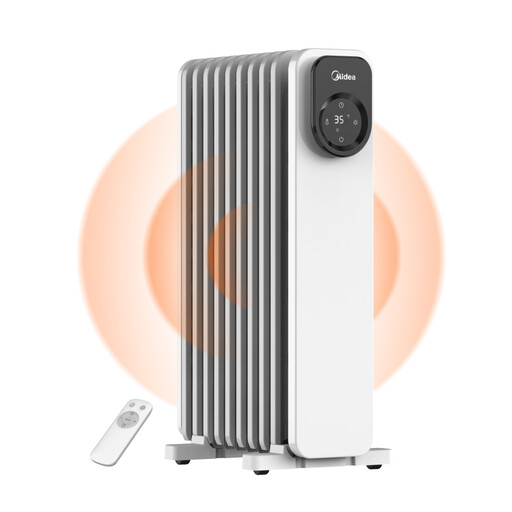
Why this product suits this profile: According to the product data, this mobile heater has an output of 2,000 W, nine fins, thermostat control, a remote control and several operating modes.
The oil-filled radiator design operates without a fan. This removes a typical source of noise, although it warms up more slowly than a ceramic fan heater.
Nine fins, thermostat, remote control and tip-over protection according to the product description.
We have put together a complete, regularly updated list of products that fully meet these strict selection criteria and the safety regulations applicable in the EU.
Before using the appliance, read the operating instructions and the manufacturer’s information. Place it on a level, stable and dry surface. Keep air outlets clear and do not use the electric heater to dry clothes. If there is visible damage to the housing, cable or plug, stop using the appliance immediately.
For an electric heater in the bedroom, automatic switch-off is recommended. In the office, low noise levels, a thermostat and a remote control with a timer are useful. In the bathroom, you may only use a model explicitly designed for this purpose. Do not leave heaters unattended during longer periods of absence.
Consumption depends on the output and the actual operating time. A 2,000-watt appliance uses 2 kWh per hour at full power. A thermostat, timer and lower heat settings can reduce the operating time or the output. For a realistic estimate, multiply the output in kW by the operating hours and your electricity price.
Depending on your needs, a quiet oil-filled radiator or a ceramic fan heater with a thermostat and timer may be suitable for the bedroom. A fan heater warms up quickly but produces fan noise. An oil-filled radiator responds more slowly and releases heat more evenly. Both appliances must be positioned with sufficient clearance and must not be covered.
Its lifespan depends on the design, operating time, cleaning, storage and compliance with the operating instructions. Regular visual checks, a dust-free air inlet and dry storage can help maintain safe operation. If you notice an oil leak, damaged cable, unusual smell or smoke, switch the appliance off immediately and disconnect it from the mains.