
Lieferung heute & morgen

Qualitätsgarantie

Willkommens-Angebote freischalten: KOSTENLOSE Lieferung | Bis zu 80 % RABATT | Kostenlose 30-Tage-JoyPlus-Testphase
App herunterladen
An electric heater can be a practical source of extra warmth in the bedroom, home office, bathroom or living room. Most models can be set up without installation and moved to another room when needed. However, choosing a cheap electric heater doesn’t always mean making the right purchase. The key factors are room size, heat output, ease of use, noise levels and safety features.
A 2,000 W electric fan heater can warm a room quickly, but it also uses 2 kWh per hour if it runs continuously at full power. At an assumed electricity price of 0.35 euros per kWh, that would cost around 0.70 euros per hour. Actual consumption depends on the thermostat, room insulation and how long the heater is used.
So, you can’t tell whether an energy-efficient electric heater is right for you from its wattage alone. Look for several heat settings, a reliable thermostat, an ECO mode or a timer. These features can reduce how long the heater runs, but they’re no substitute for good insulation.
A ceramic fan heater and other fan heaters use a fan, which creates operating noise that can be distracting in the bedroom or when you’re concentrating on work. So, check any decibel ratings carefully: do they apply to the lowest setting, night mode or the full range of heat settings?
A convector heater often works without a fan, so it moves less air around. However, it distributes heat differently and, depending on the room, may take longer to create an even sense of warmth. An oil-filled radiator also works without a fan and gives off heat relatively evenly, but it’s usually heavier and slower to warm up.
A portable heater should come with overheat protection and tip-over protection as standard. A stable design, enough clearance from curtains and furniture, and an unobstructed air outlet are also important. Never use an electric heater to dry clothes.
For bathroom use, a label saying ‘for indoor use’ isn’t enough. Check the stated IP rating and the instruction manual. A product with an IP24 rating may be protected against splashes, according to the product information. However, it must not be immersed in water or placed right next to a shower, bath or washbasin.
The manufacturer’s recommended room size is a guide. Period features, high ceilings, open doors and poorly insulated windows can all increase the heat output you need.
A heater with a thermostat can monitor the set temperature and adjust its heat output accordingly. Other useful features include:
A timer won’t automatically reduce energy consumption, but it can stop the heater from running for longer than intended.
An electric fan heater warms the air directly and is portable. A ceramic fan heater uses a PTC heating element and often comes with several heat settings. A radiant heater directs heat more towards people or specific areas. An infrared heater mainly warms the surfaces it is pointed at and, depending on the model, may be suitable for wall mounting or portable use.
An oil-filled radiator is heavier to move, but works without a fan. Whichever type you choose, place it on a stable, level, heat-resistant surface. Only use extension leads and multi-socket adaptors if they’re suitable for the heater’s power consumption. Always follow the instruction manual.
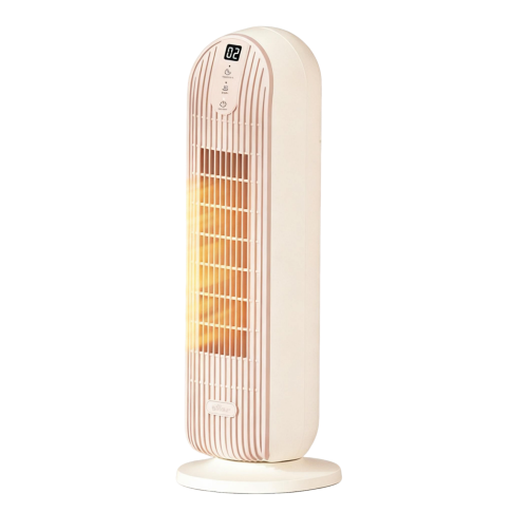
Why this product suits these needs: Its portable design, concealed handle and two heat settings make it a good choice if you’re looking for flexible extra warmth in the bedroom, living room or home office.
Choose between 1,200 W and 2,000 W, and use the timer for up to 12 hours to tailor the running time and heat setting to your needs.
90° oscillation, digital display, low noise level according to the product information, and several safety features.

Why this product suits these needs: This model is for anyone looking to combine temperature control, a remote control, oscillation and low noise levels in one heater.
The manufacturer states that the temperature can be adjusted from 5 to 35 °C and the noise level ranges from 25 to 42 dB, rather than making a blanket claim that it’s silent.
2000 W PTC heating, 70° oscillation, a 12-hour timer and several layers of protection, according to the manufacturer.
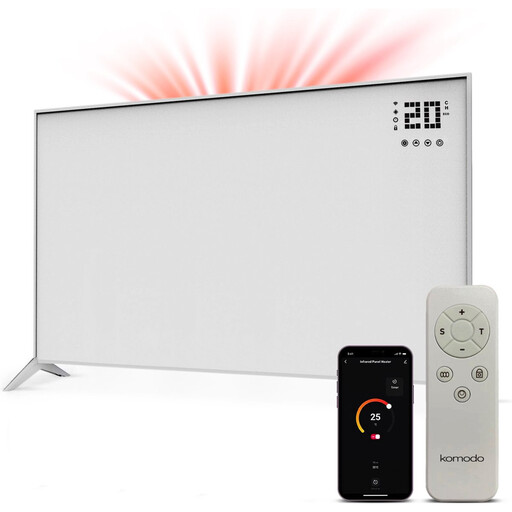
Why this product suits these needs: According to the product information, the panel can be freestanding or wall-mounted and is designed for rooms up to 20 m².
The stated IP24 rating, thermostat and automatic switch-off give you specific points to check when choosing a heater for your needs.
800 W output, Wi-Fi app, remote control, timer, ECO mode, and overheat and child-lock protection, according to the product description.
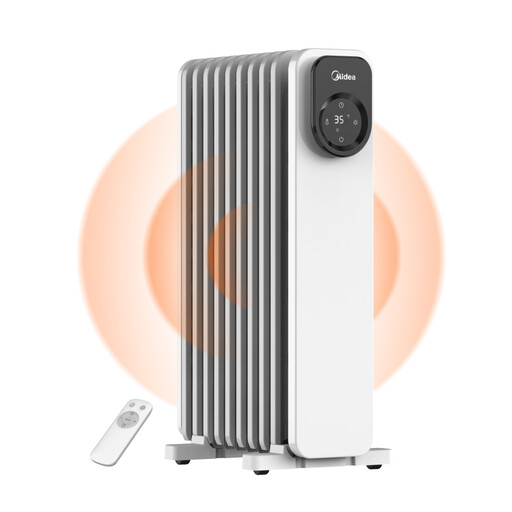
Why this product suits these needs: This portable oil-filled radiator works without a fan, making it a good fit for bedrooms, living rooms or home offices where quiet operation matters.
Its fan-free design avoids the usual source of noise found in fan heaters. The product information also specifically recommends it for well-insulated rooms or occasional use.
2000 W rated output, nine fins, thermostat, remote control and tip-over protection, according to the product description.
The simple calculation is: power in kW × operating hours × electricity price. A 1,500 W heater running at full power for one hour uses 1.5 kWh. A thermostat can reduce the actual running time once the target temperature has been reached. If you need heat regularly, also consider insulation, window seals and your existing central heating.
Don’t put a portable heater behind furniture, under curtains or on bedding. Keep to the clearance recommended by the manufacturer, don’t leave the heater running unattended, and unplug it after use. In the bathroom, only use a model specifically approved for that setting.
We’ve put together a complete, regularly updated list of products that meet these strict selection criteria and fully comply with the safety regulations in force in the EU.
Consumption depends on the heater’s power and how long it runs. A 2,000 W heater uses 2 kWh per hour at full power. Using the thermostat, a timer or a lower heat setting can reduce the running time, but won’t change how much energy it uses per hour at full power.
An oil-filled radiator or a fan heater with a stated low noise level, display-off function and timer may be suitable for a bedroom. Place the heater on a stable surface, and don’t leave it unattended or cover it while it’s in use.
Only if the manufacturer explicitly approves it for bathroom use and states the required IP rating. A standard fan heater without the appropriate rating shouldn’t be used in damp rooms. Always follow the safety clearances around water sources and the instruction manual.