
Lieferung heute & morgen

Qualitätsgarantie

Willkommens-Angebote freischalten: KOSTENLOSE Lieferung | Bis zu 80 % RABATT | Kostenlose 30-Tage-JoyPlus-Testphase
App herunterladen
An electric heater is quick to set up and flexible to use – whether in the bedroom, living room, home office or bathroom. At the same time, unclear coverage claims, high power ratings and seemingly impressive energy-saving promises can often lead to the wrong purchase. What matters is not just how quickly a heater produces warm air, but whether its heat output, room size, controls and safety features suit the way you plan to use it.
A 2,000-watt fan heater can warm a small room quickly. However, at full power it uses around 2 kWh per hour. The actual cost is calculated as follows:
Power in kW × operating time in hours × electricity price per kWh
An ECO mode or thermostat can reduce how long the heater runs, but this does not change its maximum power consumption. So an ‘energy-efficient heater’ is not automatically economical if it runs continuously on a high setting.
Claims such as ‘up to 20 m²’ or ‘up to 35 m²’ depend on several factors: ceiling height, insulation, window area, outside temperature and the room temperature you want to achieve. A 2,000-watt fan heater may perform differently in a well-insulated room than in a draughty room in an older property.
A room heater designed for dry indoor spaces is not automatically suitable for the bathroom. For damp areas, the IP rating is relevant. IP24, for example, indicates limited protection against splashing water, but does not replace the need to maintain safe distances. Heaters without the appropriate approval should not be used close to a shower, bath or washbasin.
For small areas that need occasional, targeted heating, 1,200 to 1,500 watts may be enough. Larger or less well-insulated rooms often need more power. Treat the manufacturer’s recommended coverage as a guide, not a guarantee.
An electric heater with a thermostat adjusts its heat output according to the temperature you set. A timer stops the heater running for longer than intended. Noise levels also matter with fan heaters. Where possible, compare decibel ratings at similar operating settings: a lower figure can be an advantage in a bedroom or home office.
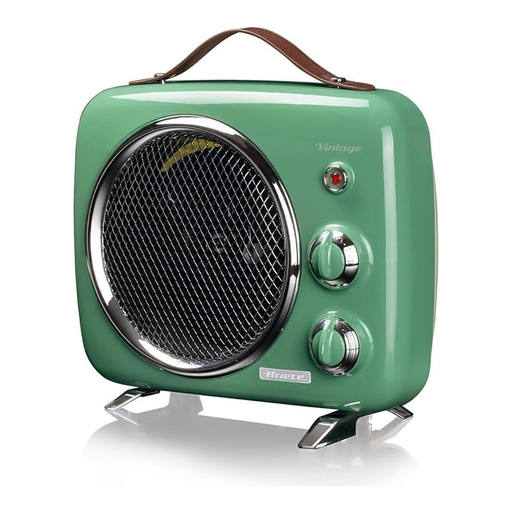
Why this product suits this profile: According to the product details, this compact fan heater offers 2,000 watts, two speeds, an adjustable temperature and a cool-air function. The carry handle makes it easy to move between rooms.
Its power is paired with an adjustable thermostat, rather than being promoted solely on the basis of a single maximum setting.
2,000 watts, heating and cool-air functions, and a low weight of 1.4 kg according to the product details.

Why this product suits this profile: According to the manufacturer, this model has a thermostat range of 5 to 35 °C, a remote control, a 12-hour timer and several safety features.
The product details give specific temperature, noise and safety figures, rather than making only general claims about efficiency.
2,000 watts, a stated noise range of 25 to 42 dB, and overheat and tip-over protection.
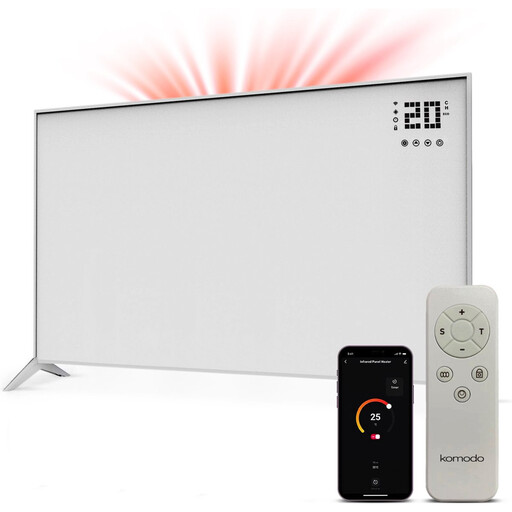
Why this product suits this profile: According to the product details, this heating panel is designed for rooms up to 20 m² and can be freestanding or wall-mounted. Its IP24 rating makes it suitable for use in areas where this level of protection is appropriate.
The fitting options, room size and IP rating are clearly stated. You still need to observe the required clearances and follow the instructions.
800 watts, thermostat, timer, ECO mode, child lock and app control, according to the product description.
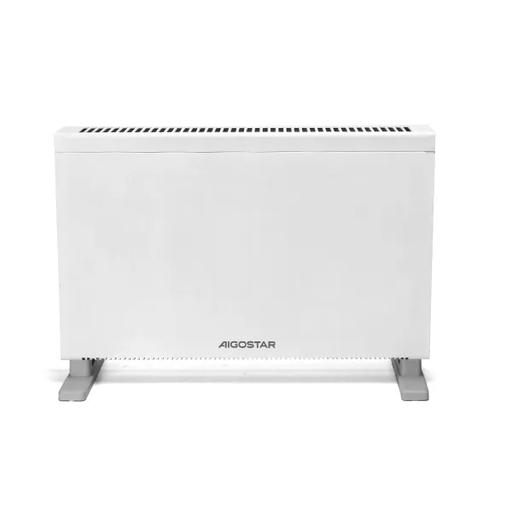
Why this product suits this profile: Natural convection means it does not use a fan, according to the description. The product details also list two power settings, thermostat control, a timer and a remote control.
The choice is not based on maximum wattage alone: it also takes account of the heating technology, controls and intended indoor use.
Suitable for 20 to 25 m² according to the product details, with an LED control panel, 24-hour timer, and tip-over and overheat protection.
We’ve put together a complete, regularly updated list of products that meet these strict selection criteria and fully comply with the safety regulations in force in the EU.
Before using your heater for the first time:
A 2,000-watt heater uses 2 kWh per hour when running at full power. A thermostat, timer and lower heat settings can reduce the actual running time and therefore its energy use. The exact cost depends on your electricity tariff.
For a bedroom, consider the noise level, thermostat, timer and tip-over protection. A ceramic fan heater warms the air quickly, while a convector heater can operate without a fan, according to the product description. Do not leave the heater unattended or use it while covered.
Only if the manufacturer explicitly approves bathroom use and the IP rating is suitable for the environment. An IP24 rating may indicate protection against splashing water, but it does not replace safe positioning. Keep the heater away from water sources, handle it with dry hands and follow the instructions in the user manual.