For short visits when you need warm air quickly, a variable-setting fan heater may be the right choice. For longer stays without a running fan, a convector or oil-filled radiator could suit you, while infrared heating is best suited to warming a particular seat. The key factors are how long you heat for, the power consumption and a safe location: the Verbraucherzentrale Energieberatung explains that direct electric heating produces one kilowatt-hour of heat for every kilowatt-hour of electricity used. So “Eco” or infrared alone is no proof of greater heat output.
Who are the different types of heater suitable for?
For short stays in a chilly room
If you only use the room for a short time, having warm air quickly may be important; a fan heater produces it using a fan, which can be audible. Aktion Das sichere Haus highlights the possible noise made by electric fans.
For longer, quieter stays
If you’ll be working or relaxing in the room for longer, you may prefer a heater without a running fan, provided you have enough space for it. Trotec describes the TCH 18 E as a convector, while De’Longhi says the TRRS0920 continues to give off heat for a while after being switched off.
For warmth where you sit
If you mainly want to warm the place where you sit, you could consider a radiant heating panel, taking its direction and mounting position into account. VASNER lists several power options for the Zipris-GR range and recommends an external thermostat system for controlling it.
What should you consider when choosing?
Portable fan heater
When it’s suitable: If you want to warm a small room quickly during a short stay and don’t mind a fan.
What to consider: The fan may be distracting. A lower power setting reduces the immediate power consumption, but may heat the room more slowly.
Portable convector heater
When it’s suitable: If you want to warm the air in the room during a longer stay without a running fan, and have enough floor space.
What to consider: The heater takes up floor space and needs a suitable position that allows for the clearances specified in the instructions.
Oil-filled radiator
When it’s suitable: If you prefer portable warmth without a fan over a longer period.
What to consider: Bear in mind its weight, the space it takes up and hot surfaces. Residual heat does not mean extra energy savings.
Infrared wall heater
When it’s suitable: If you mainly want to warm a particular seat and the direction, mounting position and controls are right for it.
What to consider: You’ll need to allow for wall space. Infrared is not automatically the better choice for heating a room evenly or using less electricity.
The overview below can help you match a type of heater and model to how long you’ll use it, the warmth you want and the space available.
| What you need |
What to check when buying |
Who is this especially relevant to? |
| Quick heating |
Check the settings, thermostat and fan on the specific model, and make sure you have a stable place to put it. |
If I only use the room for a short time, how quickly it warms up matters to me – even if the fan may be audible. Around 25% of consumers put quick heating first. |
| Quiet operation |
Check whether the heater has a fan and what operating noise level is listed for the specific model. |
When I’m working or relaxing for longer, I don’t want the constant noise of a fan, and I can make space for the heater. Around 19% of consumers prioritise quiet operation during longer use. |
| Warmth where you sit |
Check the direction and mounting position of the radiant panel, as well as the controls it requires. |
If I mainly want to warm the place where I usually sit, getting the direction right is important. Around 12% of consumers prioritise targeted warmth where they sit. |
| Estimating electricity use |
Take the power consumption in kW and the actual time the heating element is switched on into account. |
If I use the heater repeatedly, I want to estimate consumption based on the power setting I choose and the actual heating time. Around 25% of consumers prioritise predictable electricity use. |
| Safe positioning |
Check the clearances in the model instructions, choose a stable position and make sure you have a suitable power supply. |
In a small flat, I need to find a place where the heater won’t be covered or come into contact with flammable items. Around 19% of consumers prioritise safe positioning that saves space. |
Common misconceptions when buying
-
“Infrared” or “Eco” automatically means less electricity
The Verbraucherzentrale Energieberatung explains that direct electric heating produces one kilowatt-hour of heat for every kilowatt-hour of electricity used. A label or type of heater alone is no proof of greater heat output.
Compare how you intend to use the heater by looking at its power consumption and actual heating time, rather than relying on promises of savings.
-
A tiny plug-in fan heater can replace a room heater
The Verbraucherzentrale NRW does not consider the advertised mini plug-in fan heaters a suitable alternative for heating whole rooms, because of their low heat output.
Distinguish between targeted warmth right where you sit and heating the room you occupy.
-
Safety features make any location safe
Tip-over or overheat protection does not replace the need for suitable clearances and a safe position. Even a heater with an automatic safety cut-off can be dangerous if it is covered, damaged or placed near flammable items.
Before buying, check that the spot you have in mind meets the clearance and connection requirements in the instructions. Never cover the heater.
-
Residual heat from an oil-filled radiator is free warmth
The oil in an oil-filled radiator can continue to give off heat after the heater is switched off. That heat was generated using electricity beforehand; it does not mean more heat for every kilowatt-hour used.
Choose an oil-filled radiator for the type of warmth you want, not because of an unsubstantiated promise of savings.
Brands and example models to help you choose
Rowenta
Portable fan heaters for when you need warm air quickly; SO6550F0 is one example model.
- For the SO6550F0, Rowenta lists power modes, a mechanical thermostat, and tip-over and overheat protection.
- Any advertised noise level applies to a specific mode. It does not prove the heater is silent or indicate the noise level of other Rowenta models.
Trotec
Portable convector heaters; the TCH 18 E is an example of a room heater that works without a running fan.
- For the TCH 18 E, Trotec lists power settings of 750, 1.250 and 2.000 W, as well as a thermostat and overheat protection.
- The manufacturer’s claims about efficiency are not an independent comparison of heat output per kilowatt-hour with other direct electric heaters.
De’Longhi
Portable oil-filled radiators; the TRRS0920 is an example of a freestanding heater on wheels that operates without a fan.
- For the TRRS0920, De’Longhi lists 900 to 2.000 W, three settings, a room thermostat and wheels.
- Bear in mind its residual heat and stated weight of 11,583 kg when using or moving it. These specifications do not apply to all De’Longhi heaters.
VASNER
Infrared panels for mounting; Zipris GR is an example of targeted warmth for a particular spot.
- VASNER offers several power options and recommends an external thermostat system for control.
- The model, mounting position and direction need to suit the room. The manufacturer’s claims about heating whole rooms do not replace an assessment of your specific heating needs.
Stiebel Eltron
Wall-mounted electric fan heaters for quick heating, as an additional or temporary heat source; CK 20 Trend LCD is one example model.
- For this model, Stiebel Eltron lists 2.000 W, 230 V, a timer and 49 dB(A).
- Wall mounting and the stated noise level do not automatically make this model suitable for every small rented flat.
Joybuy products for small rooms
The selection includes infrared panels, fan heaters, convectors and oil-filled radiators for different ways of heating small rooms.
 No image available
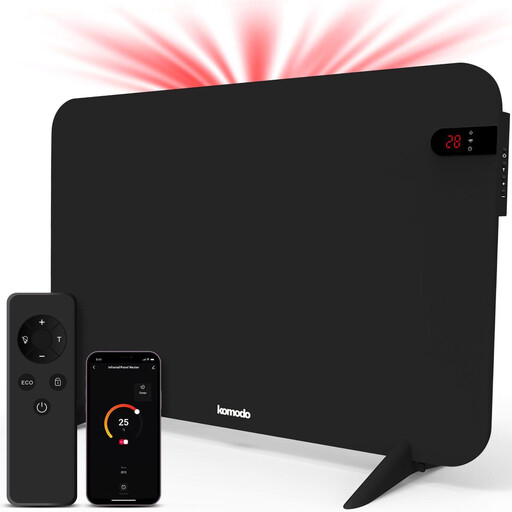
Komodo infrared heating panel, 450 W, 72.5 x 45 cm
This panel could be an option for targeted warmth in a small room, provided the mounting position and direction suit the space.
The product name lists 450 W, 72.5 x 45 cm, suitability for 15 m², a thermostat, LED display and Wi-Fi app.
According to the product information, the surface can become hot during use. Do not cover the panel and keep it away from flammable materials.
View at Joybuy
 No image available
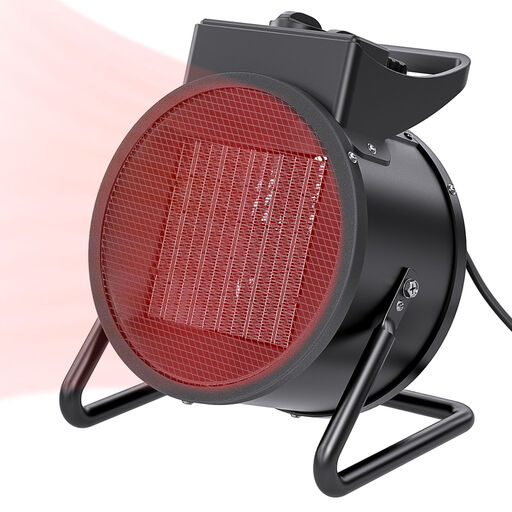
Aigostar ceramic fan heater, 2 kW
A fan heater could be a suitable choice for warming a room quickly now and then, if you don’t mind the fan.
The product name lists a PTC heating element, three settings and a thermostat.
View at Joybuy
 No image available
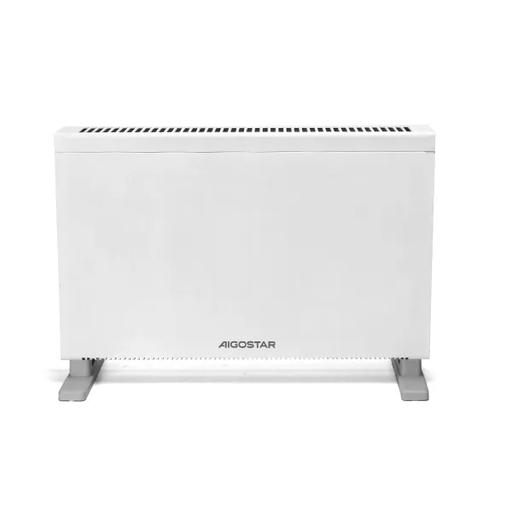
Aigostar convector heater, 2.000 W, with remote control
If you’re considering a convector rather than a fan heater, make sure you have enough space and a suitable place for it.
The product name lists 2.000 W, a remote control and a thermostat.
The product information specifies at least 1 m of clearance from furniture, curtains and other objects, and a suitable 16-A-/250-V socket.
View at Joybuy
 No image available
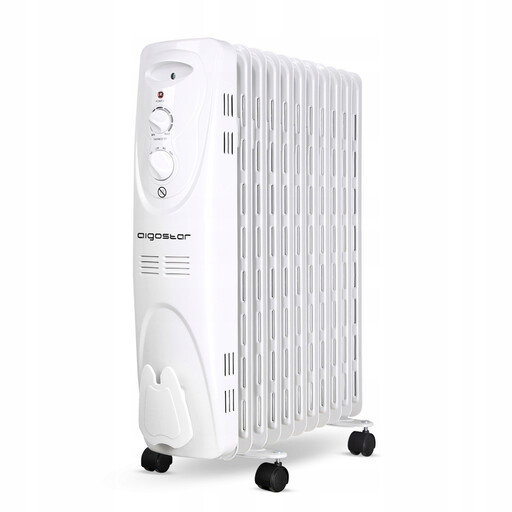
Aigostar 11-fin oil-filled radiator, 2.300 W
If you prefer warmth without a running fan, you could consider this oil-filled radiator, bearing in mind the space it takes up and its hot surfaces.
The product name lists 2.300 W, three heat settings and an adjustable thermostat.
According to the product information, the heater is intended for well-insulated, enclosed rooms or occasional short-term heating. Do not touch hot surfaces directly.
View at Joybuy
 No image available
DREO Atom 416 ceramic fan heater, 1.500 W
This portable fan heater could suit a smaller room and changing heating needs, if a fan works for you.
The product name lists 1.500 W and a 12-hour timer.
According to the product information, do not cover the heater and keep it away from flammable materials.
View at Joybuy
Frequently asked questions
Which type of heater is right for short or longer use?
For a short stay when you need warm air quickly, a fan heater could be suitable, provided the fan doesn’t bother you. For longer stays without a running fan, you could consider a convector or oil-filled radiator. If you want targeted warmth where you sit, an infrared panel pointed in the right direction may be an option.
Does an oil-filled radiator give off extra heat after it’s switched off?
Yes, the oil can continue to give off heat after the heater is switched off, as De’Longhi explains for the TRRS0920. This residual heat was generated using electricity beforehand and is no proof of greater heat output per kilowatt-hour used.
What should I check before using it for the first time?
Read the instructions for the specific model and check the casing, plug and cable. Keep to the stated clearances, don’t cover the heater and don’t place it near easily flammable items. Do not continue to use a damaged heater.
Is an EU energy label compulsory for electric single-room heaters?
The European Commission’s guide dated 17 March 2026 distinguishes between local space heaters and exemptions, which include electric appliances, under the energy labelling rules. Ecodesign requirements are separate, so the absence of an energy label alone does not indicate a defect.
Do the same requirements apply to a permanently installed direct electric heater as to a portable fan heater?
They cannot simply be treated as the same. According to the Laws on the Internet website, § 46 GModG sets out a thermal insulation requirement for installing a direct electric heater in existing residential buildings: the building must exceed the requirements by at least 30%, with some exceptions. This installation rule cannot be applied without checking to a portable supplementary heater. Any planned permanent installation needs to be assessed in relation to the specific building and project.


