
Lieferung heute & morgen

Qualitätsgarantie

Willkommens-Angebote freischalten: KOSTENLOSE Lieferung | Bis zu 80 % RABATT | Kostenlose 30-Tage-JoyPlus-Testphase
App herunterladen
An electric heater can warm rooms quickly, provide extra heat for individual workspaces or serve as a mobile supplementary heater. However, not every heating appliance is suitable for every living situation. A small fan heater may be unsuitable for the bathroom, a 2000-watt model may provide unnecessarily high output in a small bedroom, and an infrared heater works differently from a convection heater.
The key purchase decisions therefore involve more than just the price. Heating output, room size, controls, noise level, safety features and intended usage duration are all important.
An electric fan heater rated at 2000 watts generally produces more heat than a 1000-watt appliance. However, when operating at full power, it also uses twice as much electricity per hour. The term “energy-saving electric heater” should therefore not be accepted without checking the details.
The following calculation provides a simple guide:
Power consumption in kW × operating hours × electricity price per kWh = running costs
A 2 kW appliance running for two hours uses 4 kWh. The cost depends on your individual electricity tariff. A thermostat, ECO mode or timer can reduce the operating time, but it does not change the electricity consumption while the heater is actively running.
Manufacturers’ recommendations for suitable floor areas depend on factors including insulation, ceiling height, window area and outdoor temperature. A heater suitable for 15 to 25 m² may perform differently in a well-insulated home office than in a draughty older building.
For small rooms or personal spaces, a 1500-watt mobile electric heater is often sufficient. Larger or poorly insulated rooms require careful matching of the heating output. An electric heater should not be viewed as a replacement for a necessary central heating system where consistently high heating output is required.
A remote control, LED display, oscillation and a fan heater with a timer make operation easier. However, overheating protection, tip-over protection, an undamaged cable and a stable base are more important.
An indoor heater must not be covered. Textiles, curtains and furniture should be kept at a sufficient distance. Bathrooms have specific requirements: an ordinary fan heater is not automatically suitable for damp rooms. The manufacturer’s information on the appliance’s protection rating and area of use must be followed.
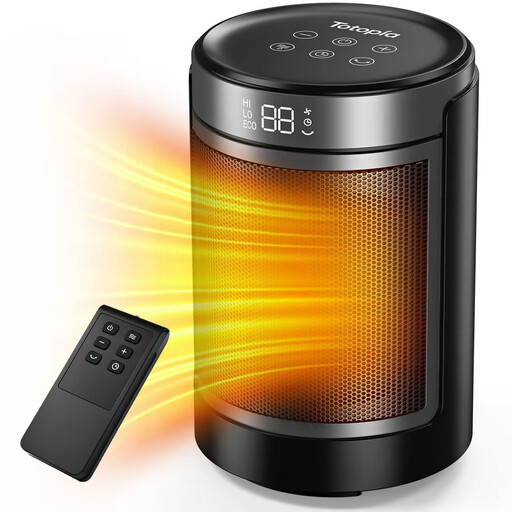
Why this product suits the profile: According to the product information, the model offers four operating modes, including 750 watts, 1500 watts and an ECO mode. This allows the output to be adjusted for smaller rooms or workspaces.
The selectable settings mean the appliance does not have to be operated exclusively at maximum output. A timer from 1 to 12 hours supports automatic switch-off.
PTC ceramic heating, LED display, remote control, oscillation, plus overheating and tip-over protection according to the product description.

Why this product suits the profile: According to the manufacturer’s information, the model combines 1500 watts with a thermostat range of 5 to 35 °C and a stated noise level of 25 to 42 dB.
The stated temperature range and noise level make it easier to choose a heater for bedrooms or home offices. The safety equipment is clearly described with several protective features.
Remote control, 12-hour timer, PTC element, tip-over protection and overheating protection according to the product data.
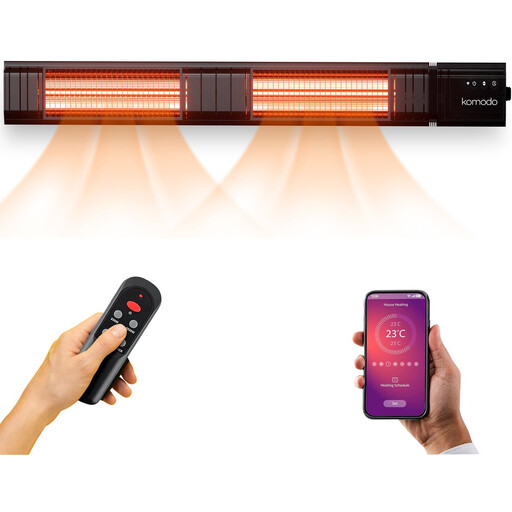
Why this product suits the profile: According to the manufacturer’s information, the appliance has nine heat settings, 180-degree oscillation, a remote control, app control and a 24-hour timer. It is specified for indoor and outdoor use.
The stated IP65 protection rating should not be confused with complete waterproofing or protection against immersion. The appliance must still be used in accordance with the instructions and with sufficient clearance.
3000 watts, infrared technology, oscillation, plus remote-control and app operation according to the product description.
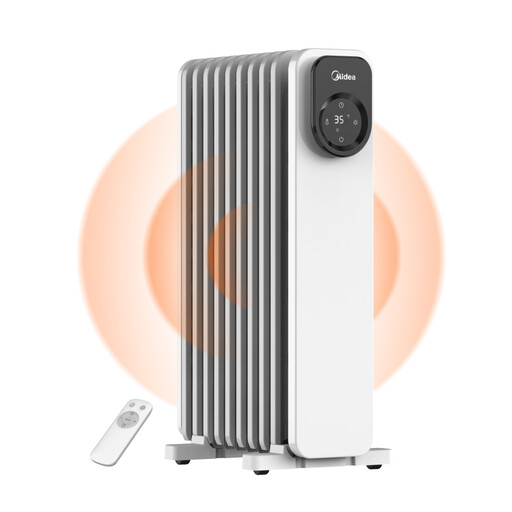
Why this product suits the profile: According to the product information, this mobile electric heater operates at 2000 watts and features nine fins, a thermostat, four modes, a remote control and an LED touchscreen.
The oil-filled radiator does not produce the typical noise associated with a fan. At the same time, the manufacturer expressly states that it is suitable for well-insulated rooms or occasional use.
Quiet operation without airflow, plus thermostat and tip-over protection according to the product description.
We have put together a complete, regularly updated list of products that fully meet these strict selection criteria and the safety regulations applicable in the EU.
Consumption depends on the output and operating time. A 1500-watt heater uses a maximum of 1.5 kWh when operated for one hour. A thermostat, timer and ECO mode can reduce the actual running time. The precise cost depends on the electricity price of your tariff.
A quiet fan heater with a stated decibel rating or an oil-filled radiator may be suitable for a bedroom. Tip-over protection, overheating protection and a timer are important. The appliance should not be covered or left unattended while operating.
Only models that the manufacturer expressly states are suitable for damp rooms or the intended protection zone should be considered. An ordinary electric fan heater is not automatically approved for bathroom use. Clearance from water sources, the protection rating and the operating instructions must be checked before purchase.