
Lieferung heute & morgen

Qualitätsgarantie

Willkommens-Angebote freischalten: KOSTENLOSE Lieferung | Bis zu 80 % RABATT | Kostenlose 30-Tage-JoyPlus-Testphase
App herunterladen
An electric heater can warm rooms temporarily or supplement your existing heating system. However, not every appliance is suitable for every location. A small fan heater for the bathroom, a portable radiator for the living room and a heated car seat serve different purposes.
A 2,000-watt electric heater can warm a room faster than a 1,000-watt model. However, when running at full power, it also uses twice as much energy per hour. The calculation is simple:
Power consumption in kilowatts × operating time in hours = consumption in kilowatt-hours
A 2 kW appliance running at full power for one hour theoretically uses 2 kWh. A thermostat, ECO mode or timer can reduce the operating time, but they do not automatically make electric heating energy-efficient overall.
A fan heater uses a fan to circulate warm air. This can shorten the warm-up time, but it also creates operating noise. For bedrooms and offices, specific decibel ratings, a night mode or a switchable display are therefore more useful than general advertising claims.
An oil-filled radiator works without a fan and is often perceived as quieter. However, it usually takes longer for the heat to become noticeable throughout the room.
Overheating protection and tip-over protection are important features. However, they do not mean that you can cover the appliance, operate it on soft surfaces or place it directly next to curtains. Many products require a distance of at least 1 metre from flammable materials. The instructions for the individual appliance take priority.
The appropriate output depends on factors including room size, insulation, outdoor temperature and the temperature you want to achieve. Product descriptions such as “for 20–25 m²” should therefore be treated as guidance, not a guarantee of a specific room temperature.
A convector heater warms the room air through natural convection. A fan heater also uses a fan to distribute heat actively. An oil-filled radiator stores heat in its thermal fluid and releases it more slowly and evenly.
A heater with a thermostat can monitor the set target temperature and adjust the heating output accordingly. Check whether the appliance specifies a particular temperature range or simply offers several power settings.
A timer set between 1 and 12 hours is practical for time-limited use. Appliances with 24-hour programming allow more detailed scheduling. A heater with remote control makes it easier to operate the appliance from the sofa or desk, but it is not a substitute for setting the thermostat correctly.
For bedrooms and home offices, low noise levels, a switchable display and a stable base are important. A portable radiator should have a handle or castors. In the bathroom, an electric heater may only be used if it is expressly approved for damp environments. The protection rating, such as a suitable IP classification, must be stated in the manufacturer’s specifications.
For your car, you need a device specifically designed for this purpose and rated at 12 volts. A 230-volt fan heater must not be connected to the vehicle’s 12-volt socket.
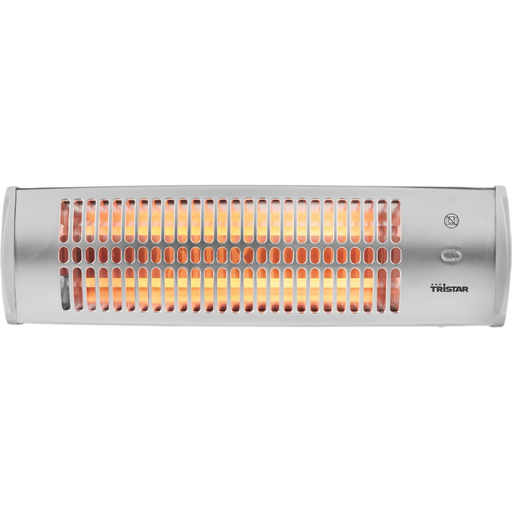
Why this product suits this profile: This appliance delivers 1,200 watts and simple controls for anyone looking for a compact electric heater for occasional supplementary warmth.
The stated output is clearly specified. The timer can be set to switch the appliance off automatically after 1 to 12 hours.
1,200 watts, timer function and ceramic heating element with a cool-down cycle, according to the product description.
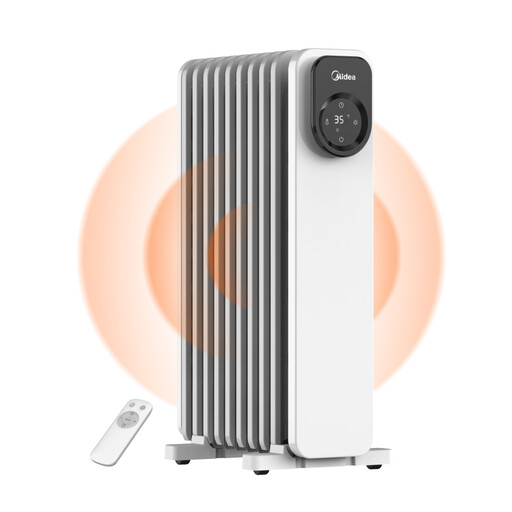
Why this product suits this profile: This portable oil-filled radiator is designed for extended, quiet use in well-insulated living rooms, bedrooms or home offices.
The design works without a fan. Thermostat control, tip-over protection and overheating protection are listed in the product specifications.
2,000 watts, nine fins, four operating modes, LED touchscreen and remote control.
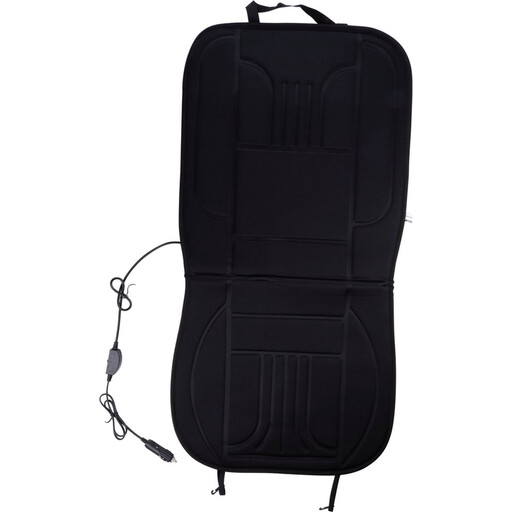
Why this product suits this profile: This heated seat cover is designed to provide targeted warmth in your vehicle and runs via the 12-volt cigarette lighter socket.
The voltage is explicitly specified as 12 volts for use in vehicles. This prevents it from being confused with an unsuitable room heater.
98 × 49 cm, two heat settings and a power consumption of 35 to 45 watts, according to the product data.
We have compiled a complete, regularly updated list of products that fully meet these strict selection criteria and the safety regulations applicable in the EU.
This depends on its output and operating time. A 2,000-watt appliance running at full power theoretically uses 2 kWh per hour. Thermostat operation, ECO mode and a timer can reduce actual consumption by shortening the heating phases. To estimate your own costs, multiply the consumption in kWh by the price of your electricity tariff.
An oil-filled radiator does not need a fan, so it may be a good choice for noise-sensitive rooms. A ceramic fan heater usually warms the air more quickly, but it does produce operating noise. Also look for a thermostat, timer, switchable display lighting and tip-over protection.
It is not possible to determine a fixed service life from the wattage. It depends on factors including operating time, exposure to dust, transport, storage and the quality of the electrical connections. Regular cleaning as instructed, unobstructed airways and immediately taking damaged appliances out of service all help ensure safe operation.