Brands to help guide your choice
The details relate to the product ranges and manufacturer information mentioned here, rather than every model from each brand.
Könighaus
The P series includes wall-mounted infrared panels for targeted radiant heat.
- Könighaus offers different power and thermostat options.
- A version without a thermostat cannot be controlled at the panel. According to the manufacturer, the required output also depends on insulation, windows and external walls; this does not prove that the panel prevents mould.
Stiebel Eltron
The wall-mounted CON 10 Premium convector is designed to provide controlled supplementary heat through the room air.
- Stiebel Eltron lists 1000 W, a weekly timer, open-window detection and overheat protection for this model.
- The model needs a suitable place for installation. These features are not necessarily available on other versions.
De’Longhi
The Radia S TRRS0920 oil-filled radiator is a portable option for fan-free supplementary heat.
- De’Longhi lists an output of up to 2000 W, a room thermostat and castors for this model. The oil continues to give off heat for a while after the appliance is switched off.
- According to the product specifications, the appliance weighs around 11,6 kg and takes up floor space.
Rowenta
The Instant Comfort Aqua SO6510F2 fan heater is designed for occasional use.
- Rowenta lists heat settings of 1200 W and 2400 W, as well as an IP21 rating, for this model.
- The stated minimum setting is 45 dB(A), and the model has no timer. The manufacturer’s statement that it is suitable for bathrooms applies only to this appliance and does not replace the need to follow the installation instructions.
Trotec
The TCH 20 E freestanding convector could be an option if you don’t want a wall-mounted heater.
- Trotec lists 2000 W, three heat settings and a thermostat for this model.
- The advertised room size of up to 24 m² is a manufacturer’s claim, not proof that it will adequately heat a room with cold external walls.
Joybuy products at a glance
The products below include infrared supplementary heaters, a portable oil-filled radiator and a portable PTC heater. Choose according to your heating needs, where you’ll place the appliance and how long you’ll use it.
 No image available
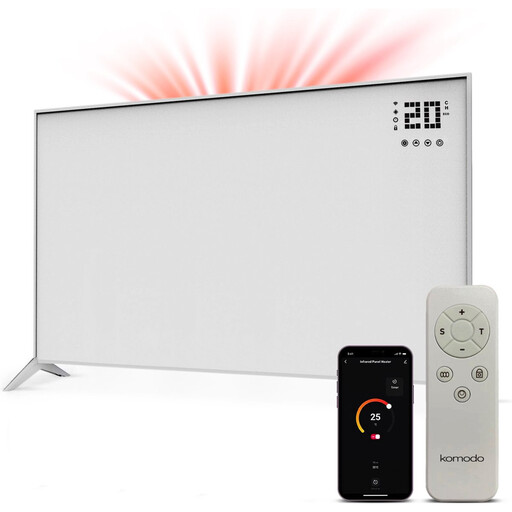
Komodo Blazi infrared heating panel, 800 W, 100 × 80 cm
Could be suitable if you’re looking for targeted infrared supplementary heat and the choice of wall-mounted or freestanding installation.
Listed with a thermostat, timer and Wi-Fi app control, and stated to be suitable for rooms up to 20 m². IP24, overheat protection and child lock are also mentioned in the product name. Do not cover during use and keep away from flammable materials.
View at Joybuy
 No image available
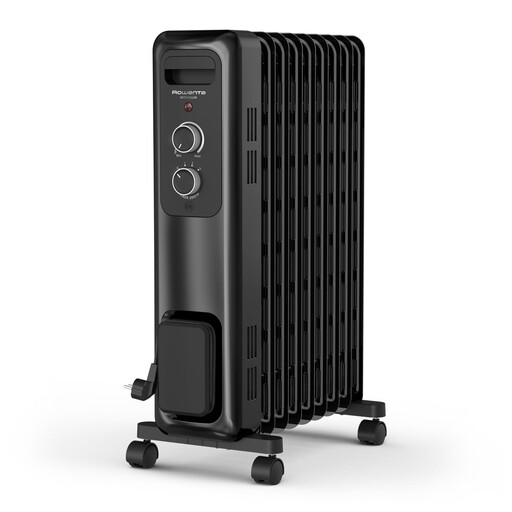
Rowenta Intensium Ultra BU2420 oil-filled radiator, 2000 W
A good option for portable supplementary heating if you want to move the appliance around and prefer fan-free warmth.
Described as having eight fins, castors, three power settings and an adjustable thermostat. The product description states that it operates quietly. Keep at least 1 m away from flammable materials; do not use in the bathroom or outdoors.
View at Joybuy
 No image available
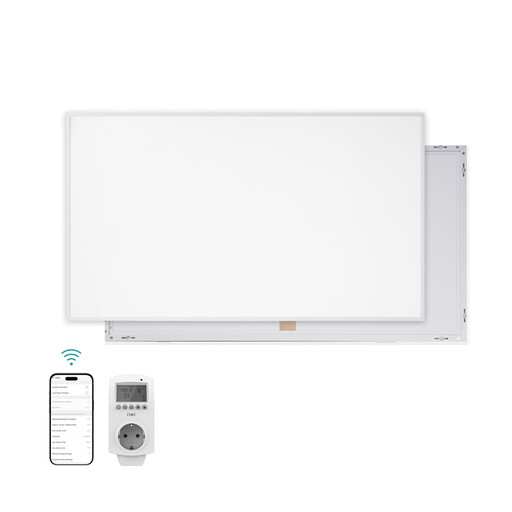
EMKE infrared wall heater, 600 W, 1005 × 595 mm
Could suit a living room or bedroom if you’re looking for a wall-mounted infrared heater with adjustable controls.
Described as having a plug-in thermostat, app control and timer. According to the product description, use only with the supplied thermostat; the surface temperature is stated as 85–125 °C. Do not cover and install out of reach of children.
View at Joybuy
 No image available
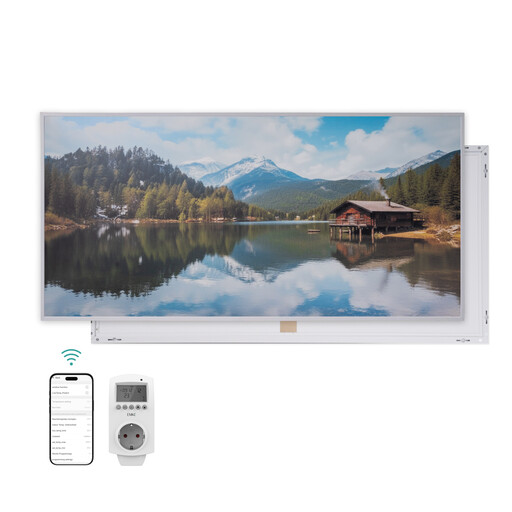
EMKE infrared wall heater, 1200 W, 1195 × 595 mm, aluminium frame
Could be an option for targeted supplementary warmth in a living room or bedroom if you’re planning to mount the heater on a wall.
Described as having a plug-in thermostat, app control and programmable timer. According to the product description, use only with the supplied thermostat; the surface temperature is stated as 85–125 °C. Do not cover and install out of reach of children.
View at Joybuy
 No image available
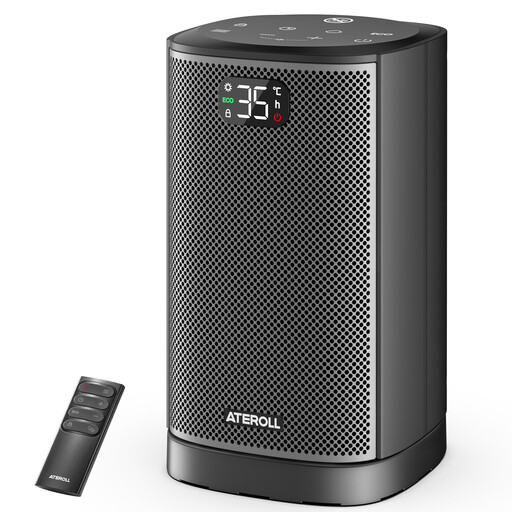
Ateroll portable PTC ceramic heater
Could be suitable for occasional warmth in a living room or bedroom if you’d like a portable appliance that circulates warm air.
Listed with 75° oscillation, ECO mode, remote control and a carry handle. The product name also mentions a 32-dB mode; this figure refers to that mode.
View at Joybuy
Frequently asked questions
Can an infrared heater get rid of mould on a cold wall?
No, you can’t assume that from the heating technology alone. If there is damp or mould, the cause needs to be identified; heating and ventilation are important but won’t fix structural damage. This is the advice of the consumer advice centre and the German Environment Agency.
How can I estimate the electricity costs before buying?
Multiply the power consumption in kW by the expected heating hours and your electricity price in euros/kWh. Compare appliances using the same assumptions about usage; according to the consumer advice centre, cheaper electricity tariffs for an infrared heater are not a given.
Which electric heater is right for a small room with a cold wall?
For targeted warmth in a spot you use regularly, a well-positioned infrared panel could be an option; a convector or oil-filled radiator are alternatives if you want supplementary heat that warms the room air. A fan heater is better suited to short bursts of heat. None of these options will identify or fix a damp or structurally defective wall.
How can I use a fan heater safely?
Keep the appliance and its airflow unobstructed, and follow the appliance-specific clearance from flammable objects. Don’t leave the fan heater running unattended. Do not continue using an appliance with a damaged cable or casing.
Which EU product rules apply to electric local space heaters?
Electric local space heaters that fall within scope and are newly placed on the EU market must meet the ecodesign requirements set out in Regulation (EU) 2024/1103; the new rules have applied since 1 July 2025. The European Commission also clarifies that electric local space heaters are not covered by energy labelling for this product group. Whether a particular model is covered depends on the scope of the regulation.


