
Lieferung heute & morgen

Qualitätsgarantie

Willkommens-Angebote freischalten: KOSTENLOSE Lieferung | Bis zu 80 % RABATT | Kostenlose 30-Tage-JoyPlus-Testphase
App herunterladen
An electric height-adjustable desk can make it easier to switch between sitting and standing during the working day. Before you buy, though, it’s worth taking a close look at the technical specifications and what’s actually included. Marketing terms such as ‘stable’, ‘quiet’ or ‘ergonomic’ tell you little on their own if key details about the height range, load capacity or space requirements are missing.
Many listings don’t clearly distinguish between static load capacity and the dynamic load capacity while the desk is being raised or lowered. In everyday use, start by checking how much weight the frame and desktop can support when stationary. As well as your monitor, laptop and speakers, remember to allow for mounts, documents and accessories.
The three models featured here list a maximum static load capacity of 70 kg. This gives you a clear basis for comparison. Even so, you shouldn’t keep the desk loaded right up to its stated limit.
A 120 cm desk may be large enough for a laptop or a single monitor. If you use two screens, speakers and other work equipment, consider a 140 cm desk or 160 cm desk instead. The stated width alone doesn’t tell the whole story: depth also affects how far away you can position your monitor.
Think about the layout of the room, too. An electric height-adjustable desk needs enough clearance from walls and furniture. The product information advises against placing the desk directly against a wall to avoid scratches.
A desk with a memory function lets you quickly call up saved sitting and standing heights. It only saves time, though, if the saved positions suit your height and chair. Before using the desk, check that cables, drawers and other objects won’t get in the way as it moves up and down.
The JOYFURNOS models featured here have four storable heights and an obstacle-detection sensor. According to the product description, you can adjust the sensor’s sensitivity. Even with this feature, you’ll still need to check that the desk has room to move.
All three models have a height range of 72.1 to 120.1 cm. For a comfortable seated position, your forearms should rest as naturally as possible on the desktop while you sit upright. When standing, adjust the work surface so your shoulders don’t have to stay raised.
Your height, office chair and equipment all affect the right setting. That’s why a sit-stand desk won’t automatically suit everyone at the same height.
Choose dimensions to suit the way you work:
The product specifications list particleboard, steel and Oxford fabric as materials. However, a desk’s stability depends not just on its materials, but also on its construction, the load it carries and correct assembly.
A desk with cable management helps keep wires tidy. The models below include cable grommets, a storage bag and a hook. Before buying, check that your cables are long enough across the full height range and that you can secure power adapters safely.
The product description also mentions overheating protection: if the desk is moved continuously for two minutes, the system may switch off. It is then designed to rest for 18 minutes. Keep electrical components away from liquids; these models are intended for indoor use only.
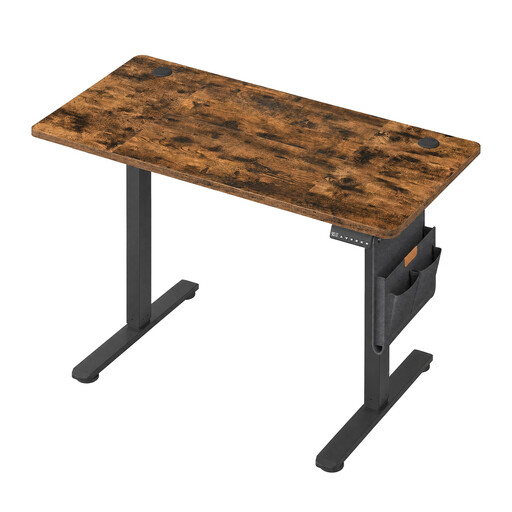
Why this product suits this profile: The compact desktop is a good fit for smaller rooms, a laptop or a single monitor.
The clearly stated dimensions, height range of 72.1 to 120.1 cm and four memory settings make it easier to check the details before you buy.
120.1 cm wide, 60.1 cm deep, maximum static load capacity of 70 kg and cable grommets.
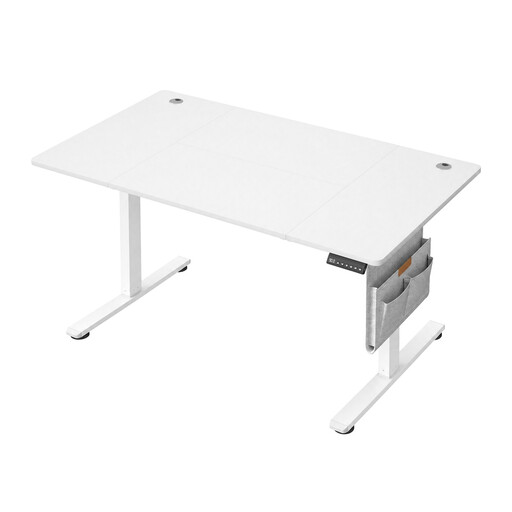
Why this product suits this profile: The mid-sized work surface offers a practical balance between space taken up and usable room, whether you’re working from home or in an office.
There’s more to the setup than height adjustment: the memory settings, cable openings, bag and hook are all clearly listed.
140.1 cm wide, four memory heights, a steel frame and a white finish for a clean, understated office look.
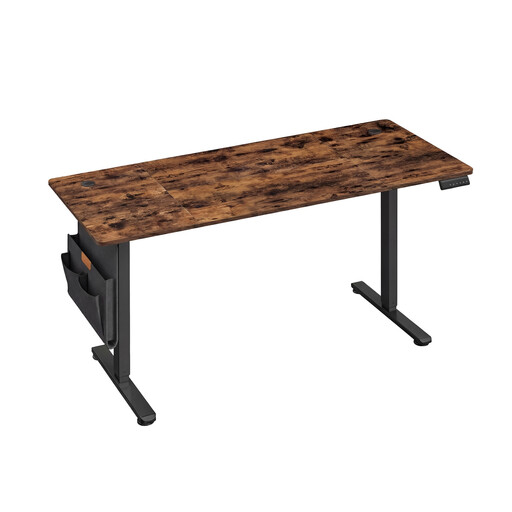
Why this product suits this profile: The larger surface is designed for multiple monitors, gaming accessories or a substantial amount of paperwork.
With a depth of 70.1 cm and maximum static load capacity of 70 kg, you can check the key space and weight details in advance.
160.1 cm wide, 70.1 cm deep, four memory heights and cable management for larger workspaces.
Make sure you have enough space for assembly and follow the labelled instructions. Before adjusting the desk for the first time, arrange all cables so they have enough slack. Don’t place the desk right against a wall, and keep liquids away from the controls and motor.
When choosing an ergonomic office desk, it’s not just the motor and design that matter. The key is whether the desk height, chair, screen position and work surface all work well together. If you want to switch between sitting and standing, set up the saved heights to suit you first and check the desk’s range of movement regularly.
We’ve put together a complete, regularly updated list of products that meet these strict selection criteria and fully comply with the safety regulations in force across the EU.
When sitting, your forearms should rest roughly level on the desktop. When standing, adjust the work surface so your shoulders stay relaxed. As people’s height, chairs and screen positions vary, there’s no single standard height that suits everyone.
Its lifespan depends on factors including the motor, construction, load, assembly and how often it’s used. Avoid keeping it loaded close to its maximum static capacity, and follow the guidance for overheating protection. The models mentioned here are designed to rest for 18 minutes after two minutes of continuous movement.
The desk uses most of its electricity when adjusting its height; the motor isn’t continuously active when the desk is stationary. Actual running costs depend on how often you adjust it, the motor’s power rating and your electricity tariff. For an accurate estimate, check the manufacturer’s stated power consumption.