
Lieferung heute & morgen

Qualitätsgarantie

Willkommens-Angebote freischalten: KOSTENLOSE Lieferung | Bis zu 80 % RABATT | Kostenlose 30-Tage-JoyPlus-Testphase
App herunterladen
An electric height-adjustable desk, often called a sit-stand desk, is a central component of a modern, health-conscious home office. The ability to switch between sitting and standing at the touch of a button can noticeably transform your workday. However, the market is flooded with models whose quality differences are hard to spot at first glance. Many buyers invest in a product only to find it develops faults after just a few months.
As a Joybuy Product Recommendation Officer, I analyse product information daily to provide you with objective, practical guidance. In this guide, I'll show you the three most common pitfalls when buying a standing desk and what you need to look out for to make an informed decision.
Marketing promises often sound tempting, but the devil is in the details. These three issues most frequently lead to user disappointment:
To avoid these problems, you should check three core parameters before buying. These are crucial in determining the longevity and functionality of your new workspace.
Stability is the foundation of any good standing desk. A solid steel frame is the basic requirement here. Pay attention to the construction of the legs and the frame. Models with a continuous crossbar or a robust T-foot design generally offer greater stability, especially when the desk is fully extended. A solid tabletop, for instance, with a thickness of 1.5 cm or more, also contributes to overall stability and prevents sagging under load.
The motor is the heart of any electric office desk. A high-quality motor not only operates quietly (often under 50 dB, equivalent to a quiet conversation) but also provides smooth and consistent height adjustment.
Another important feature is the control system. A desk with a memory function is particularly practical. It allows you to save up to four preferred heights and recall them at the touch of a button. This saves you from manual adjustments and encourages regular switching between sitting and standing. Some models also offer an anti-collision system that stops the movement if the desk encounters an obstacle.
The right tabletop size depends on your individual needs. A 120x60 cm desk is a common size that offers enough space for most home office setups with a laptop and an additional monitor. Consider how many devices and documents you need on a daily basis.
Additional organisational features are an often-underestimated benefit. Integrated cable grommets, a hook for headphones, or a side storage pocket help keep the workspace tidy and free of cable clutter. A well-organised home office desk promotes a structured workflow.
Based on the criteria above, we have identified a few models that are well-suited for different needs.
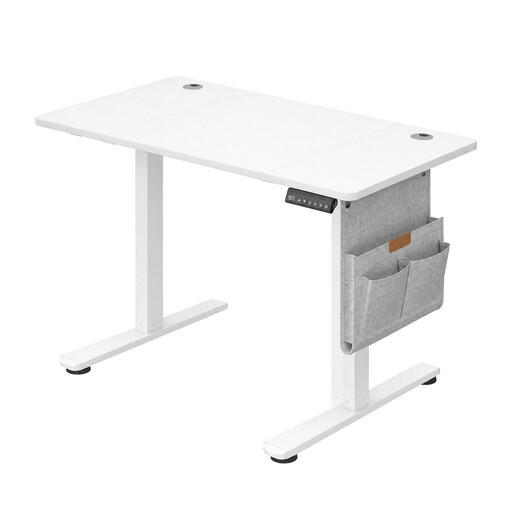
Why This Fits Their Persona: Ideal for anyone setting up their first ergonomic home office and looking for reliable core features without a hefty price tag. The light-coloured design fits into many home decors.
The solid steel frame ensures stability even at maximum height, thus avoiding the 'wobble' trap. Its quality motor operates quietly, preventing the noise pollution typical of budget models.
It offers four memory presets and useful extras like a side fabric pocket and cable grommets, which are not a given in this price range.
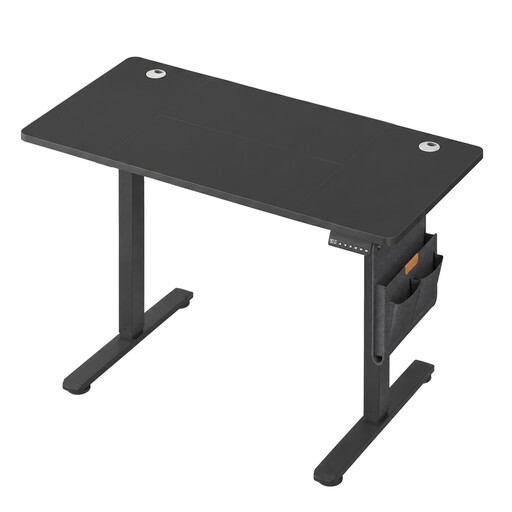
Why This Fits Their Persona: Perfect for users who value a seamless workflow. The memory function allows for quick changes in working height without losing focus. The black design looks professional and unobtrusive.
The quiet and fast motor prevents disruptions during focused work or online meetings. Its reliable mechanism ensures that the height adjustment works smoothly and doesn't become a test of patience.
The four memory presets for custom height settings are a clear efficiency gain. The integrated cable grommets and hook help maintain a tidy workspace.
We have compiled a complete, up-to-date list of products that fully meet these strict selection criteria and comply with key safety regulations.
A memory function is a significant convenience upgrade. It allows you to switch between your ideal sitting and standing heights at the touch of a button. Without this feature, you have to manually adjust the height each time, which makes regularly changing your posture less appealing during the workday. For consistent ergonomic use, it is therefore highly recommended.
Stability heavily depends on the quality of the frame. High-quality models with a solid steel frame, wide feet, and precision-engineered telescopic legs are very stable even at their maximum height. Look for product descriptions that explicitly mention a stable construction and check the total weight of the desk—a higher weight often indicates more robust materials.
The static load capacity specifies how much weight the desk can support when stationary. The dynamic load capacity is the weight that the motor can safely and smoothly move during height adjustment. The latter is crucial for everyday use. Ensure that the dynamic load capacity is sufficient for your entire setup (computer, monitors, books, etc.) to avoid overloading the motor. A typical dynamic load capacity for solid models is around 70-80 kg.