
Lieferung heute & morgen

Qualitätsgarantie

Willkommens-Angebote freischalten: KOSTENLOSE Lieferung | Bis zu 80 % RABATT | Kostenlose 30-Tage-JoyPlus-Testphase
App herunterladen
Preparing traditional herbal decoctions or nourishing soups on the stove is time-consuming and requires constant supervision. An electric herbal pot promises a solution through automation and safety. However, not every device delivers on its promise. Many models have design flaws or superfluous features that cause more problems than they solve in practice.
This guide highlights the most common pitfalls to watch out for when buying and explains which technical features truly matter to find a reliable and durable appliance for your wellness routine.
Before you make a purchase, you should be aware of the typical weaknesses that often only become apparent after a few weeks of use.
To avoid the problems mentioned above, focus on three objective technical features. These largely determine the functionality, safety, and longevity of your device.
The material of the inner pot is of central importance. A high-quality ceramic pot for herbs should be made of high-density ceramic fired at over 1300°C. The smooth, non-porous glaze prevents residue from sticking and the transfer of flavours. It is also resistant to thermal shock and easy to clean.
Also, look for a split-body design. In these models, the ceramic pot can be completely removed from the heating base. This allows for uncomplicated and safe cleaning of the pot without the electrical components coming into contact with water.
An effective device for Traditional Chinese Medicine (TCM) or medicinal herbs requires intelligent heat management. A power rating of around 600 watts has proven to be a good compromise between efficiency and control. The key is the ability for segmented heating: the device should automatically switch between a phase of strong boiling (to break down the cell walls of the herbs) and a longer phase of gentle simmering (for the gentle extraction of active ingredients).
Two automation features are also indispensable:
Choose the capacity according to your needs. For individuals or couples, models with 1.3 to 3.5 litres are often sufficient. Families or individuals who cook larger quantities in advance should consider a device with 4.5 litres or more. The operation should be intuitive, with clearly labelled buttons and unambiguous displays. This is especially important if the device will also be used by older family members.
Here are some recommendations based on the objective criteria mentioned above, suitable for different usage scenarios.
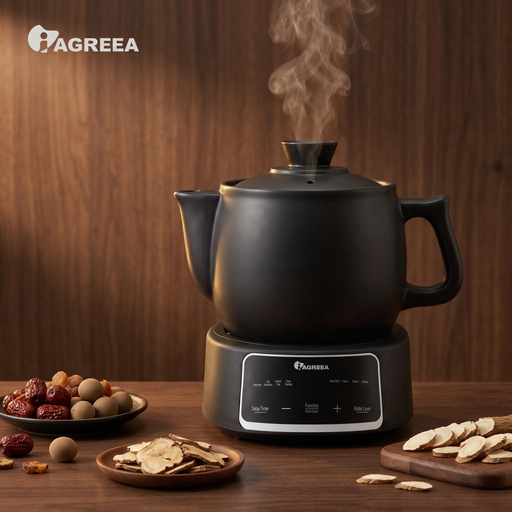
Why This Fits Their Persona: With a 3.5-litre capacity, this model is ideal for the daily needs of 2-3 people. It automates the entire process, from preparing decoctions to nourishing soups, making daily wellness routines effortless.
The split-body design and the inner pot made of high-fired, glazed ceramic solve the problem of difficult cleaning and safety risks. The segmented 600W heating system prevents scorching and ensures optimal extraction.
Full automation with a 24-hour timer and keep-warm function. Four preset programs, including a function for a second brew (2nd Decoction), maximize the use of the herbs.
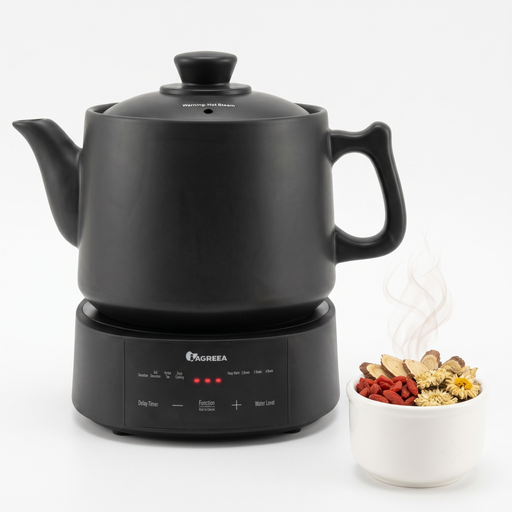
Why This Fits Their Persona: With a larger capacity of 4.5 litres, this model is suitable for families of 2-4 people or for users who regularly prepare larger batches of herbal decoctions or soups for several days.
This model uses the same proven technology as the 3.5-litre version: a split-body design with a high-quality ceramic pot and a smart 600W heating system. The larger capacity does not compromise safety or efficiency.
Generous capacity for family needs. It retains all key automation features like the 24-hour timer, automatic keep-warm function, and preset cooking modes.
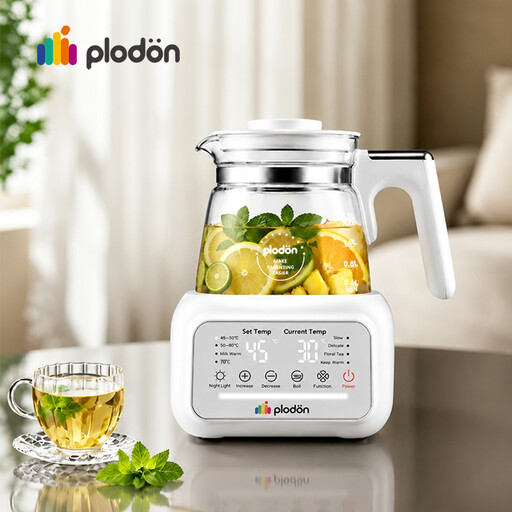
Why This Fits Their Persona: For users who primarily prepare single cups of herbal tea and are looking for a versatile appliance. This borosilicate glass model is not just a **herbal tea maker** but is also suitable for baby formula or coffee.
Instead of ceramic, this uses heat-resistant borosilicate glass, which is also flavour-neutral and easy to clean. Instead of a simple cooking program, it offers precise temperature control, which avoids the risk of over-boiling delicate teas.
Multifunctionality through precise temperature settings for various purposes (tea, milk, dechlorination). The 72-hour keep-warm function is especially practical for continuous use.
We have compiled a complete, up-to-date list of products that fully meet these strict selection criteria and German safety regulations.
1. How do I clean a ceramic electric herbal pot? For models with a split-body design, remove the ceramic pot from the heating base. Let it cool down, then wash it with warm water and a soft sponge. Thanks to the glazed surface, residue hardly sticks. The heating base should only be wiped with a damp cloth and never submerged in water.
2. Can I use an electric herbal pot for other purposes? Yes, most models are not only suitable as an electric decoction pot but are also excellent for preparing nourishing broths, ginger tea, grain soups, or other recipes that require long, gentle simmering. The preset programs often cover various applications.
3. What is the difference between a glass kettle with temperature control and a ceramic herbal pot? A ceramic herbal pot is specifically designed for the hours-long cooking of solid ingredients like roots and herbs. Its shape and material promote even heat distribution for slow extraction. A glass kettle with temperature control is more of an all-rounder, ideal for quickly brewing tea leaves or soluble powders at a precise temperature, but less suited for lengthy decoctions.