
Lieferung heute & morgen

Qualitätsgarantie

Willkommens-Angebote freischalten: KOSTENLOSE Lieferung | Bis zu 80 % RABATT | Kostenlose 30-Tage-JoyPlus-Testphase
App herunterladen
Preparing herbal decoctions, as used in Traditional Chinese Medicine (TCM), requires precision and patience. An electric herbal pot can significantly streamline this process by automatically controlling the cooking time and temperature. However, the market is flooded with a variety of models, and their differences in quality are not always apparent at first glance. A hasty choice often leads to devices that are unsafe, ineffective, or impractical to use. This guide highlights the most common pitfalls and explains which technical features you should look for to ensure safe and effective use.
Many users invest in an automatic herb pot only to find that the device fails to meet their expectations. Pay close attention to these three common flaws to avoid a poor investment.
To ensure your device is safe and effective for preparing Chinese medicine, you should check the following core parameters.
The material of the pot is crucial for the purity of the decoction. A ceramic decoction pot, ideally made from high-fired and glazed ceramic, is the preferred choice. Its smooth, non-porous surface prevents flavor residue from previous batches from leaching into the new brew. Furthermore, ceramic is known for its even heat distribution.
Even more important is the split design. In these models, the ceramic pot can be completely detached from the heating base. This allows for easy and safe cleaning of the pot under running water, while the electric base can be wiped down separately with a cloth. This construction minimizes the risk of water damage to the electronics and increases the device's longevity.
An advanced TCM pot should do more than just heat water. Look for an intelligent, segmented heating system. Such systems mimic the manual process by automatically switching between a phase of strong boiling (to break down the cell walls of the herbs) and a phase of gentle simmering (for the slow extraction of ingredients).
Additional features like an herb pot with a timer and keep-warm function offer maximum convenience. A programmable timer allows you to schedule the preparation hours in advance, so the decoction is ready exactly when needed. The automatic keep-warm function then maintains the liquid at an optimal drinking temperature.
The capacity should be tailored to your household's needs. For a single person or a couple, a volume of 2 to 3 liters is often sufficient, while families will benefit from a larger pot of 3.5 liters or more.
Operation should be intuitive. A clear control panel with well-labeled buttons and displays is particularly advantageous for the elderly or users who are less tech-savvy. Some models offer preset programs for different water levels (e.g., for 2, 3, or 4 cups of final liquid), which simplifies dosage and further automates the process.
Based on the criteria above, we have identified products that stand out for their thoughtful design and user-friendly features.
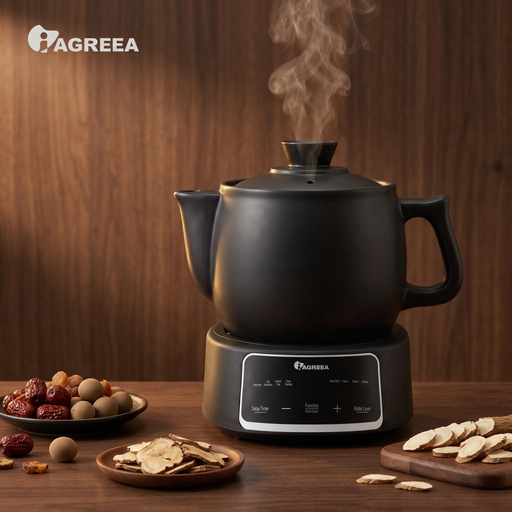
Why This Fits Their Persona: The 3.5-liter capacity is ideal for the daily needs of a 2-3 person family. The fully automatic functions, including the 24-hour timer and automatic keep-warm feature, offer maximum convenience for a busy lifestyle or allow elderly family members to use it safely and unattended.
The split design safely separates the ceramic pot from the heating base, bypassing the cleaning and safety risks of integrated models. The segmented heating prevents scorching and ensures optimal extraction. Full automation eliminates the need for constant supervision.
Features 4 preset modes, including a special function for a second decoction to maximize herb utilization. The pot is made of food-grade ceramic fired at 1300℃.
We have compiled a complete, up-to-date list of products that fully meet these strict selection criteria and safety standards.
1. How do you properly clean a ceramic electric herbal pot? With a split-design model, cleaning is straightforward. The detachable ceramic pot can be washed by hand with dish soap and water like a normal cooking pot or, if specified by the manufacturer, in the dishwasher. The heating base must never be submerged in water; it should only be wiped with a slightly damp cloth.
2. Can you also cook regular soups or teas in a TCM pot? Yes, many modern devices are designed as multi-functional kitchen appliances. They often have special programs for preparing nourishing soups, wellness teas, or other infusions. This makes them a versatile tool for daily health promotion beyond their use for herbal decoctions.
3. How much water should be used for an herbal decoction? The exact amount of water depends on the type and quantity of herbs, as well as the instructions from the prescribing doctor or practitioner. However, some advanced cookers simplify this step by offering preset programs for a specific final volume of liquid (e.g., 2, 3, or 4 cups). A matching measuring cup is also often included to standardize the water dosage.