What to look for when buying
| Buying priority |
What to look for |
Who it matters most to |
| Large, full pot |
Compare the pot’s base size with the cooking zone, and check that the weight of the full pot is within the model’s maximum load. |
If I’m making a large pot of chilli, the cooking surface and load capacity need to suit the pot and its contents. Around 36% of consumers prioritise this kind of pot compatibility. |
| Control when simmering |
Check the controls and power settings; settings or a temperature selection don’t guarantee a constant temperature inside the pot. |
If you’re simmering the pot for a while after bringing it to the boil, you’ll want to be able to turn the heat down as needed. Around 29% of consumers prioritise control when simmering. |
| Two pots at once |
Choose two zones only if you’ll be cooking two dishes at the same time; also consider the appliance’s width and stated total power output. |
If I’m cooking a side dish at the same time as the chilli, I need room for two suitable pots and two usable zones. Around 21% of consumers prioritise cooking two dishes at once. |
| Reusing a pot you already own |
For induction, check that the pot has a ferromagnetic base and the right diameter; for ceramic glass, consider the heating zone and residual heat. |
If you want to keep using your existing chilli pot, you’ll want to choose a hob with a heating method that suits its base. Around 14% of consumers make reusing their pot their top priority. |
The percentages shown refer to consumers for whom each point is the main priority; the priorities are treated as mutually exclusive.
Hobs at Joybuy
This selection includes electric single hotplates for one pot, as well as portable induction hobs with one or two cooking zones.
 No image available
SEVERIN KP 1092 single hotplate
An electric single hotplate for a pot with a base that fits the stated 18 cm heating ring.
Variable temperature control; 1,500 W.
View at Joybuy
 No image available
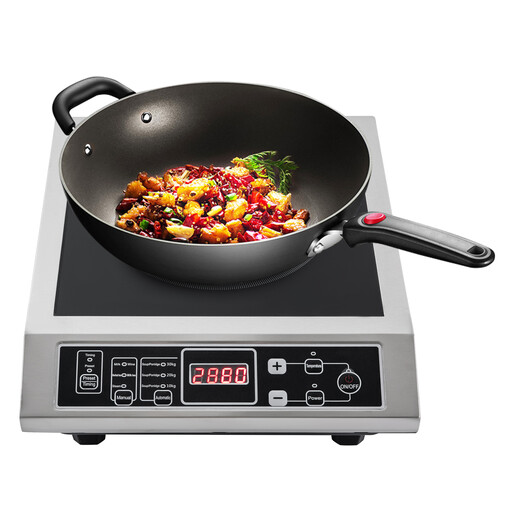
Induction hob with IGBT technology
A portable single induction hob for a pot with an induction-compatible base.
3,500 W; eight temperature settings and a timer.
View at Joybuy
 No image available
Induction hob with two cooking zones
Two cooking zones are a useful option if you want to prepare chilli and another dish at the same time; both pots must be induction-compatible.
Five temperature settings.
View at Joybuy
 No image available
Portable single induction hob
A portable single hob for a pot with an induction-compatible base.
1,000 W; five power settings.
View at Joybuy
 No image available
Portable microcrystalline glass induction hob
A portable single induction hob for a pot with an induction-compatible base.
3,500 W; ten temperature settings.
View at Joybuy
Frequently asked questions
How can I check whether my chilli pot will work on an induction hob?
Check that the pot has an induction-compatible base, then compare its diameter with the hob’s specifications. For the CASO ProMenu 2100, the manufacturer specifies 12–24 cm; this range doesn’t automatically apply to other models.
Which type of hob should I choose if my current pot isn’t induction-compatible?
A radiant ceramic glass hob doesn’t require a ferromagnetic pot base, as long as the pot and heating zone are a suitable match. For the ROMMELSBACHER CT 2200/E, the manufacturer specifies heating zones of 140 or 210 mm; the cooking surface gets hot and has a residual heat indicator.
Can I use a powerful double hob with a multiway adaptor?
ROMMELSBACHER advises against connecting its powerful double hobs to a multiway extension lead. Follow the instructions for your chosen model and check the permitted total load; this manufacturer guidance isn’t blanket approval for connecting other appliances in the same way.
How should I prepare dried beans for chilli?
The Federal Institute for Risk Assessment recommends soaking dried pulses such as kidney beans for at least five hours, discarding the soaking water and cooking them thoroughly in fresh water. A gentle simmer alone isn’t enough to cook raw beans; tinned beans that have already been cooked don’t need soaking beforehand.
How should I cool a large batch of chilli after cooking?
Following the Federal Institute for Risk Assessment’s recommendation, divide larger quantities between several shallow containers and cool them to below 7 °C within a few hours. Chilled leftovers should be eaten within two to three days.


